

 GMA Brandtalk
 Tracking
 Archives

Imee Marcos eyes new Omnibus Election Code
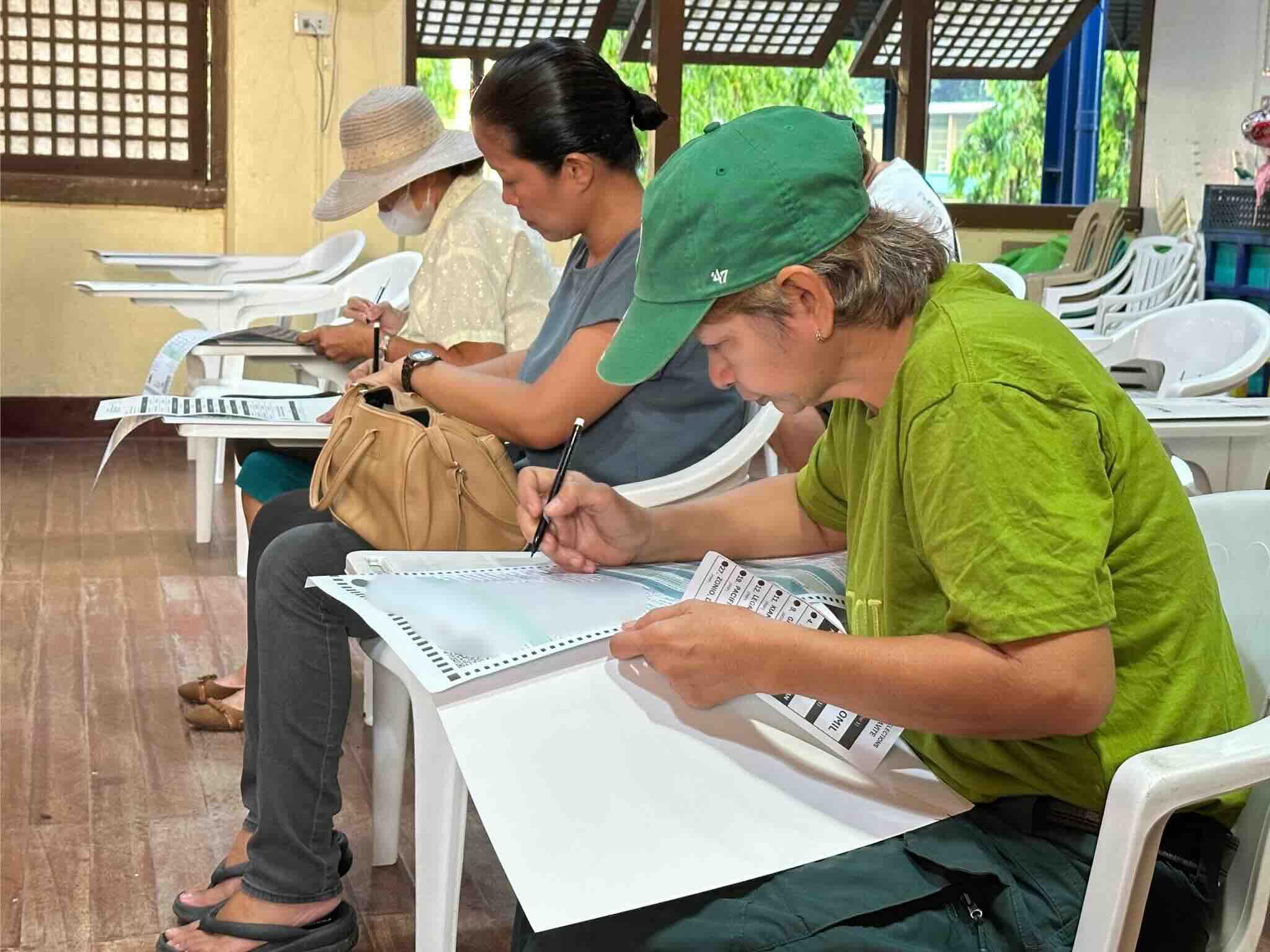
Senator Imee Marcos has filed a measure seeking to revise and recodify all the election statutes, paving the way for the New Omnibus Election Code of 2025.
In the explanatory note of Senate Bill 425, Marcos, chairman of the Senate committee on electoral reforms and people's participation, said certain provisions of the 1985 Omnibus Election Code are "outrightly ill-suited for modern times."
"The [OEC] is well more than three decades old. Since the inception of the OEC, there have been many significant changes in the manner by which elections are conducted," the senator said.
"Likewise, regulations and limitations under the OEC have since been proven inadequate to realistically ensure a more level-playing field for candidates," she added.
In 2023, the Commission on Elections (Comelec) finished a 964-page draft of proposed amendments to the Omnibus Election Code, according to poll chairman George Garcia. He said the proposed revisions include provisions on the overhaul of the party-list system and changes in campaign finance.
The European Union (EU) Election Observation Mission, which sent a delegation to monitor Eleksyon 2025, said in its report that nearly half of the provisions of the Omnibus Election Code, including those for campaign finance and election offenses, are already "outdated."
Those provisions, the report said, were already superseded by the 1987 Constitution and by numerous subsequent laws and regulations.
BSKE term of office
Under Marcos' bill, the Comelec shall have exclusive charge of enforcement and administration of all laws and regulations to the conduct of election, plebiscite, initiative, referendum, and recall for the purpose of ensuring free orderly and honest elections.
The measure also provides for the conduct of a hybrid election system—a combination of the automated election system and the manual election system—to ensure transparency and credibility of the electoral processes.
This hybrid election system shall be applicable to the May 2028 elections and all national, local, and Bangsamoro Autonomous Region in Muslim Mindanao (BARMM) polls thereafter.
The bill also stated that the term of office of all elected barangay and Sangguniang Kabataan (BSKE) officials shall be four years. The BSKE elections will be held on the first Monday of November 2026 and every four years thereafter.
No elective barangay official shall also serve for more than three consecutive terms in the same positions, while no elective SK official shall serve for more than one term in the same post.
Party-list, substitution
The bill also classified the party-list system into: a) political parties or coalition of political parties; and b) sectoral parties or organizations. Each of these classifications shall have 50% of the seats allocated for the party-list.
Each registered party, organization, or coalition shall submit to the Comelec a list of names of not less than five nominees from which party-list representatives shall be chosen in case it obtains the required number of votes, together with the certificates of nomination and acceptance of all the nominees in such list.
Substitution shall also be allowed for any nominee who dies, becomes physically incapacitated, or has been disqualified.
"No substitution shall be allowed for nominees who withdrew their acceptance to the nomination. In the event the list of nominees of a party-list group is exhausted because of the withdrawal of all its nominees, such party, organization, or coalition shall be deemed to have withdrawn its manifestation of intent to participate in the elections," the bill noted.
Only a person belonging to and nominated by the same political party may file a certificate of candidacy to replace any official candidate who died, became incapacitated, or was disqualified after the last day of the filing of certificates of candidacy (COCs).
In all cases of substitution after the period for filing of COCs, the substitute candidate must have the same surname as the candidate being substituted for.
Cha-cha
The proposed measure also states that a petition for an initiative on the 1987 Constitution must have at least 12% of the total number of registered voters as signatories, of which every legislative district must be represented by at least 3% of the registered voters.
Initiative on the Constitution may also be exercised only once every five years.
So far in the 20th Congress, only Senator Robin Padilla has filed a resolution seeking to revise the 1987 Constitution of the Republic of the Philippines through a constitutional convention. — VDV, GMA Integrated News

