

 GMA Brandtalk
 Tracking
 Archives

Why the World Court's advisory opinion on climate is important for countries like the PH
The International Court of Justice just issued a landmark advisory opinion on climate, saying governments must stop climate pollution and pay vulnerable nations and communities for the harm they have caused.
Grounded in binding international law, the advisory opinion gives vulnerable nations like the Philippines legal grounds to demand accountability and reparation.
Atty. Grizelda Mayo-Anda, an environmental lawyer and executive director of the Environmental Legal Assistance Center first acknowledged the advisory opinion is not legally binding but said it is still "very significant" to country like the Philippines, "which deals with typhoons, extreme weather events and ocean acidification."
In a statement, Representative Renee Louise Co of the Kabataan party-list said the ICJ advisory opinion "gives Filipino coastal communities legal backing to demand action and accountability."
Pointing to "typhoon-vulnerable areas like Rizal and Eastern Samar," Co said "survivors and youth leaders now have firmer ground to demand support and reparations."
"Women and girls, who make up around 80% of those displaced during storms and face heightened risks in evacuation centers, can push for protections rooted in international law," she added.
Meanwhile, World's Youth for Climate Justice Global Advocacy Lead Nicole Ponce said "this moment shows how youth and Global South communities have the power to shape international law and seek reparation for damage done."
Charles Zander Deluna, campaigner for the Philippine front of the World's Youth for Climate Justice said the ruling "affirmed what we've long known from the frontlines: that climate inaction is not just negligence. It's a violation of international law. This opinion puts states on notice that protecting the climate is no longer optional. It is an obligation."
For YB Charles Santiago, co-chairperson at the ASEAN Parliamentarians for Human Rights, the advisory opinion "lays down a firm legal marker" for countries across Southeast Asia. "Major emitters aren't just urged to cut greenhouse gases, they are bound under international law to do so, and to stop inflicting harm through state enforcement."
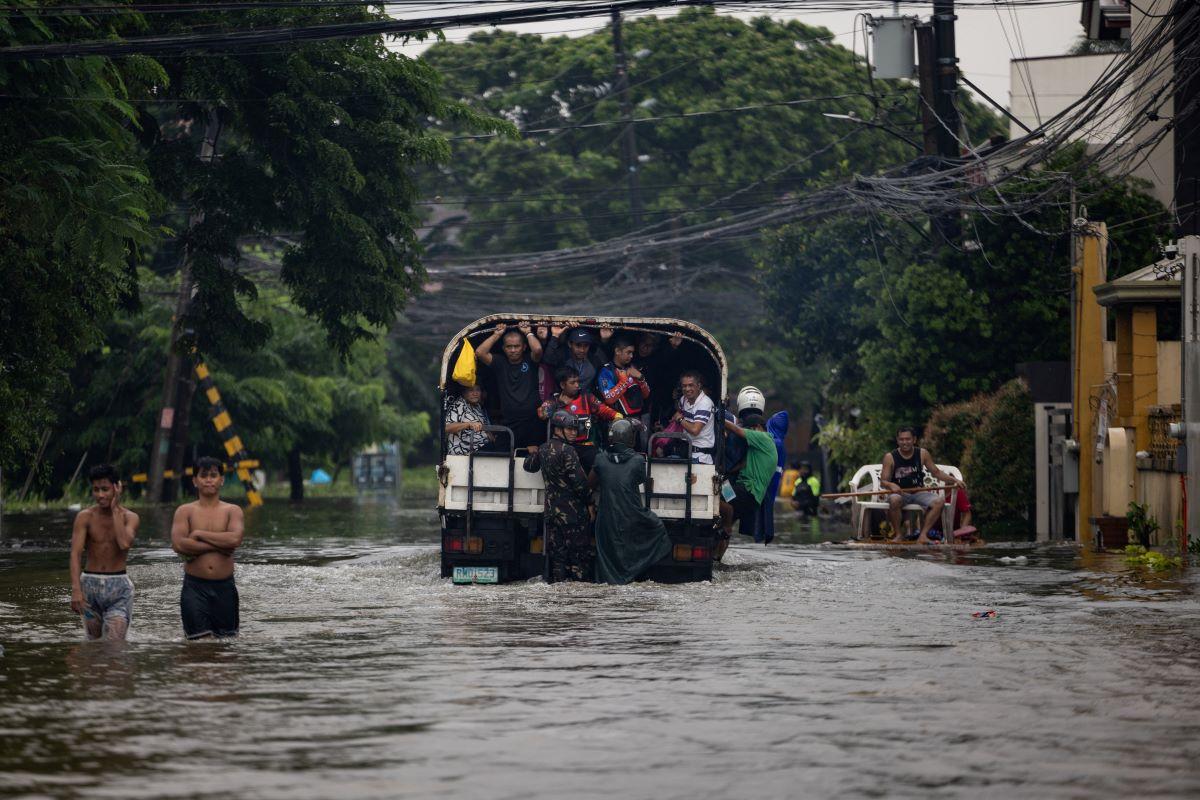
The ruling comes at a time when most of the Philippines is being battered by simultaneous storms while enduring non-stop Habagat-induced rains.
In an advisory Thursday morning, PAGASA said Tropical Cyclone Emong has already intensified into a typhoon with the northern portion of Pangasinan and the western portion of La Union under Signal No. 3.
Meanwhile Tropical Storm Dante is maintaining its strength as it moves toward Ryukyu Islands, as the LPA outside of the Philippine Area of Responsibility that PAGASA has been monitoring all week has become a tropical depression.
Amid the weather extreme, 40 areas in the Philippines have been declared under the state of calamity.
A total of 2,733,646 people or 765,869 families have been affected by the bad weather in all regions except Eastern Visayas.
According to legal experts, ICJ's advisory opinion offers stronger grounds to push for enforcement of climate laws, align national targets with international obligations and ultimately, project communities.
The advisory opinion is welcomed by most everybody, but JL Algo, National Coordinator of Aksyon Klima Pilipinas, takes on a more sobering tone.
Saying it's "reminiscent of recent court rulings like the National Inquiry on Climate Change by the Commission on Human Rights from three years ago" and that finally "the climate crisis is now formally acknowledged as an existential threat," Algo said "the effects of this ruling would likely take years to be truly felt, especially by the most vulnerable communities."
"Litigation is a long, expensive, and at times inefficient process in many countries, including the Philippines. If this ruling is ever applied in our country's context, our judiciary system has to be truly ready to handle cases related to climate accountability. Ultimately, any decision is only as strong as its enforcement," he added.
The initiative to seek the ICJ's opinion on the climate crisis was launched by 27 law students from the Pacific region who succeeded in convincing the government of Vanuatu to bring the case before the UN General Assembly. It was backed by 130 countries.
In 2023, the UN General Assembly unanimously voted in favor of the resolution referring the issue to the International Court of Justice and a year later, countries and international organizations had the opportunity to explain to ICJ judges what they thought international law demands of nations to prevent harm to the climate system and what the consequences are for polluters who are causing harm. — RSJ, GMA Integrated News

