

 GMA Brandtalk
 Tracking
 Archives

House says SC can still reverse ruling on VP Sara impeach raps
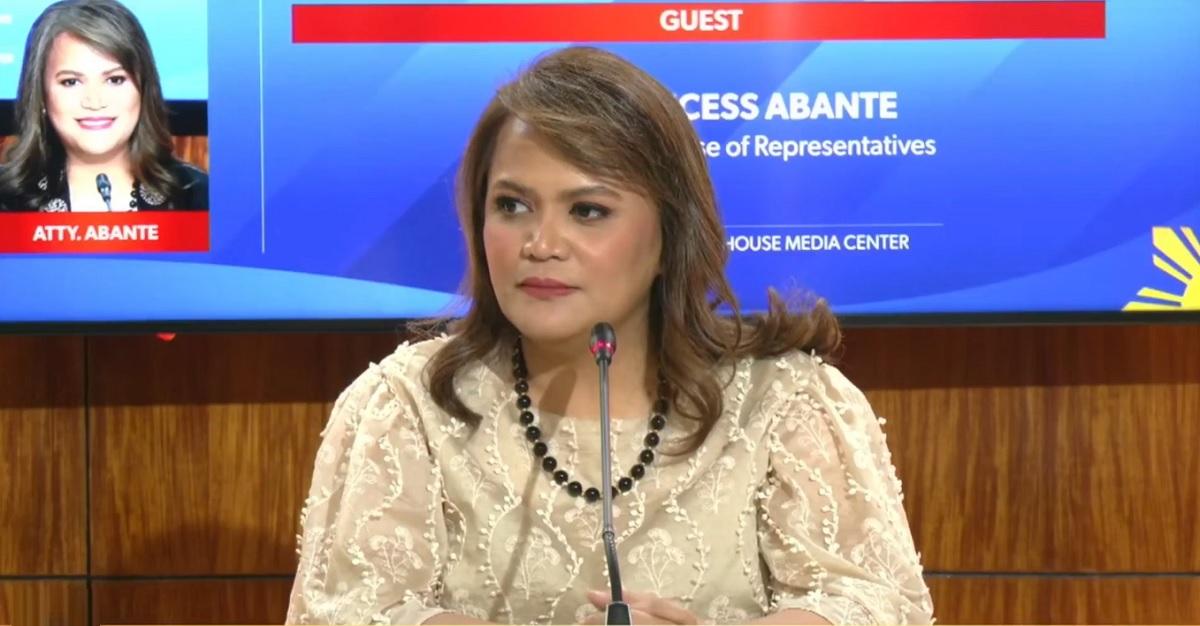
The House of Representatives believes the Supreme Court can still reverse its decision on the articles of impeachment filed against Vice President Sara Duterte, provided that it considers the official records of the House of Representatives involving the initiation of the impeachment case.
“The House will file a motion for reconsideration. It is up for the Senate to decide on how they will act on the impeachment complaint now, but on the part of the House, we believe that our actions on the impeachment are right and in accordance with our laws and the Constitution,” House spokesperson Princess Abante told reporters.
“The filing of MR is one of the legal actions we could take. Kung suntok sa buwan po iyan, iyan po ay kasama pa rin po sa pwede namin gawin. Kung maitatama naman po yung mga erroneous data where the Supreme Court decision were based upon, puwede pa rin naman po na mabago ang desisyon,” she added.
(If it is shooting for the moon, well, that is still one of the remedies we could avail of. If we are able to correct the erroneous data where the Supreme Court based its decision, it can still change its mind.)
The Supreme Court voided the impeachment case against the Vice President, saying it violated the one-year bar rule which only allows one impeachment complaint filed against an impeachable official per year.
The Supreme Court, contrary to its two previous rulings, also said that House initiated more than one complaint because it “initiated” another impeachment complaint by archiving the first three impeachment raps on February 5, an action that the House did after transmitting the consolidated impeachment complaint endorsed by over 215 House members to the Senate, also on February 5.
The 215 signatories were more than the Constitutional requirement of one-third of the House members endorsing the impeachment complaint, a situation that allows the House to transmit the Articles of Impeachment to the Senate for the immediate holding of an impeachment trial, bypassing House justice panel deliberations.
Prior to its decision on the Vice President’s case, previous Supreme Court decisions in the Francisco v. House and Gutierrez v. House state that the initiation of the impeachment complaint starts with its referral to the House Committee on Justice.
The first three impeachment complaints against the Vice President that were archived on February 5 were not referred by the House Secretary General to the House Justice panel.
Further, the High Court said the House maxing out the 10 session days before acting on and archiving the first three impeachment complaints is also a grave abuse of discretion.
The House, however, has argued that the consolidated impeachment case was Constitutionally-compliant because it met the Constitutional threshold of over one-third of House members endorsing it before being transmitted to the Senate. In addition, the House has also argued that the archiving of the first three impeachment complaints is not considered an initiation of an impeachment complaint as provided in the High Court decisions on the Francisco v. House and Gutierrez v. House cases.
The Articles of Impeachment against the Vice President accuse her of:
- conspiracy to assassinate President Ferdinand Marcos Jr., First Lady Liza Marcos, and Speaker Martin Romualdez;
- malversation of P612.5 million in confidential funds with questionable liquidation documents;
- bribery and corruption in the DepEd during Duterte’s tenure by handing out cash to former DepEd Undersecretary Gloria Jumamil-Mercado (Procurement Head), Bids and Awards Committee Member Resty Osias, DepEd Chief Accountant Rhunna Catalan and Special Disbursing Officer Edward Fajarda;
- unexplained wealth and failure to disclose assets in the Vice President’s Statement of Assets, Liabilities, and Net Worth where her wealth increased by four times from 2007 from 2017;
- involvement in extrajudicial killings in Davao City;
- destabilization, insurrection, and public disorder efforts, which include: boycotting the State of the Nation Address (SONA) while declaring herself "designated survivor," leading rallies calling for Marcos' resignation, obstructing congressional investigations by ordering subordinates not to comply with subpoenas, threatening bodily harm against the First Couple and Romualdez, among others; and
- the totality of the Vice President’s conduct as the second highest official of the land.
— BM, GMA Integrated News

