

 GMA Brandtalk
 Tracking
 Archives

New ‘flood-resilient’ school building in Pampanga is model for climate-vulnerable communities
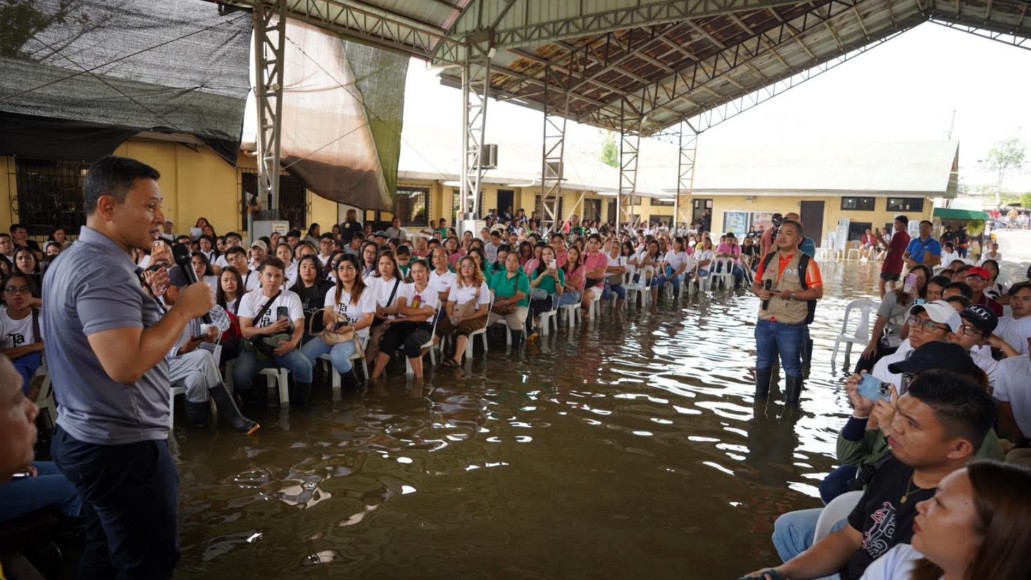
The Department of Education (DepEd) on Wednesday inaugurated a new “flood-resilient” school building in Masantol, Pampanga, an infrastructure project designed to withstand seasonal floods and to serve as a model for climate-vulnerable communities across the country.
Education Secretary Sonny Angara led the ribbon-cutting ceremony at the Masantol High School. He was joined by Pampanga 4th District Representative Anna York Bondoc, DepEd Region III Assistant Regional Director Jessie L. Amin, and Schools Division Superintendent Romeo S. Alip.
“Yung nakita nating classroom sa Masantol, I think 'yun yung talagang magiging modelo for flood-prone areas. Sa Bicol, dito, sa Bulacan. 'Yan din ang gusto ng Pangulo, na may permanent solutions na tayo—hindi yung nag-a-adjust. We must adapt our policies,” said Angara, referring to President Ferdinand Marcos Jr.’s directive for long-term, climate-adaptive solutions in education infrastructure.
The Masantol building is part of DepEd’s upgraded standard designs for schools located in disaster-prone zones. Built using reinforced concrete and structural steel, the facility is designed to endure extreme weather conditions, including strong winds and rising floodwaters. The structure follows a stilt-type or elevated design, which aims to minimize flood damage and ensure learning continuity during the rainy season.
Key features and benefits of the stilt-type design include:
- Flood protection: Elevating the structure prevents water intrusion and protects classrooms, furniture, and learning materials.
- Improved ventilation and natural light: The open space underneath enhances airflow and lighting, creating a more comfortable and energy-efficient learning environment.
- Adaptability to uneven terrain: The stilt construction allows for school buildings to be built even on sloped or challenging terrain.
- Versatile under-space: The area beneath the elevated classrooms can serve various purposes—such as a covered play area, assembly space, or storage.
- Modern school identity: The unique design fosters a strong visual identity and sense of pride within the school community.
- Connection to the environment: Elevated classrooms offer broader views and foster a stronger sense of place.
- Sustainability: The design supports natural cooling and can incorporate eco-friendly materials, contributing to green infrastructure goals.
In a Viber message, Angara’s media relations officer Dennis Legaspi told reporters that the idea with the "flood-resilient" school building is the flexibility it gives in schools that experience severe and prolonged flooding.
"A normal 2-storey will be built like a 3-storey building with the ground floor completely open. Thus, during the dry season or low tide, the ground floor can be used as classrooms as all they need to do is board up the area and use as multiple learning spaces. Other times, the space can be used as a multi-purpose hall," he said.
"During high tide, it will remain as the stilted area as the usable space will only be the 2nd and upper floors," Legaspi added.
According to DepEd, the concept was first applied in typhoon-resilient schools in Bicol and later refined using site-specific risk assessments and climate-adaptive planning. It is now being rolled out to other flood-prone provinces, including parts of Central Luzon and Bulacan.
Angara said the initiative reflects a shift toward permanent and sustainable solutions to disaster risks in education. He emphasized the importance of preparing school infrastructure for the realities of climate change, especially in low-lying areas frequently hit by storms and floods.
“Hindi natin kayang pigilan ang bagyo, pero kaya nating ihanda ang bansa. Basta’t magkakasama tayo, DepEd, LGU, Kongreso, at mga guro, walang hindi kakayanin,” he added.
(We cannot prevent typhoons from happening, but we can prepare our country. As long as we work together, DepEd, local government units, Congress, and our teachers, there is nothing that we cannot overcome.)
Following the inauguration, Angara held a dialogue with educators and community members before leading the distribution of relief packs to teaching and non-teaching personnel affected by the recent floods. Over 2,000 food packs were provided across schools in the town of Masantol and neighboring Macabebe.
DepEd officials said the agency remains committed to building more climate-resilient schools nationwide as part of its broader disaster risk reduction and education continuity strategy. — RF, GMA Integrated News

