

 GMA Brandtalk
 Tracking
 Archives

Senate rules do not include motion to dismiss —Lacson
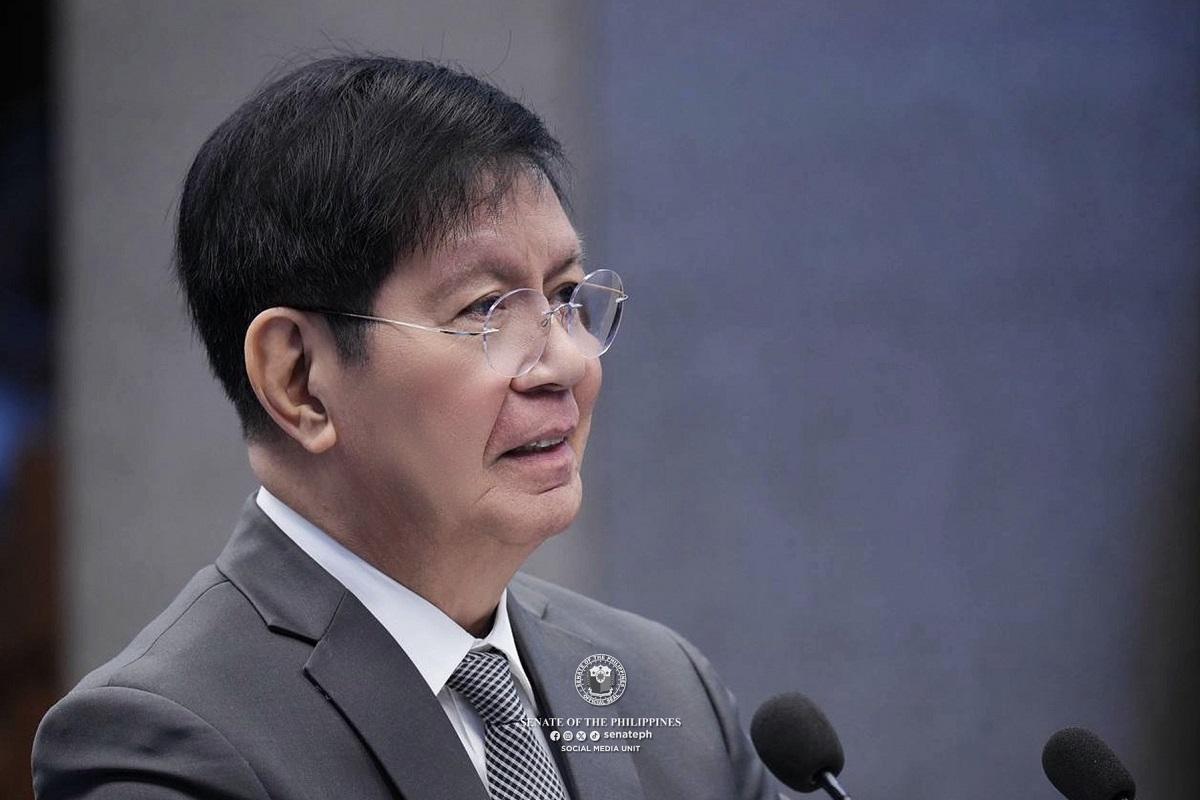
Senator Panfilo “Ping” Lacson on Wednesday questioned how and whether the Senate, during its plenary session, should take up the motion to dismiss the impeachment complaint against Vice President Sara Duterte, noting that the Senate does not have rules on motions seeking to dismiss proceedings.
“I cannot relate a motion in this plenary to an issue that involves the collective decision that falls solely and exclusively under the jurisdiction and authority of an impeachment court,” Lacson said during the plenary session.
“Wala po sa rules natin. Papaano? Wala po tayong guidelines kasi wala po sa rules natin ‘yung motion to dismiss. So anong guidelines ang susundin natin in addressing the motion to dismiss?” he later added.
(It’s not in our rules. How? We don’t have guidelines because a motion to dismiss is not in our rules. So what guidelines are we supposed to follow in addressing the motion to dismiss?)
He said that the Senate is in the plenary as a legislative body and not as the Senate Impeachment Court.
This was echoed by Senator Francis “Kiko” Pangilinan, who said that the Senate Impeachment Court has the sole power to try and decide impeachment cases.
“This representation believes the sole power to try and decide impeachment cases is the impeachment court and not the Senate in plenary,” Pangilinan said.
Meanwhile, Senator Risa Hontiveros inquired about whether the newly-elected senators should take oath as an impeachment court, saying that the issue is related to an ongoing impeachment case.
The impeachment proceedings against Duterte began during the 19th Congress.
“Hindi ba dapat ay pasumpain muna ng presiding officer, with us convened as an impeachment court, ‘yung mga bagong halal na senador para makapag convene po tayo bilang impeachment court at i-treat ‘yung mga motion at bar?” she said.
(Shouldn’t the presiding officer first swear in the newly elected senators, with us convened as an impeachment court, so that we can properly convene as an impeachment court and address the motions at bar?)
This came after Senator Rodante Marcoleta moved to dismiss the verified impeachment complaint against Duterte during the plenary session.
He based this motion on the Supreme Court’s ruling that declared that the Articles of Impeachment against Duterte are barred by the one-year rule under Article XI, Section 3(5) of the Constitution.
The SC also ruled that the articles violate the right to due process. It said that the Senate did not acquire jurisdiction over the impeachment proceedings.
To recall, three impeachment complaints were filed against Duterte in December 2024, all of which were connected with the alleged misuse of confidential funds.
It was the fourth impeachment complaint that was endorsed by over one-third of lawmakers from the House of Representatives, and was later transmitted to the Senate as the Articles of Impeachment.
For his part, Marcoleta said that the Senate rules include the suppletory application of the Rules of Court.
“In the Rules of Court, ‘yung korte po [the court] can motu proprio dismiss a case kung wala pong [if there is no] jurisdiction. And considering that the rules of court has become part of our rules, that’s why I used the motion to dismiss,” he said.
However, Lacson said he could not find any rules on the suppletory application of the Rules of Court for plenary proceedings.
“Maski po basahin natin nang isang daang beses ang ating rules of the Senate. Wala pong suppletory application sa ating rules,” he said.
(Even if we read the rules of the senate a hundred times. there is no suppletory application in our rules.)
Archive
For his part, Senate President Francis “Chiz” Escudero said that motions to archive have been previously filed in relation to the impeachment complaints against former President Joseph Estrada and former Ombudsman Merceditas Gutierrez.
Their cases were archived for being moot and functus officio.
“Once a decision is made by the Senate and the period to seek a reconsideration of that decision, put to a vote, has expired, the next logical step would be to archive, so that it may be made part of our records,” Escudero said.
Escudero noted that the SC declared the Articles of Impeachment to be null and void, and that the Court ruled that the Senate never acquired jurisdiction over it.
“Indeed there might not even be anything to dismiss. And the procedure would be more properly to archive, similar to what we have done in the past. So that these proceedings will still be made part of the Senate’s records. But we will cross that bridge once we put it into a vote,” he added.
The House of Representatives on Monday filed its own motion for reconsideration, arguing that it should be allowed to perform its exclusive duty to prosecute an impeachable official, and the Senate's to try the case. — BM, GMA Integrated News

