

 GMA Brandtalk
 Tracking
 Archives

PH better prepared for natural hazards, but risks now higher - DOST
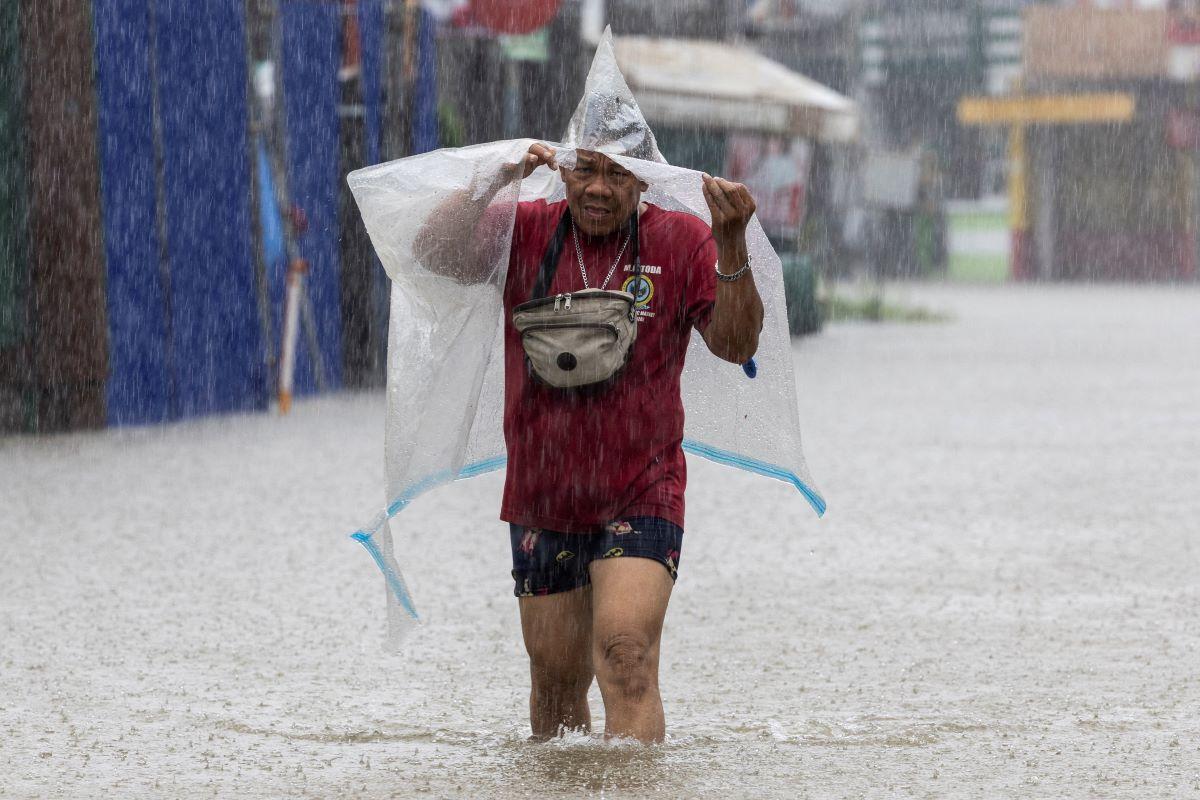
BAGUIO CITY – Department of Science and Technology (DOST) Secretary Renato Solidum Jr. believes that while the Philippines is more prepared for natural hazards, the risks they pose have become much higher.
During a press conference of the Luzon leg of the Handa Pilipinas para sa Bagong Pilipinas 2025 and the 2025 Regional Science, Technology and Innovation Week in Cordillera Administrative Region, Solidum noted that the increased risks are due to the country’s higher population.
“Given the developments, we are much better prepared now than before. But, the reality is preparedness is relative. As we increase our population, the risk is also getting higher. Why? Because more people will be affected as we increase population. What is important is that we prepare for large scale disasters,” he said.
Solidum noted there was a significant divide in terms of risks between urban and rural areas, as urban areas tend to have a higher concentration of people and non-engineered structures.
“Napakaraming tao, napakaraming gusali… Maraming tao nagpupunta at naninirahan sa mga delikadong lugar sa bahay dahil may oportunidad na makapagtrabaho… Maraming non-engineered structures sa mga urban areas tulad sa Metro Manila. Kung titignan natin, mataas ang risk sa urban areas,” the DOST secretary said.
(There are a lot of people, and a lot of buildings… There are many people who come over and live in dangerous areas because there are opportunities to work… There are a lot of non-engineered structures in urban areas like Metro Manila. If we look at it, there is a higher risk in urban areas.)
He stressed the importance of being prepared across multiple industries, as he believes a lack of preparedness would lead to more victims of future disasters, both natural and man-made.
Meanwhile, the Office of Civil Defense (OCD) stated that they are continuously updating their policies and modernizing their protocols and systems for disaster risk response.
OCD Officer in Charge – Administrator Assistant Secretary Bernardo Alejandro IV said they are using several platforms developed by DOST to make correct and accurate forecasts and plans.
Among the tools in development are the “Plan Smart, Ready to Respond” digital tool that is designed to help decision-makers assess disaster response based on drafted scenarios and recommended steps by the system.
“Continuous yung aming paggamit at pag-modernize ng mga sistema na yan, making sure na science-based ang aming desisyon when we do our pre-disaster risk assessment. (The usage and modernization of these systems are continuous, making sure that our decisions are science-based when when we do our pre-disaster risk assessment.) We are updating how we do contingency planning… We are integrating science-based solutions or anticipatory planning models emphasizing on early warning and risk assessment,” he said.
Alejandro said the OCD aims to use early warning systems to improve government’s reaction time.
“That’s why science-based tools, early warning tools ay ‘di lang basta basta mareceive yung warning but dapat it should translate into concrete actions sa ating LGUs at even sa communitites…. Dati, nakakareceive tayo ng alert. What do we do with that message? Yun yung gusto natin paghandaan pa,” he shared.
(That’s why science-based tools, early warning tools are not just receiving warnings but must translate into concrete actions with our LGUs and even communities… Before, we received alerts. What do we do with that message? That is what we need to prepare for.)
“Continuous policy and governance reforms na ginagawa namin, inuupdate natin yung ating mga frameworks to align with the regional and even international frameworks. And yung ating tuloy tuloy na proactive risk governance. Rest assured that the OCD is really embracing technology and data-innovation in modernizing our risk system,” he added.
(Our policies and governance reforms are continuous, and we are updating our frameworks to align with the regional and even international frameworks. And our proactive risk governance is continuous. Rest assured that the OCD is really embracing technology and data-innovation in modernizing our risk system.)
Investing in innovation
Solidum noted that while there are a lot of good projects and ideas in the Philippine market, there is a need for them to be commercialized and scaled up to make notable changes in their respective sectors.
In line with this, he shared that the DOST has launched programs like Propel to connect innovators with potential investors.
“We cannot adapt it by just producing one piece at the time. To do that, we have to engage many people so that they invest in it,” he said.
“Disaster risk reduction is part of economic development because extreme disasters wipe out economic development gains that many provinces would attain. That is why in our strategy, creation of wealth must be in tandem with protection of wealth… Ultimately, whether it’s related to disasters or not, commercialization of products and development will be the priority,” he added.
He also said that part of the DOST priorities is to talk to partner institutions like DILG and OCD for better planning and dissemination of platforms, and capitalize on the presence of higher educational institutions to develop science-based solutions.
Flood management
On the topic of flood, Solidum shared that the country needed flood management.
“Flood control is a very narrow part of flood management. Kapag sinabi mong control, ko-control mo tubig. (If you say flood control you are controlling the water.) Its only structural input. When we talk about flood management, you have to look at the whole water shed from the river to the shoreline. We have different types of flood,” he said.
He also noted that the country must improve on waste management.
“Rivers and drainages are supposed to convey water. They’re not supposed to convey trash, sofa and refrigerator… So we need to look at the overall system collectively. You don’t only look at the engineering but the genetic, hydraulics, and really look into how water can be managed,” he said. — RF, GMA Integrated News

