

 GMA Brandtalk
 Tracking
 Archives

Ronnie Puno optimistic about Con-con but admits 'challenges'
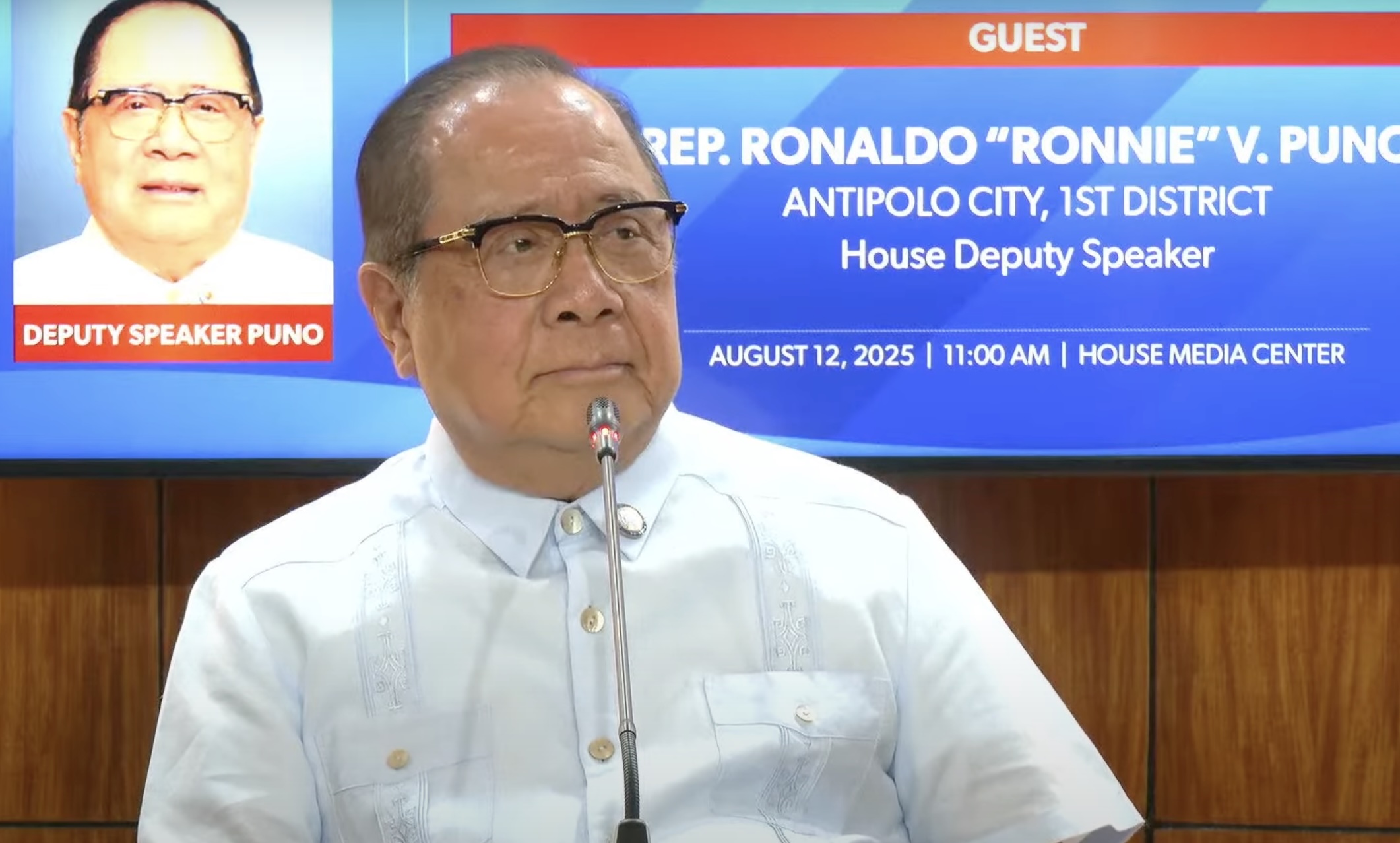
Amending the 1987 Constitution via a Constitutional Convention (Con-con) will face "challenges," but House Deputy Speaker Ronaldo Puno of Antipolo City is optimistic about its chances.
"The initial reaction is always hindi papayag ‘yung Senado dyan. Then the next reaction is, oh baka mamaya sabihin nila perpetuation of power na naman ‘yan, babaguhin ‘yung mga term of office. So, it's going to be a challenge,” Puno said in a press conference.
(The initial feedback is that Con-con faces an uphill climb. The initial reaction is that the Senate won’t agree to it. Next is that this is just about perpetuating ourselves in power by changing term limits.)
Puno, meanwhile, said the public and his colleagues in the House and Senate should trust the Con-con system which is provided for by the Constitution, given that the House and the Senate can also limit the scope of the Constitution’s provisions that will be amended.
Puno made the statement after calling for a Con-con to address supposed vague provisions in the 1987 Charter. Among them is the use of the term fortwith in Article 11, Section 3.4 on the Accountability of Public Officials, which became controversial during the impeachment proceedings of Vice President Sara Duterte.
After more than one-third of the House impeached and sent the Articles of Impeachment against the Vice President last February 5, Senate President Francis Escudero has repeatedly said that while forthwith is the synonym of immediately, forthwith cannot be considered immediately because the Constitution did not state immediately.
This, despite former Supreme Court Associate Justice Adolf Azcuna, who was a member of the 1986 Constitutional Convention and drafted Article 11, saying that he included the word “forthwith” referring to the need of the Senate to proceed with the trial after the House adopts a Resolution of Impeachment.
The Senate later voted to transfer to the archives the articles of impeachment agains Duterte, following the decision of the Supreme Court (SC) to declare her impeachment unconstitutional.
Scope
Puno, meanwhile, believes that the first challenge for the Con-con is to secure the passage of the Joint Resolution in the House and the Senate for the establishment of the Con-con to amend the Constitution.
A Joint Resolution needs to be approved by two-thirds of the members of the House and Senate, voting separately, before both Houses of Congress draft and pass a bill that will serve as the implementing law for Con-con.
In addition, Puno said the Con-con bill will set the parameters for which constitutional provisions should be amended and the qualifications of the Con-con delegates, among others.
"We are not thinking of changing the form of government here. If the Senators or my colleagues in the House want to limit the scope of the amendments, that can be done under the bill. Sa [Con-con] bill, makakasiguro na hindi tatalakayin 'yung mga hindi dapat," Puno said.
(The Con-con bill will ensure that the Con-Con will only discuss amendments with merit and not the ones that the public do not approve of.)
Likewise, Puno said that the election for Con-con delegates can be done manually to save money, since it will not involve many names, unlike in usual midterm and national elections.
“I think that there is enough goodwill, there is enough patriotism in our national leaders that they can rely on to move forward. With a little faith...a little faith in the wisdom of our people in electing the delegates to the convention, faith in all of our citizenry in their ability to prevent abuse by being vocal and by being vigilant,” Puno said.
“So, andun kami sa alam namin mahirap ito pero wala namang madali,” he added.
Palace on Tuesday said that President Ferdinand ''Bongbong'' Marcos Jr. will not oppose calls to amend the 1987 Constitution through Con-con, provided that it will close loopholes in its provisions, according to Palace Press Officer Undersecretary Atty. Claire Castro. —VAL, GMA Integrated News

