

 GMA Brandtalk
 Tracking
 Archives

Philippines rules out deploying Navy ships to Panatag
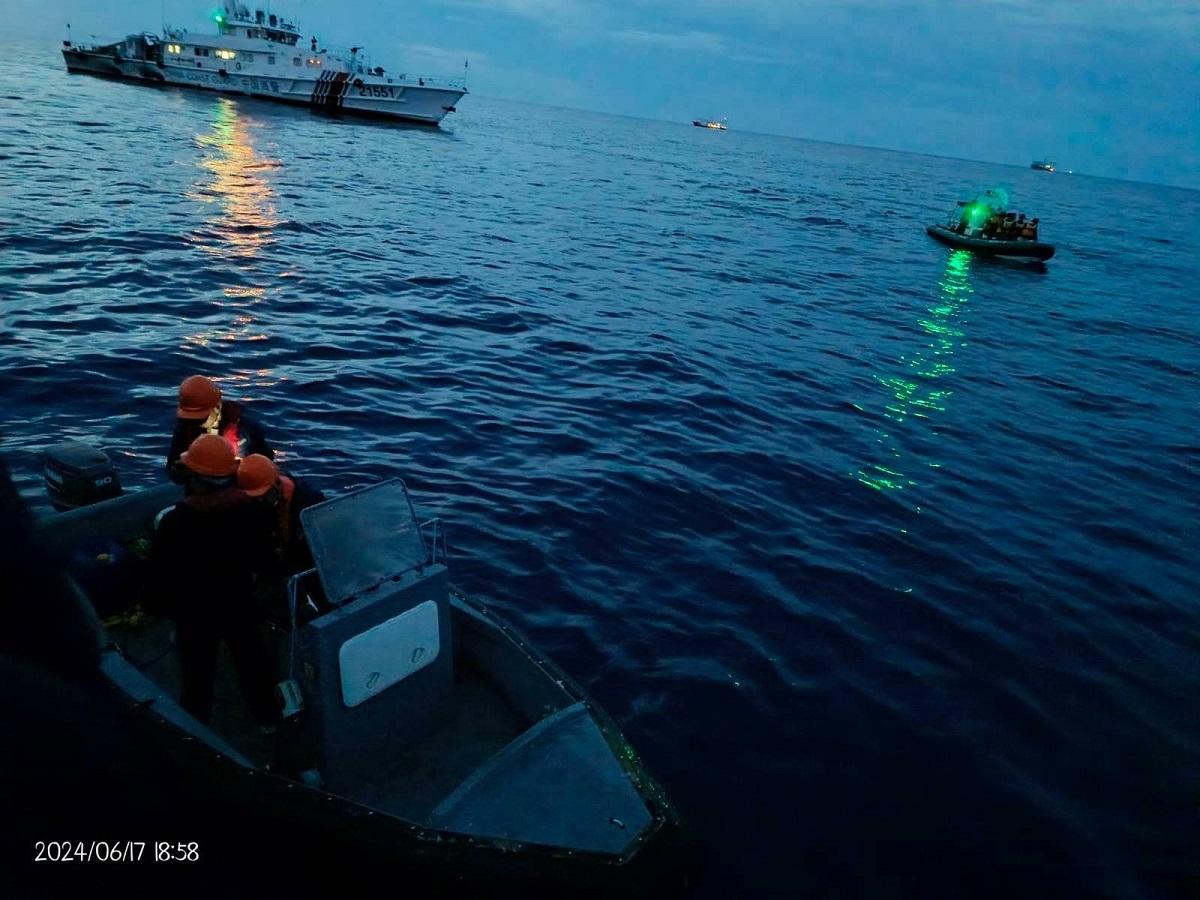
The Philippines said on Monday it would not send Navy ships to Panatag (Scarborough) Shoal, despite recent harassment by Chinese forces, since doing so would be seen as "warlike."
National Maritime Council (NMC) spokesperson Undersecretary Alexander Lopez said President Ferdinand Marcos Jr.'s directive is clear: the Philippines must not be the first to provoke.
“Unang-una, napakaliwanag ng directive ng ating Pangulo, whatever we do, we will not be the one to provoke,” Lopez said at the 2nd Quarter Maritime Council press conference.
(First of all, the President’s directive is very clear—whatever we do, we will not be the one to provoke.)
Lopez explained that China had previously deployed a People’s Liberation Army warship to the area, but the Philippines has consistently avoided sending its Navy vessel.
He noted that deploying a Navy vessel would amount to a “warlike” posture.
“Bakit? Kasi, once you deploy a Navy vessel there, you come in warlike. Parang nanunot siya ka, nangahamon ka. That is not the policy stance of our government,” he said.
(Why? Because once you deploy a Navy vessel there, you come in warlike. It’s like you’re challenging them. That is not the policy stance of our government.)
He added that such encounters could lead to misjudgment and miscalculation, which the Philippines wants to avoid.
“So, hindi tayo magpapabawak kasi we do not know what will happen if two Navy vessels are there. Kasi doon pwede mangyari ang miscalculation, misjudgment. And that is the thing that we do not want.”
(We will not escalate because we do not know what will happen if two Navy vessels are there. That’s where miscalculation and misjudgment could happen, and that is what we do not want.)
Lopez maintained that prudence, not weakness, drives the government’s stance, stressing that an escalation would harm not just Manila but also Beijing and the wider region.
“If ever it escalates, it is not in the best interest of our country. It is not even in the best interest of China for that matter or of the region. So, we might as well tone it down and bring it down to a level that we can manage.”
(If ever it escalates, it is not in the best interest of our country. It is not even in China’s best interest, nor for the region. So we might as well tone it down to a manageable level.)
Meanwhile, Philippine Coast Guard (PCG) spokesperson for the West Philippine Sea Commodore Jay Tarriela said contingency measures are in place should tensions further escalate.
“Well, what the government is doing, in particular the Philippine Coast Guard, is to make sure that we are deploying skippers of the vessels who are excellent in seamanship skills,” he said.
“Contingency measures or plans are in place. So, sinasabi naman na yung hope, but actually we are planning for the worst scenario,” he added.
(Contingency measures or plans are in place. People may say we are hoping, but actually we are planning for the worst scenario.)
“Whatever happens, actually our government is prepared for anything without going into the details.”
China claims almost the entire South China Sea, with Manila referring to parts of the waters within its exclusive economic zone as the West Philippine Sea.
Beijing’s heavily contested territorial claims in the SCS have led to multiple maritime incidents involving the Philippines over the years.
In 2016, an international arbitration tribunal in the Hague ruled that China's claims over the South China Sea had no legal basis, a decision Beijing does not recognize. —VBL, GMA Integrated News

