

 GMA Brandtalk
 Tracking
 Archives

Political dynasty ban should cover up to 2nd degree of consanguinity – Comelec
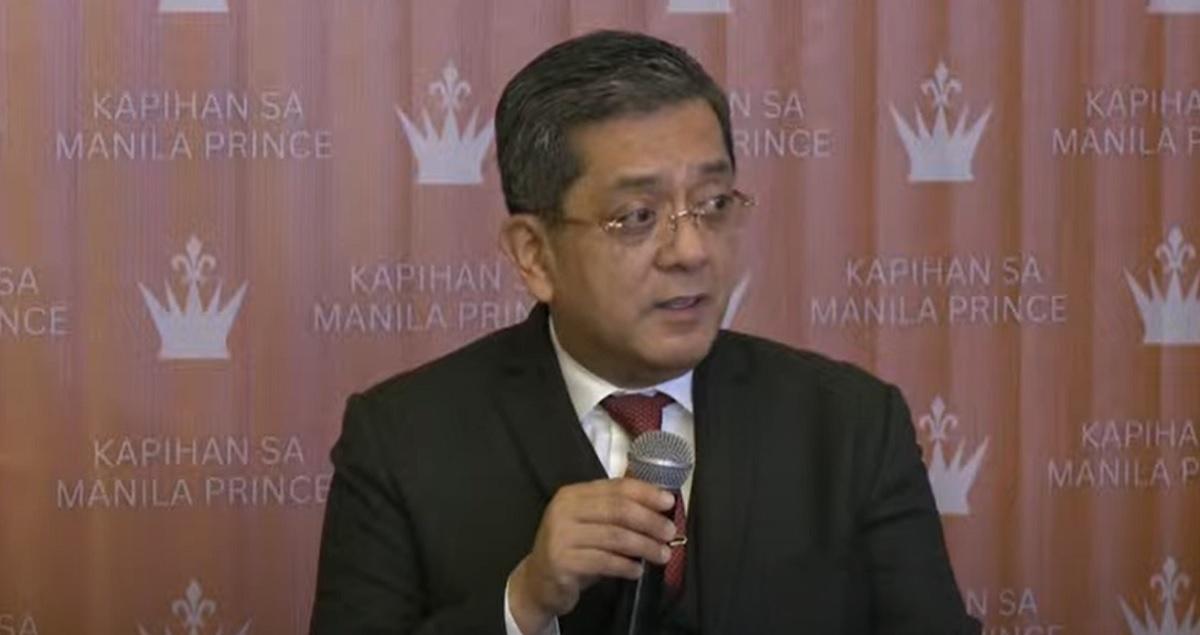
An anti-political dynasty law should prohibit family members of incumbent officials up to the second degree of consanguinity from seeking public office, the Commission on Elections (Comelec) said Tuesday.
“Sa amin pong palagay ang second degree of consanguinity ang mas practical at mas reasonable in order not to deprive others of the opportunity to run for public office,” Comelec Chairperson George Erwin Garcia said at a Senate committee on electoral reforms hearing.
(For the Comelec, the second degree of consanguinity is the more practical and reasonable option in order not to deprive others of the opportunity to run for public office.)
Second degree of consanguinity refers to blood relatives, including siblings, grandparents, grandchildren, aunts, uncles, nieces, and nephews.
“Kung magkakaroon tayo ng national policy at law sa political dynasties, at least yung second degree para consistent sa lahat. But again, ang issue na ito, the question of to what degree is a policy decision, and it is for Congress to determine,” said Garcia.
(If there will be a law and national policy on political dynasties, we want the second degree for consistency. But again, this issue is a policy decision, and it is for Congress to determine.)
Section 26 of the 1987 Constitution explicitly prohibits political dynasties in the country, but an enabling law has yet to be passed.
Nonetheless, efforts have been made to implement the provision.
Republic Act 10742 or the Sangguniang Kabataan (SK) Reform Law states that a candidate must not be related within the second civil degree of consanguinity or affinity to any incumbent elected official.
Likewise, the Bangsamoro Election Code imposed a ban on political dynasties.
According to the poll body, the Comelec “effectively implemented” the ban under the SK Reform Law, as at least 1,000 candidates were prohibited from running in the October 2023 polls due to the provision.
Garcia further proposed that legislators allow a registered voter as well as the Comelec to motu proprio initiate a petition to cancel the candidacy of erring aspirants.
The poll chief also urged lawmakers to clarify if violating the ban would be considered an election offense and its possible implication on nuisance candidates.
“Maganda ring mailagay natin sa batas na maliwanag that those who will be filing their candidacies in violation of the anti-political dynasty law shall be liable as an election offense, even including those who will be filing their candidacies as nuisance candidates,” he added.
(It would be better if the law would clarify if those who will be filing their candidacies in violation of the anti-political dynasty law shall be liable for an election offense, even including those who will be filing their candidacies as nuisance candidates.)
Lawyer Christian Monsod, one of the framers of the 1987 Constitution, proposed that aspirants must not be related within the third degree of consanguinity to any elected official.
“I think the Congress owes it to the people to pass an anti-dynasty law,” he said.
“When we were writing the Constitution, we trusted that Congress would carry out this mission and duty on their part and that the Congress would have the capability and the courage to change it as our democracy changes,” Monsod added. –VBL, GMA Integrated News

