

 GMA Brandtalk
 Tracking
 Archives

CHR: Police used Duterte-era policy to refuse access to drug war info
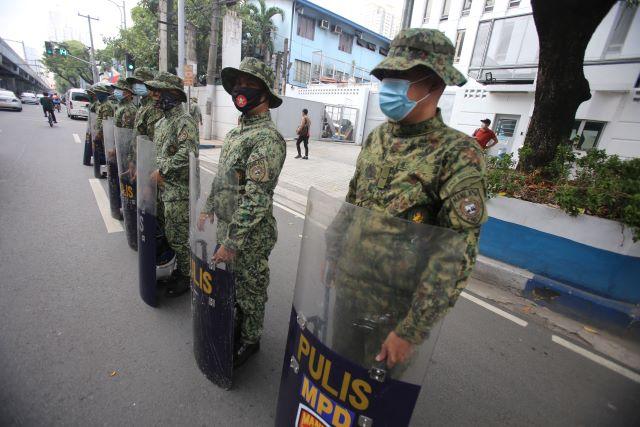
Police officers had invoked a policy established by the previous administration to withhold information about deaths linked to former President Rodrigo Duterte's war on drugs, the Commission on Human Rights (CHR) said on Tuesday.
At a hearing at the House of Representatives, Akbayan congressman Chel Diokno asked when the CHR Extrajudicial Killings Task Force would complete the investigation into the drug war and make recommendations regarding who should be held accountable.
CHR Chairperson Richard Palpal-latoc said they plan to come up with an initial report covering 400 cases in November, but "[the timeline on finishing our work] depends on the availability of evidence."
"We have been attending hearings in different fora, and our concern is that there are no available records being provided to us by different agencies, like, most especially, the PNP. That information is crucial to the investigation because from there we can identify who is involved and who failed to perform his or her duties," Palpal-latoc said during CHR's briefing on its proposed P1.24 billion budget for 2026.
“There are some [police] stations complying with the subpoena, your honor, but the majority…are still not complying with the subpoena. The legal defense of the Philippine National Police is the Executive Order No. 2 and the list of exceptions. Executive Order No. 2 is the freedom of information order issued by then-President Duterte, and there is a list of exceptions, which includes the police investigations as confidential,” he added.
In November 2016, then-Executive Secretary Salvador Medialdea issued a memorandum stating that one of the exceptions to the right to access information under EO No. 2 is "information concerning law enforcement and protection of public and personal safety."
The memo effectively prohibits the production of information that would interfere with enforcement proceedings, deprive a person of the right to a fair trial or an impartial adjudication, disclose the identity of a confidential source, and unjustifiably disclose investigative techniques and procedures.
Diokno, who questioned the legality of the drug war before the Supreme Court, urged the CHR to ask the courts to cite the police in contempt if they keep using the Duterte-era FOI policy to refuse access to drug war records.
“I certainly agree that you need to get those documents from the PNP because you [are investigating] at least 4,000 persons who were killed during police operations. For those cases, you do not need witnesses. The police reports themselves contain admissions of who committed the killing under what circumstances allegedly. Nanlaban daw. (The drug suspects allegedly resisted arrest),” Diokno said.
“That [admission] is sufficient to at least conduct the investigation and come up with conclusions. To me, that [invocation of an FOI EO] is totally unacceptable [reason for delay in your work]. I would recommend that appropriate cases be filed in court to declare in contempt those who are not cooperating with the commission because this is a very, very important issue when we talk about accountability of public officials,” he added.
Palpal-latoc agreed, saying, “We will be looking into that remedy as part of the strategy of the commission.” —VBL, GMA Integrated News

