

 GMA Brandtalk
 Tracking
 Archives

2.3 million Filipino students benefit from free college — CHED
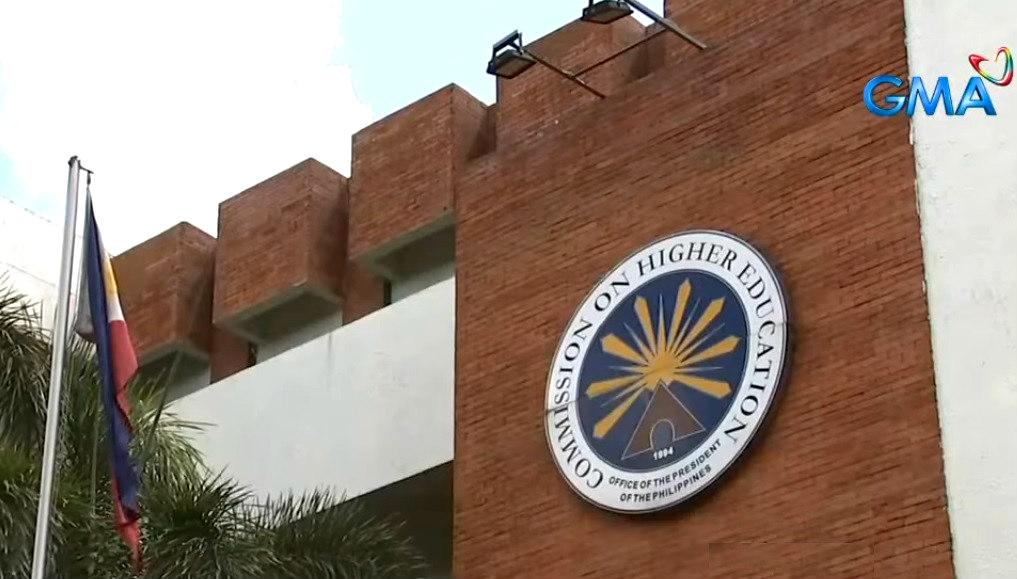
The Commission on Higher Education (CHED) reported that more than 2.3 million students are currently benefiting from the government’s free higher education program, while 713,000 learners are receiving subsidies to support their studies.
CHED chairperson Shirley Agrupis told senators during a hearing on Wednesday that the program, anchored on the Universal Access to Quality Tertiary Education Act (Republic Act 10931), remains a cornerstone of government investment in higher learning.
She explained that while there are 179 local universities and colleges (LUCs) across the country, only 101 of these institutions qualify for free tuition coverage since they have submitted to CHED’s quality assurance standards.
Along with state universities and colleges (SUCs), these schools make up the 2.3 million beneficiaries of free higher education.
Agrupis also highlighted the reach of the Tertiary Education Subsidy (TES), a key component of RA 10931.
For academic year 2023–2024, 713,000 students received assistance through the TES program, distributed across three categories: the Listahanan and 4Ps beneficiaries identified by the Department of Social Welfare and Development (DSWD), and the PNSL or “program of no SUCs/LUCs” which prioritizes students in provinces without public higher education institutions.
She noted that while SUCs and LUCs are prioritized, private higher education institutions also receive subsidy support in underserved areas to ensure that no student is left behind.
CHED data further showed that private higher education institutions continue to dominate overall enrollment, but interest in critical sectors such as agriculture, fisheries, veterinary studies, and natural sciences is rising — programs that are vital for food security and national development.
The CHED chief also reported a surge in the number of college graduates, from just 277,000 in 2020–2021 to 805,000 in 2023–2024. However, she cautioned that quantity must translate to quality.
“We do not lack graduates, but we lack graduates who have the commitment to serve our nation,” Agrupis said.
Meanwhile, student participation in higher education has grown to 68.12 percent, placing the Philippines second in ASEAN after Singapore.
Despite these gains, Agrupis admitted CHED faces structural and manpower constraints. The agency oversees 5.2 million students, nearly 2,000 higher education institutions, and 9,000 degree programs nationwide with only 700 plantilla staff, augmented by contract-of-service and job order personnel.
She added that CHED is undertaking strategic planning to address challenges such as the fragmented education system, lack of centralized workforce data, and an outdated organizational structure. —LDF, GMA Integrated News

