

 GMA Brandtalk
 Tracking
 Archives

China can't stop PH from asserting rights in WPS —Palace
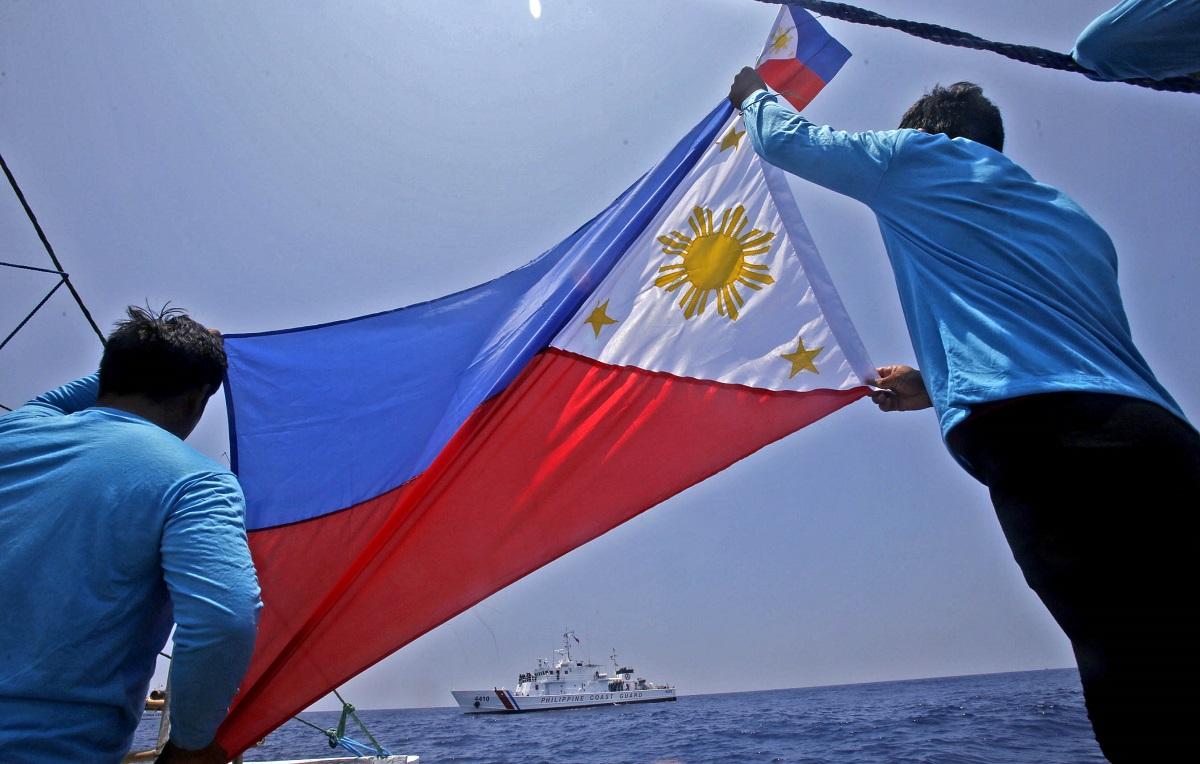
Malacañang said Friday that China cannot stop the Philippines from asserting its rights in the West Philippine Sea.
During a press briefing, Palace Press Officer Undersecretary Atty. Claire Castro was asked for comment on the Chinese Ministry of Defense's statement, saying that the Philippines is a ''disruptor and troublemaker'' in the region following the Philippines and Australia's military activities.
''We cannot stop China from making its own narrative. But they cannot also stop us from fighting for our rights based on laws, UNCLOS, arbitral ruling, and for our being [an] independent country,'' Castro said.The Armed Forces of the Philippines (AFP) and Australian Defence Force (ADC) had conducted live fire drills at Fort Magsaysay, Nueva Ecija as part of the ongoing Exercise Amphibious Land Operation (ALON) 2025.
As part of the training, the Philippine Army employed a self-propelled ATMOS 155mm battery while the Australian Army demonstrated its M777A2 155mm howitzers, Australian Light Armored Vehicle, Javelin Anti-Tank Missile Launchers, MK47 Grenade Launchers, M2 QCB Machine Guns, Blazer 2 Sniper Rifles, AW50F Anti-Material Rifles and Mag58 General Purpose Machine Guns.
More than 3,600 troops from the Philippines, Australia, the United States, and Canada are participating in the exercises that started last August 15 and are being conducted in the joint operational area of the Armed Forces of the Philippines’ Northern Luzon Command and Western Command.
China’s Ministry of National Defense also earlied warned the Philippines of “consequences” over Manila’s alleged hyping up of incidents, provocations, and infringements in Ayungin Shoal.
"The Philippines should immediately stop making provocations and infringements and stop hyping up incidents. Otherwise, all consequences arising therefrom should be borne by itself,” said Chinese defense spokesperson Senior Colonel Zhang Xiaogang in a press conference in Beijing.
Tensions continue as Beijing claims almost all of the South China Sea, a conduit for more than $3 trillion of annual shipborne commerce, including parts claimed by the Philippines, Vietnam, Indonesia, Malaysia, and Brunei.
Parts of the South China Sea that fall within Philippine territory have been renamed by the government as the West Philippine Sea to reinforce the country's claim.
The West Philippine Sea refers to the maritime areas on the western side of the Philippine archipelago including Luzon Sea and the waters around, within and adjacent to the Kalayaan Island Group and Bajo de Masinloc.
In 2016, the Permanent Court of Arbitration in the Hague ruled in favor of the Philippines over China's claims in the South China Sea, saying that it had "no legal basis."
China, however, refused to recognize the decision and continued its hostile actions in the region. —VAL, GMA Integrated News

