

 GMA Brandtalk
 Tracking
 Archives

Comelec says outdated laws limit its power vs. overspending, partylist abuse
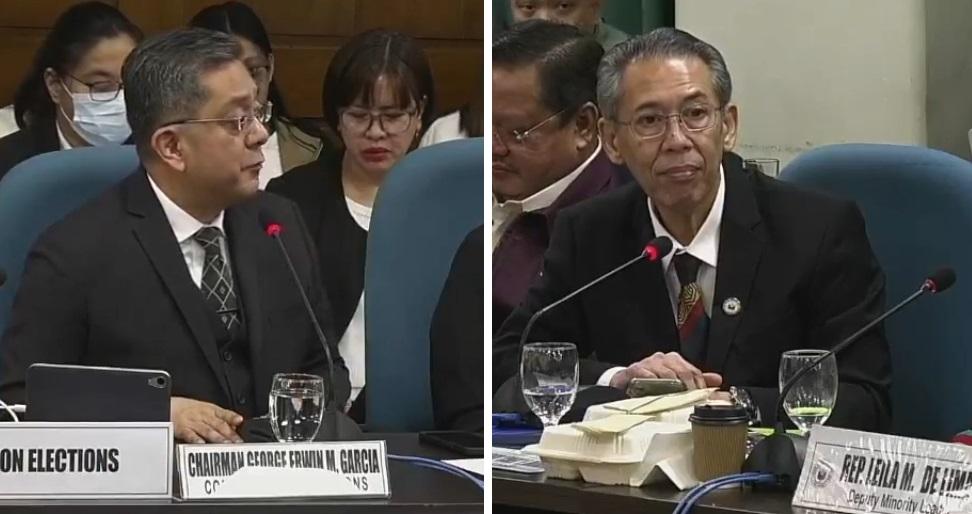
The Philippines' election laws are outdated and limit Comelec's authority to combat overspending and political dynasties' infiltration of the party-list system, the commission's chairman said Monday.
During the House Appropriations Committee's budget deliberations on the Commission on Elections’ proposed P11.5-billion budget for 2026, Chairman George Garcia pointed to the election laws when Akbayan party-list Representative Chel Diokno asked whether Comelec is fulfilling its mandate of ensuring free and fair elections when moneyed candidates tend to dominate their opponents.
Garcia said that the Omnibus Election Code, the Fair Elections Act, the Automated Elections Law and the Party-list Law in their current state hamper Comelec’s authority to address, if not sanction, the overspending of candidates during the campaign and pre-campaign period, and wealthy or dynastic candidates' entry into the party-list system.
In addition, Garcia said that these decades-old legislations have resulted in the Supreme Court legislating, rather than clarifying election laws.
“Our Omnibus Election Code was passed in 1985. Our Automated Election Law was passed in 2007. The party-list law is also more than 20 yeas old. Our Fair Elections Act is also almost 20 years old. Ang pinaka-latest na pong election law ay ‘yung pag-postpone ng [barangay and Sangguniang Kabataan] elections. It [really] requires [amendment of] legislation,” Garcia said.
“We're going to submit again to Congress this 20th Congress the 963 pages of the proposed...revised Omnibus Election Code. We're hoping that the 20th Congress will be able to pass it because this contains the necessary modifications, amendments that need to ensure equal opportunity for all,” he added.
Garcia then said that certain Supreme Court decisions greatly limit Comelec's authority and thus undermine the election process, citing Peñera v. Comelec (an individual is considered a candidate only once the campaign period starts) and Banat v. Comelec (an individual with a mere "proven advocacy" is already eligible to be party-list nominee).
“In several instances, the Supreme Court is forced to commit judicial legislation [because of outdated election laws]. This is what the European Union also observed. The problem is systemic. Modesty aside, they did not put the blame on Comelec [because] we wanted to enforce and implement [reforms],” Garcia said, referring to the findings of EU poll observers who were deployed to the country to observe the conduct of the 2025 midterm polls.
“So it really lies with legislation, with all due respect,” he added.
Diokno, for his part, said Congress should heed Garcia’s call for election reforms.
“This is a big wake-up call for Congress. Unless we fix our election laws, 'yung bilyon-bilyong na budget na ibinibigay po ng pamahalaan sa Comelec ay magagamit 'yun para panatilihin ang isang hindi patas at hindi pantay na eleksyon,” Diokno, a human rights lawyer, said.
“Our Constitution provides that we must have free, honest, and fair elections. But until these inequalities are corrected, we will continue to be spending billions of pesos in a situation which is not free, fair, and honest,” he added. — BM, GMA Integrated News

