

 GMA Brandtalk
 Tracking
 Archives

Senators want flood control funds diverted to classrooms, repairs
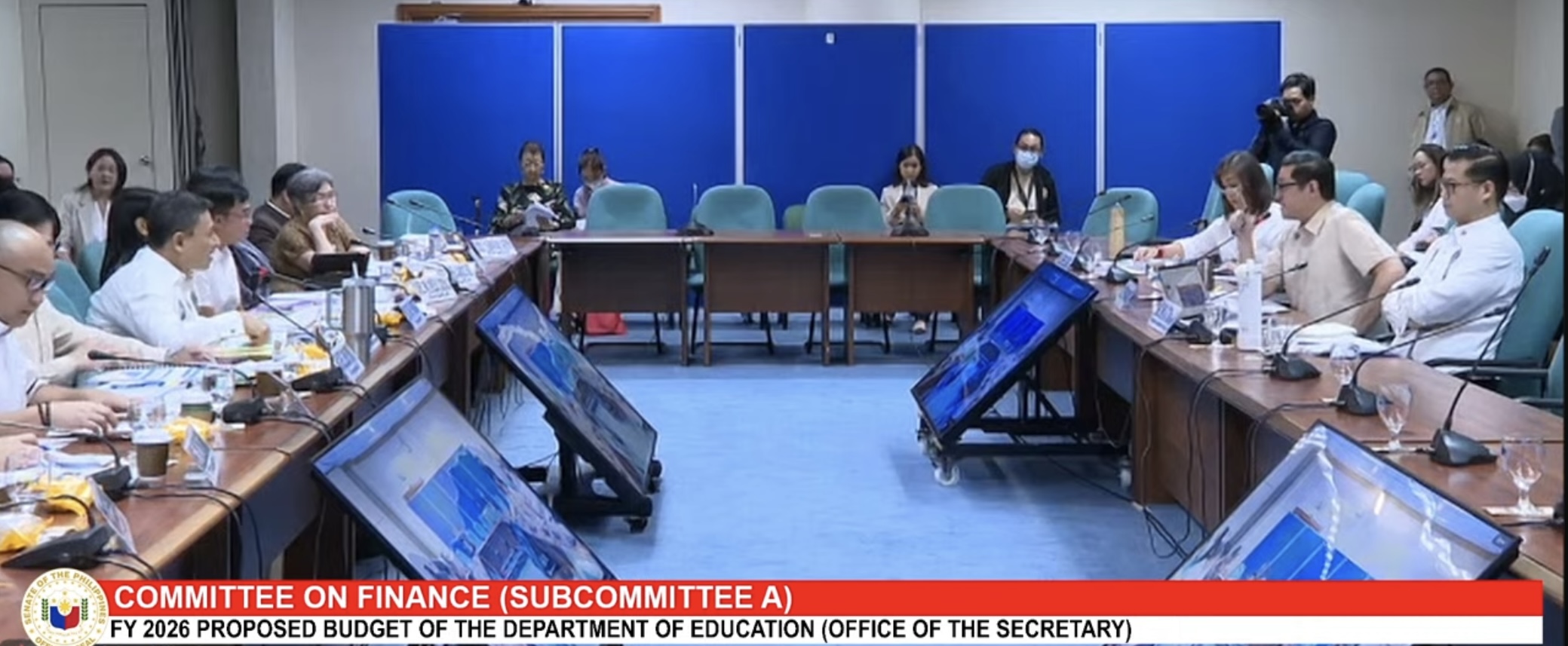
Senators on Tuesday called for the realignment of government funds for flood control projects to classrooms and school repairs as the Department of Education faces a massive backlog.
Senate Majority Leader Juan Miguel Zubiri threw his full support behind Education Secretary Sonny Angara, saying the budget must reflect education as the government’s top priority.
“Tama 'yung sinabi ni Chairman Bam (Aquino) at ni Chairman Sherwin (Gatchalian), dapat talaga ang mga kalokohan na flood control, ilipat na lang natin sa classroom building program,” Zubiri said during the Senate hearing on the proposed 2026 budget of DepEd.
(Chairmen Bam and Sherwin are right, the fund for unnecessary flood control projects should be transferred to classroom building programs.)
Senator Sherwin Gatchalian agreed, describing classroom construction as straightforward and far less complex than major infrastructure.
“It’s just classrooms. They’re not building a railway, they’re not building complicated projects. It’s just boxes nationwide,” he said.
Zubiri also expressed frustration that many classrooms, damaged by typhoons, remain unused despite still being structurally sound.
“Sayang kasi hindi magamit, pero ang structure maganda pa. So kung na-repair natin siya, it’s like additional classrooms,” Zubiri said.
(It’s a waste that they cannot be used, even if the structure is still intact. If we repair them, it’s like gaining additional classrooms.)
“May ibang mga nasirang classroom, konting repair, parang brand new na siya. Kasi 'yung structure niya maayos pa. 'Yung mga bubong lang, 'yung mga pinto,” Zubiri said.
(Some classrooms just need minor repairs to be as good as new, since the structure is still intact. Only the roof or doors need fixing.)
He added that minor repairs could make many facilities usable again, easing the classroom shortage.
Angara admitted the repair budget decrease each year and depends on actual utilization.
Currently, DepEd has requested only P5.4 billion for repairs in 2026—far below the P132 billion needed. Angara admitted the repair budget has been inconsistent through the years.
“The classroom repair budget, rollercoaster rin siya. Minsan marami, minsan konti. It’s also dependent on the utilization,” Angara said.
(The classroom repair budget has also been a rollercoaster—sometimes large, sometimes small. It also depends on utilization.)
Lawmakers stressed that redirecting underutilized flood control allocations could cover both new classrooms and major repairs, helping DepEd bridge gaps faster.
At the budget hearing, the Education Department also highlighted that it is turning to public-private partnerships (PPP) to accelerate classroom construction and reduce costs.
Undersecretary Ronald Mendoza said the PPP model would allow the government to lease classrooms for 10 years before ownership is transferred to DepEd. Unlike traditional procurement, PPPs incentivize private builders to finish quickly.
“Once the contract is given, the classrooms are built very, very quickly because the private sector has every incentive to build them quickly so that they can get paid,” Mendoza explained.
He noted that PPP classrooms could be completed within one to two years, compared to three to four years under conventional procurement. Bulk construction would also drive down costs.
“PPP should be the lowest price because they are producing in bulk,” he said.
Sen. Sherwin Gatchalian said the approach could help address the shortage without unnecessary delays.
“It’s really just front-loading. The task is nothing complicated—it’s just classrooms,” Gatchalian said.
Mendoza added that PPPs ensure better transparency and governance, making each peso spent more efficient in reducing the classroom deficit.—AOL, GMA Integrated News

