

 GMA Brandtalk
 Tracking
 Archives

Balisacan open to publication of contractor blacklist
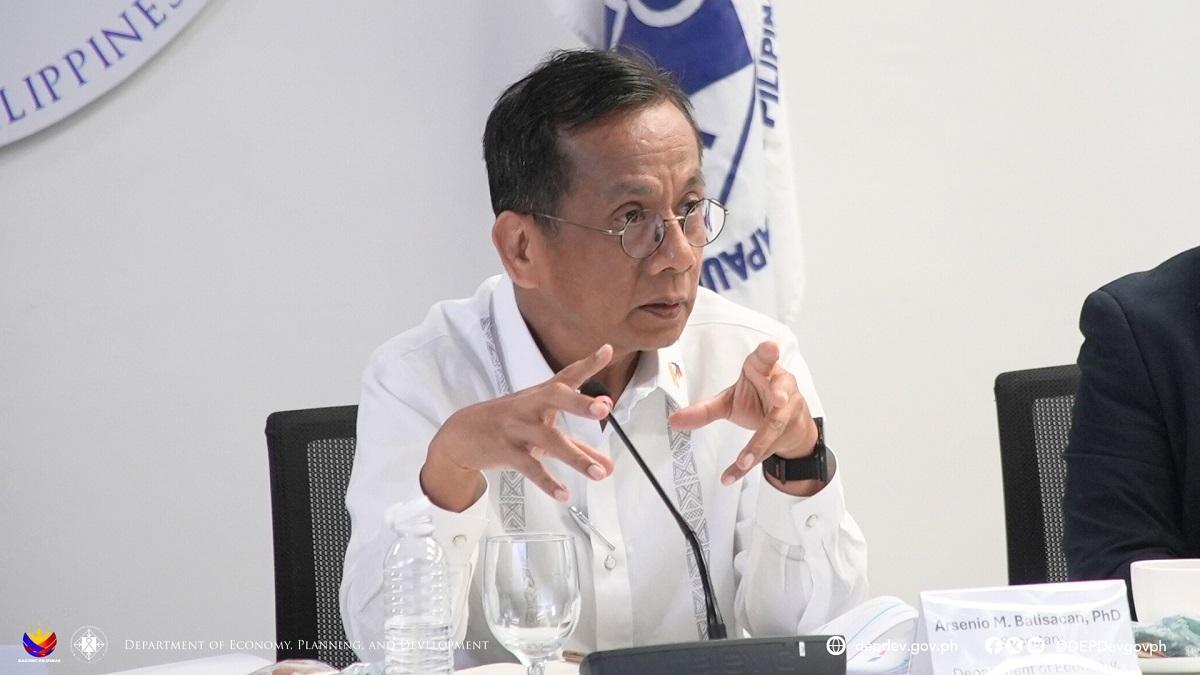
Economy Secretary Arsenio Balisacan expressed openness Monday to the release of a blacklist of government contractors involved in anomalies.
“I think that the public being aware of what is a good partner and a bad partner should be part of that accountability mechanism that needs to be put in place,” Balisacan told reporters in a press conference in Mandaluyong City.
Balisacan expressed hope that the corruption concerns plaguing the Philippines are only temporary, as he said measures are now being taken to improve transparency, including releasing a public list of ‘bad’ private sector partners.
He said that while corruption issues have hit government spending on infrastructure projects, steps are being made in the Investment Coordination Committee (ICC) to enhance the efficiency and turnaround of projects, and push for more monitoring.
“These corruption issues, we hope that that is a temporary thing. As I said, we expect to come up with measures that will improve the governance of our public spending and that the cost, short-term cost, is compensated by a much improved environment for the medium-term and long-term investment. I think that’s not necessarily bad,” he said.
Among the measures Balisacan cited is the possible release of a blacklist of anomalous government contractors, and the embedment of impact and monitoring evaluation of projects, which he said could potentially save the government from costly mistakes.
Several investigations are currently being made on government infrastructure projects, particularly on flood control, as President Ferdinand “Bongbong” Marcos Jr. earlier bared that 20% of the total P545-billion budget for such projects went to only 15 contractors, which he described as a “disturbing assessment.”
Data from the Department of Budget and Management showed that government infrastructure spending fell by 25% in July, dragged by the slow disbursements from the Department of Public Works and Highways, which is under scrutiny due to the corruption issues.
Balisacan noted, however, that government spending contributes only about 15% of the economy, which remains largely driven by the private sector.
“Our economy is very much a private economy… What is critical is the enabling environment that government influences in terms of how the private sector economy works, and so that’s what we are even more concerned about,” he said.
Philippine economic growth was recorded by 5.4% in the first quarter, and at 5.5% in the second quarter. The government’s economic team has set a target of 5.5% to 6.5% for this year.
“Let us clarify that the slowdown, the reduced growth rates achieved in the last two quarters, are not entirely due to domestic factors. The global economy has deteriorated… because of the elevated uncertainty in the global economy that impact the flow of goods, trade, investment, and so on, so we are not completely isolated from those developments,” Balisacan said.
“In fact, if you look at the last couple of years, it is the trade deficit that is impacting on our growth, not so much the domestic performance of the various sectors. Having said that, there are positive forces that we are seeing in the economy,” he added, noting the slowdown in inflation.
Inflation clocked in at 1.5% in August, faster than the 0.9% in July, but slower than the 3.3% in August 2024. Figures for September are scheduled to be released on Tuesday, October 7, 2025.
When asked if the corruption concerns could impact the Philippines’ target to hit upper-middle-income country (UMIC) status, the World Bank said it still believes this could be achieved in the coming years, and steps being taken could provide opportunities for the country.
“I think I would say that it’s a good opportunity for the country to increase transparency, increase institutions to prevent corruption, monitor, and enforce good governance, and that should increase the investment environment and appetite for investment, and that should support long-term growth,” World Bank division director for the Philippines Zafer Mustafao?lu said in the same briefing.
The World Bank in June said it expects the Philippines to hit UMIC status in 2027, longer than expected, due to global uncertainties.
The country remains a lower-middle-income economy for the fiscal year 2026, as its gross national income (GNI) per capita in 2024 stood at $4,470, short of the $4,495 threshold to be classified as UMIC.
“On the growth, Philippines is growing relatively fast and is one of the fastest growing countries in East Asia, and it’s very close to the upper-middle-income country threshold,” Mustafao?lu said.
“Philippines is very close to achieve that, and we expect the Philippines to achieve that in the coming few years,” he added. —AOL, GMA Integrated News

