

 GMA Brandtalk
 Tracking
 Archives

DA urges Congress to increase crop insurance subsidy to P8B for 2026
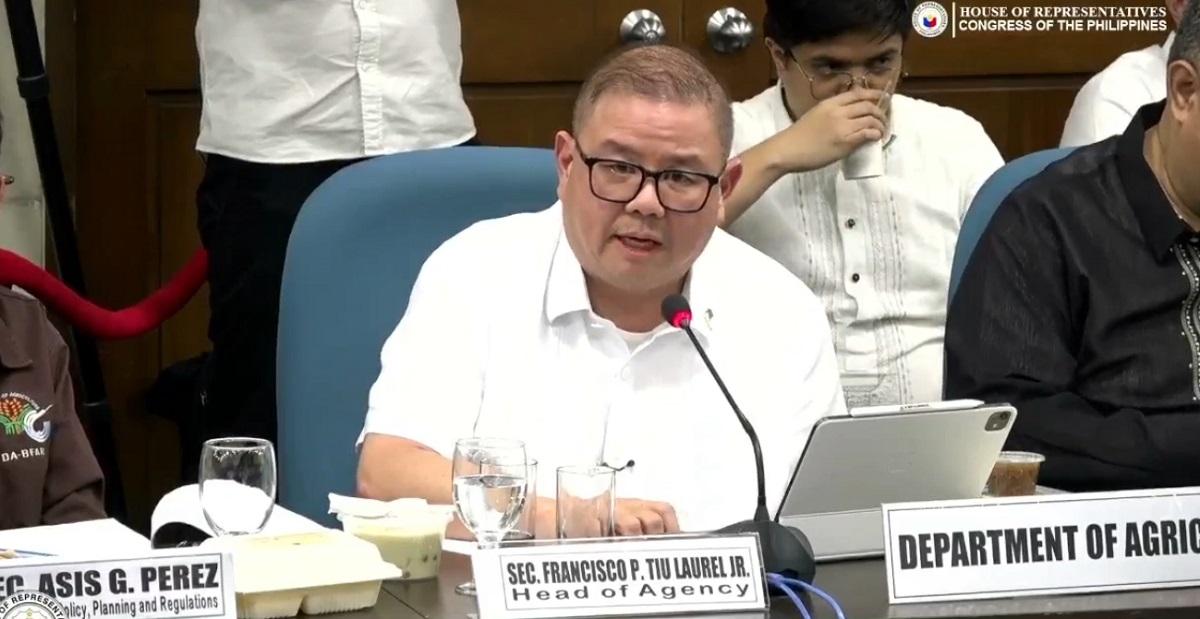
Agriculture Secretary Francisco Tiu Laurel Jr. is calling on Congress to increase the government’s crop insurance subsidy to P8 billion as the Department of Agriculture aims to expand its coverage for up to 4.2 million agricultural workers by 2026.
In a statement on Tuesday, Tiu Laurel said that only 2.3 million farmers are insured under the Philippine Crop Insurance Corporation, with rice farmers accounting for the lion’s share at 1.25 million.
The Agriculture chief said that under the proposed 2026 General Appropriations Act, the PCIC’s subsidy remains at P4.5 billion—the same level since 2022.
“PCIC’s current subsidy level is simply inadequate. We need to insure more farmers at realistic levels that reflect the true cost of production, especially as climate change and market volatility continue to impact the sector,” said Tiu Laurel.
“To insure 4.2 million farmers, we need about P8 billion. That means we’re short by P3.5 billion. Of the 4.2 million farmers we aim to cover, 2.2 million will be rice farmers—an increase of nearly a million from the current number,” he said.
Not enough
During the joint hearing of the House committee on agriculture and food and committee on ways and means, Rep. Brian Poe asked if the initial House proposal of P1 billion additional fund for crop insurance is enough.
“Sapat po ba ito or magkano po ang talagang kailangan natin para sa crop insurance program (Is it enough or how much do we really need for the crop insurance program), Mr. Chair?” he said.

Tiu Laurel replied that technically, it is not enough as only P20,000 in coverage is provided against actual costs of P60,000 and only two million of four million farmers are covered.
He said P1 billion would help a lot but DA needs “a total of P8 billion, so additional P4 billion.”
The DA chief said that the “stagnant” funding undermines the government’s ability to protect farmers from mounting risks.
He underscored that expanding insurance coverage is a strategic investment in the country’s food security.
“Crop insurance isn’t just a financial product—it’s a critical lifeline. When typhoons, droughts, or pest outbreaks hit, insured farmers can recover faster and get back to planting. Without it, many are left in debt or forced to abandon farming altogether,” Tiu Laurel said.
The PCIC provides a maximum coverage of just P20,000 per hectare for rice farmers, accounting for a third of the estimated average production cost of P60,000 per hectare.
By boosting PCIC’s capacity, the Agriculture chief said the government can provide a stronger safety net for smallholder farmers—especially rice producers—who face the dual burden of rising input costs and increasingly unpredictable weather patterns.
Tiu Laurel called on lawmakers to prioritize agricultural resilience in the national budget, pointing out that a well-funded insurance system is essential for stabilizing rural incomes, encouraging continued production, and safeguarding the country’s food supply.
Poe also mentioned during the hearing the key House budget amendments that “directly address the challenges and concerns of the Department of Agriculture.”
“One is the NFA capacity and constraints, and the second is weather-related impacts. In the amendments proposed here in the House, I believe we set aside about P8 billion for NFA… for the establishment, repair, and rehab of post-harvest facilities and transport equipment,” he said, later stating that it is P8.69 billion.
He also raised concerns about farmer access to capital, noting many have to borrow from unfair sources and are now deep in debt. He also said that the Agrisenso (formerly Sikat Saka) application process is strict and hard for the farmers.
Poe urged the DA and NFA to push the amendments given to them by the House throughout the entire budget process. —AOL, GMA Integrated News

