

 GMA Brandtalk
 Tracking
 Archives

PH hits back at 'some countries' for 'erroneous' opinion on its WPS claim
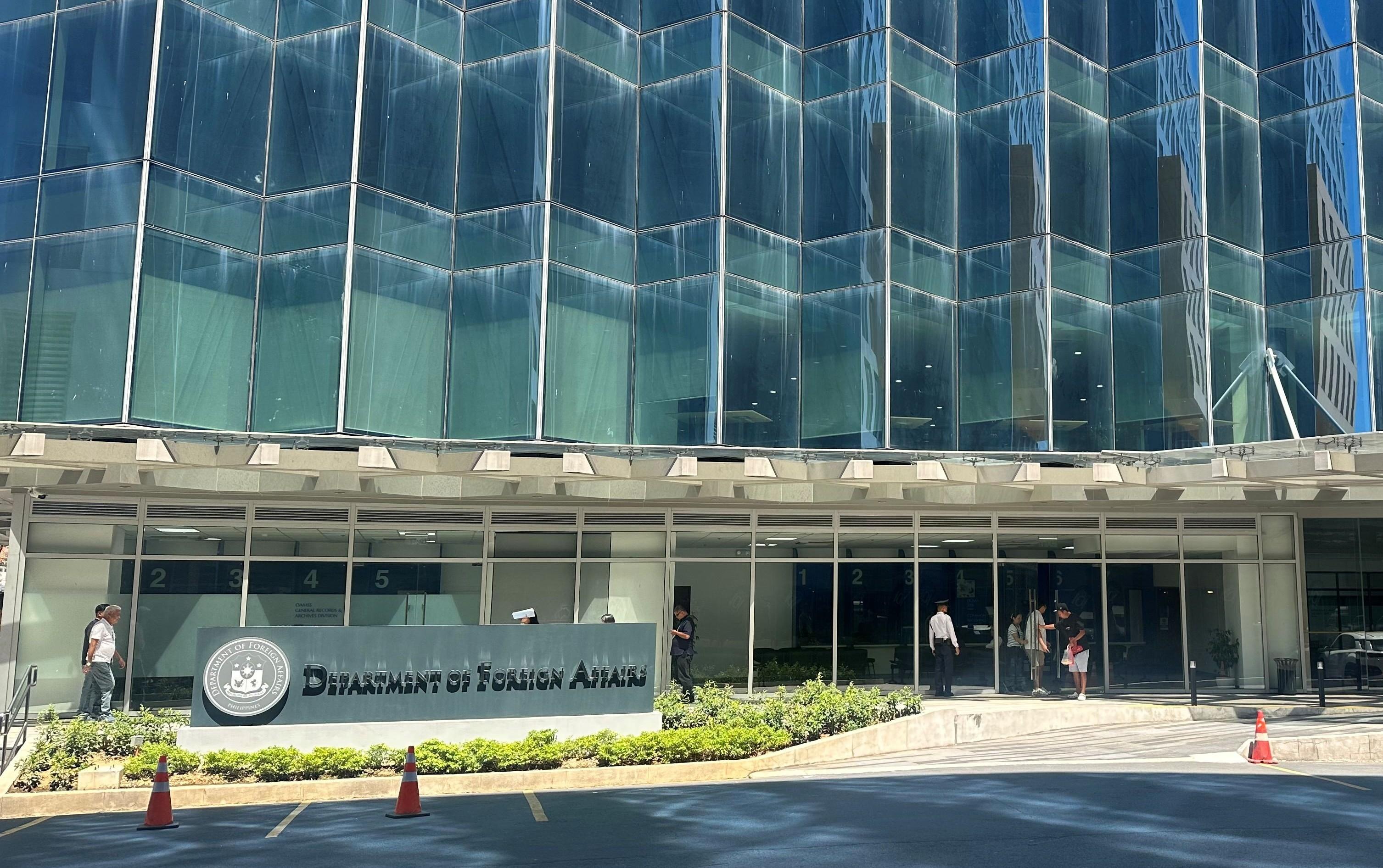
The Philippines on Monday accused "some countries" for its inaccurate and "erroneous" opinion on the extent of its territory, specifically in the West Philippine Sea, stressing that its claim is recognized under international laws and treaties.
Manila did not name the said countries, but issued a statement through the Philippine Department of Foreign Affairs, to reiterate its position that it has sovereignty over the waters, which is also being claimed by China.
"Some countries have been articulating an erroneous opinion that intentionally misreads certain treaties upon which the extent of Philippine territory is partly based," the DFA said, citing the Treaty of Paris and Treaty of Washington as examples.
The Treaty of Paris between Spain and the United States,, the December10, 1898 peace accord that ended the Spanish-American War and ceded Spain's control over the Philippines to the US, "crystallized our islands into a cohesive whole," the DFA said.
On the other hand, the Treaty of Washington in 1900 "clarified that the extent of our sovereignty and our patrimony transcends the lines set by international powers."
As such, the DFA said the country's sovereignty over its archipelago and other territories, including Bajo de Masinloc or Scarborough Shoal and the high-tide features of the Kalayaan Island Group (KIG), "is incontrovertible and firmly founded on international law, legal principles, effective control, and recognition through international treaties and agreements."
Moreover, the DFA said other agreements, such as the 1930 US-Great Britain Treaty, "clearly and firmly state the extent of Philippine territory as well as their meaning derived from the concrete and consistent demonstrations of sovereign authority and jurisdiction exercised by the Philippines over its territory through the centuries."
On the other hand, the 1935, 1973 and 1987 Constitutions of the Philippines, "taken together, are clear on the legal bases and extent of the Philippine national territory," the DFA said.
China, Taiwan and four Association of Southeast Asian Nations (ASEAN) members Philippines, Vietnam, Brunei, and Malaysia lay claim on parts or virtually the entire contested region, islands and reefs where undersea gas deposits have been discovered in several areas. Oil and gas explorations have been planned in other offshore areas.
The South China Sea territorial disputes are crucial to Asian and Western governments, which use the strategic waters to transport their oil and other inputs that power their economies.
Beijing has aggressively asserted sovereignty over most of the waters and accused smaller claimant states, such as the Philippines, of intruding into its territories.
Chinese Coast Guard, Navy and suspected maritime militia ships have used high-pressure water cannons and dangerous maritime maneuvers to Philippine ships or vessels China has accused of entering its territorial waters illegally.
"The Philippines will continue to remain vigilant against attempts to misinform the general public. It will continue to assert and preserve its territorial integrity, and strongly uphold its sovereignty, sovereign rights and jurisdiction in accordance with international law," the DFA said.
Western and regional powers led by Philippine ally, US, have frequently denounced China for its coercive and illegal actions in the West Philippine Sea, that part of the South China Sea that is nearest to the Philippines' archipelago. — RSJ, GMA Integrated News

