

 GMA Brandtalk
 Tracking
 Archives

DepEd launches digital planning web tool, safety guidebook for disaster resilience
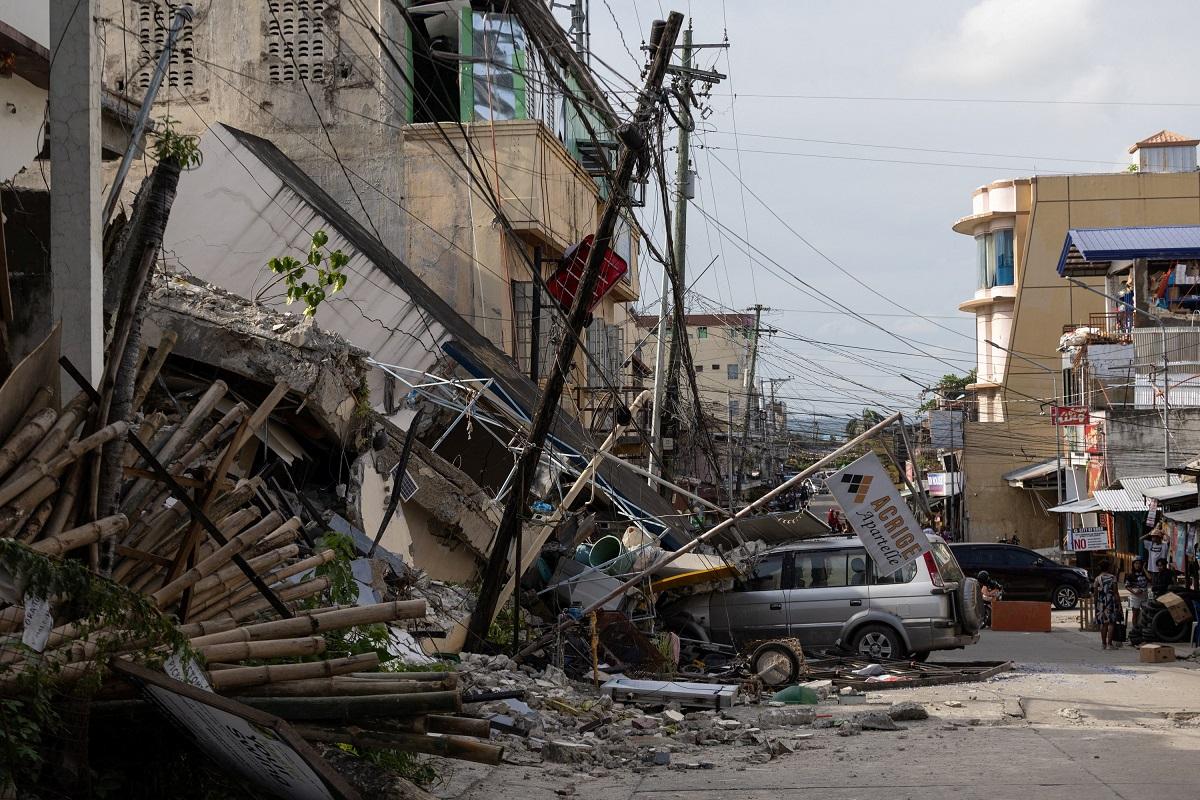
Following the 6.9-magnitude earthquake that struck Bogo City, Cebu, the Department of Education (DepEd) has reinforced its disaster preparedness and response systems by tapping new tools and facilities aimed at strengthening education resilience.
“Sa utos na rin ni Pangulong Bongbong Marcos, ang pokus natin ay kahandaan. Kailangan nating masiguro na makakaresponde ang ating mga paaralan na protektahan ang mga mag-aaral at maipagpatuloy ang edukasyon bago, habang, at matapos ang anumang sakuna,” Education Secretary Sonny Angara said.
(As directed by President Bongbong Marcos, our focus is preparedness. We must ensure that our schools can respond to protect learners and continue education before, during, and after any disaster.)
As response efforts continue in the wake of the powerful tremor, DepEd is also shifting its focus from rapid relief to long-term preparedness.
Among its major initiatives is PlanSmart for Safe Schools, a web-based contingency planning application developed with support from the Department of Science and Technology–Philippine Institute of Volcanology and Seismology (DOST–Phivolcs) and the World Bank.
The platform integrates hazard and risk data from the GeoRiskPH system, enabling schools to create evidence-based contingency plans aligned with the standards of the Office of Civil Defense (OCD) and the National Disaster Risk Reduction and Management Council (NDRRMC).
To build the capacity of school heads and disaster risk reduction and management (DRRM) coordinators, a series of training sessions will begin in November 2025 for 3,012 schools in the Greater Metro Manila area prior to its nationwide rollout.
In addition, DepEd will pilot the M7X School Ready Program, an initiative aimed at strengthening earthquake preparedness in public schools and DepEd offices.
Recognizing the imminent threat of a 7.2-magnitude earthquake along the West Valley Fault (WVF), the program introduces a certification system that awards the M7.2 Ready School Seal to schools that comply with the checklist on both structural safety and non-structural preparedness.
The pilot phase will prioritize schools in Metro Manila, Region III, and Region IV-A that are situated along or near the WVF.
DepEd also introduced the Pillar 1: Safer Learning Facilities Guidebook, a reference manual promoting resilient design, safe site selection, and maintenance practices in line with the Comprehensive School Safety (CSS) Framework and the Sendai Framework for Disaster Risk Reduction.
Developed in collaboration with UNICEF and Good Neighbors International Philippines, the guidebook empowers schools to adopt inclusive, climate-resilient, and child-safe construction standards.
To sustain learning in disaster-affected areas, DepEd also rolled out Upgraded Temporary Learning Spaces (UTLS) — improved modular classrooms designed to support continued education while permanent school structures undergo repair or reconstruction.
These initiatives were revealed during the National DRRM x CCA Summit 2025 held in Makati City this October, with the theme "EduResilience 2025: Strengthening Learning Continuity and Climate Resilience in Basic Education."
DepEd Region VII Director Salustiano Jimenez said the total damage to schools across Cebu as a result of last week’s earthquake is projected to exceed P1 billion.
More than 50,000 learners and over 1,400 teaching and non-teaching personnel were affected by the earthquake, including nearly 900 in hard-hit Bogo City.
“Ang kahandaan ang pundasyon ng katatagan. Kapag may sapat na kagamitan, pagsasanay, at pasilidad ang ating mga paaralan, makakatiyak tayo na magpapatuloy ang pag-aaral kahit sa gitna ng sakuna,” Angara added.
(Preparedness is the foundation of resilience. When our schools have the necessary tools, training, and facilities, we can be confident that learning will continue even in times of disaster.) — JMA, GMA Integrated News

