

 GMA Brandtalk
 Tracking
 Archives

Officials urge strict enforcement of disaster, building codes
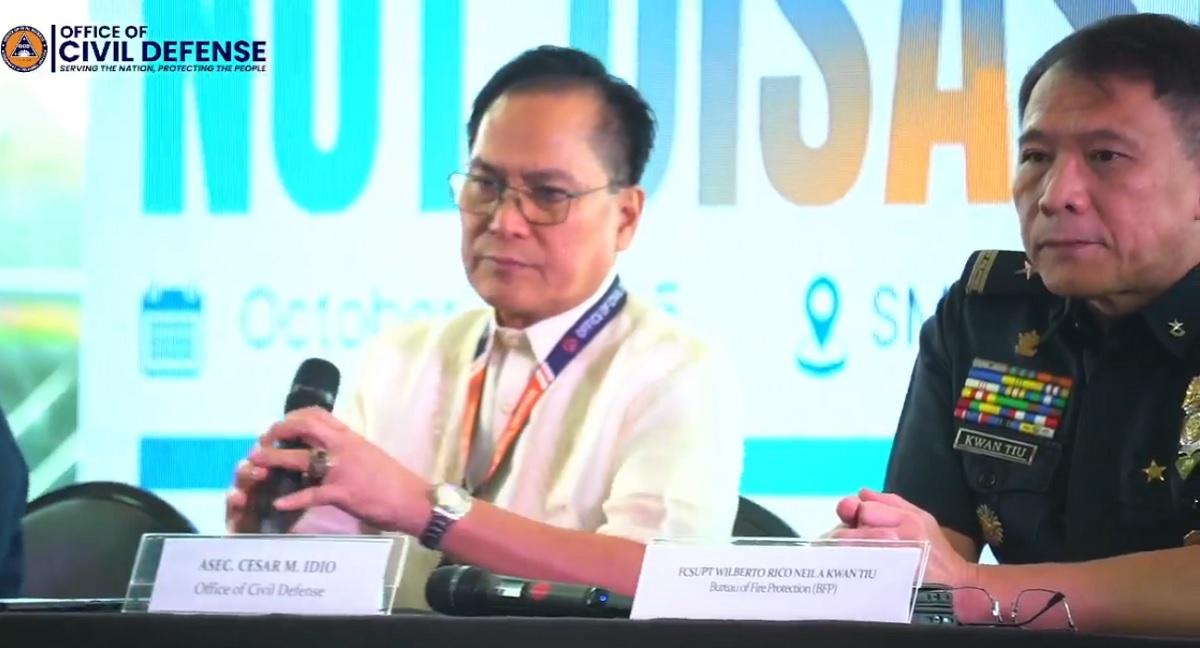
Government disaster officials on Monday acknowledged that while the Philippines has extensive laws on disaster risk reduction and management, enforcement at the local level remains inconsistent—a gap that continues to cost lives and livelihoods.
Speaking at the International Day for Disaster Risk Reduction (IDDRR) at the SM Mall of Asia, officials from the Office of Civil Defense (OCD), Bureau of Fire Protection (BFP), and ARISE Philippines underscored the need for strict compliance with building codes and preparedness policies, as well as sustained cooperation with the private sector.
“The country is bombarded with a lot of policies, building code, fire code, zoning ordinances—but despite these, we still see structures built in danger zones or not up to safety standards,” said OCD Assistant Secretary Cesar Idio.
“It’s just a matter of political will to implement existing policies,” he added.
With this, he explained that the National Disaster Risk Reduction and Management Council (NDRRMC) works continuously to ensure quick decision-making and implementation at the local level.
“So ‘yung mga reconstruction, rehabilitation ay nare-restore hindi lang sa original structure kundi more resilient sa mga hazards. So ito po ‘yung mga integrated policies that the National Disaster Risk Reduction and Management Council ay ini-implement. So lahat ‘yan, 24x7, nand’yan ‘yung mga focals ng mga member agencies ng NDRRMC, nag-uusap-usap kami diyan, nagko-coordinate kami and mabilis ang decision making, mabilis ang policy making, at nagti-trickle down to the locals. ‘Yan po ang nagagawa ng ating NDRRM Council.”
(Reconstruction and rehabilitation efforts are not just to restore the original structure but to make it more resilient to hazards. These are integrated policies implemented by the NDRRMC. The focal persons of the member agencies coordinate 24/7, ensuring quick decision-making and that policies are cascaded down to local levels. That’s what our NDRRMC does.)
BFP Fire Chief Superintendent Wilberto Rico Kwan Tiu then added that while the country has strong laws, enforcement and compliance remain weak.
“If we talk about policy, actually the country is bombarded with a lot of policy. Ang dami nating polisiya. It's just a matter of the gas-gas word na political will to implement the existing policy. We have ‘yung sinasabi nating policy on building code na dapat ganito ang klase ng istruktura mo. Bakit hindi naging ganyan? We have the policy of fire code na dapat your structure must be in compliance with the requirements of the fire code. Pero bakit meron? This co-establishment fire around 174 people died. Mas marami kaysa earthquake. So ‘yan po ‘yung magandang tanong—despite all the policy, bakit may nangyayaring ganito? We are bombarded with policies as said earlier.”
(If we talk about policy, the country has a lot of them. It all comes down to political will to implement existing laws. We have building codes and fire codes that should ensure safety—so why do violations persist? In one establishment fire, around 174 people died—more than earthquake fatalities. So despite all these policies, why do such tragedies still happen.)
ARISE Philippines engineer Liza Silerio, representing the private sector, said businesses like SM have integrated disaster drills and emergency procedures into their operations, noting that preparedness benefits both their workforce and the general public.
“We protect not only our business but our people,” Silerio said, citing SM’s regular participation in national earthquake and fire drills.
The BFP, which has expanded its mandate beyond fire suppression to include emergency medical services and search-and-rescue operations, said it now maintains 17 rescue groups nationwide.
Officials also discussed the crucial role of the private sector in relief supply chains, with Idio pointing out that coordination with businesses determines how quickly food and emergency goods reach affected areas.
“The success of our disaster relief often lies in how fast private suppliers can produce what’s needed. That’s why supply chain management is key,” Idio added.
As the event closed, officials called for greater accountability from local governments and developers to adhere to no-build zones and structural standards.
“We have the laws. We have the codes. What we need is enforcement—and certainty of punishment,” Silerio stressed.
This year’s IDDRR carries the theme “Fund Resilience, Not Disaster,” highlighting the importance of investing in prevention and preparedness to reduce losses from increasingly frequent calamities. — BM, GMA Integrated News

