

 GMA Brandtalk
 Tracking
 Archives

DepEd, PHIVOLCS forge stronger ties to improve disaster response, class suspension decisions
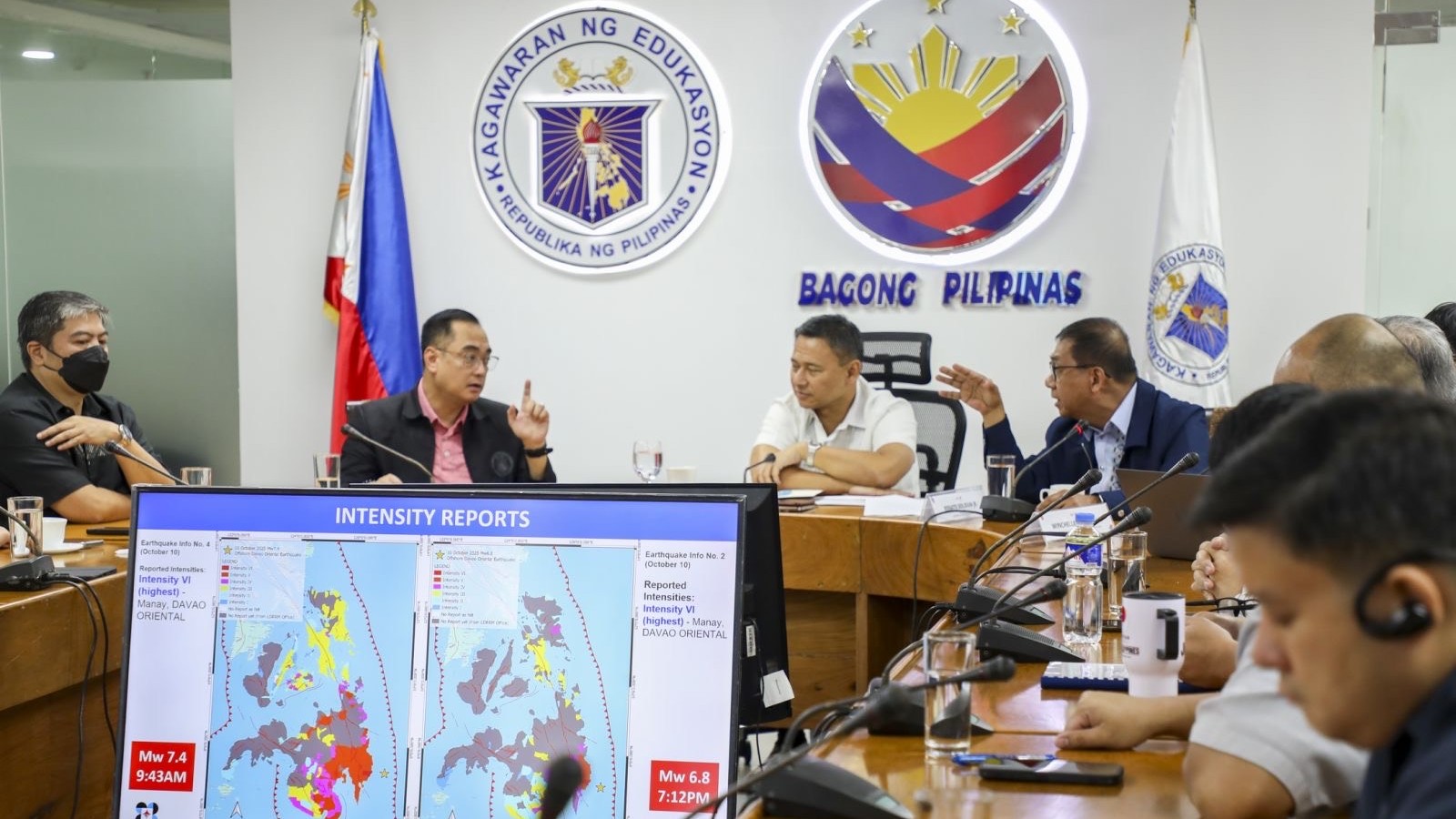
The Department of Education (DepEd) is strengthening its coordination with the Philippine Institute of Volcanology and Seismology (PHIVOLCS) to ensure that class suspension decisions and school safety measures are guided by scientific data and localized risk assessments, following the recent earthquakes in Cebu and Davao Oriental.
The initiative, carried out under the directive of President Ferdinand R. Marcos Jr., seeks to strike a balance between protecting learners and personnel and sustaining education amid natural disasters.
“Sa usapin ng kalamidad, bukod sa maagap, dapat eksakto rin ang kilos. Kaya mahalaga ang pakikipag-ugnayan sa PHIVOLCS para ang bawat desisyon, mula sa pagsuspinde ng klase hanggang sa pagpapatuloy ng pag-aaral, ay nakabatay sa siyensya at hindi sa pangamba,” said Education Secretary Sonny Angara.
Angara, who personally inspected earthquake damage in Cebu and Davao Oriental, underscored the importance of reliable data and institutional coordination in disaster management.
(When it comes to disasters, responses must not only be swift but also accurate. That’s why coordination with PHIVOLCS is vital, so that every decision—from suspending classes to resuming learning—is based on science, not fear.)
“Nang makita ko mismo ang pinsala ng lindol sa Cebu at Davao Oriental, mas nauunwaan natin gaano kahalaga ang tamang datos at koordinasyon. Sa tulong ng PHIVOLCS, masisiguro nating ang bawat hakbang ng DepEd ay mabilis, ligtas, at may batayang siyentipiko,” he added.
(Seeing firsthand the damage caused by the earthquakes in Cebu and Davao Oriental made me realize even more how critical accurate data and coordination are. With PHIVOLCS’ support, we can ensure that every DepEd action is fast, safe, and science-based.)
During the coordination meeting, DepEd and PHIVOLCS—under the leadership of Science and Technology Secretary Renato Solidum Jr. discussed the importance of ensuring that schools near fault lines are “over-engineered” to withstand strong ground movement.
DepEd also proposed a specialized partnership for technical training programs that would empower regional and division offices to assess school building integrity and implement proper response measures during earthquakes.
A DepEd Command Center, to be established in coordination with PHIVOLCS, is also in the works. The center will function as a real-time monitoring hub for disaster response, early warnings, and information sharing.
DepEd said that personnel will be trained to follow checklist-based procedures that automatically trigger alerts and responses when specific safety conditions are met— allowing for faster and more coordinated emergency actions across schools.
Both agencies likewise vowed to strengthen coordination in issuing science-based advisories and verified information to maintain public trust and curb misinformation during crises.
Angara emphasized that preparedness and learning continuity must go hand in hand. Under DepEd Order No. 22, s. 2024, the authority to suspend classes lies with the Local Chief Executive (LCE), Schools Division Superintendent (SDS), and school heads, who are required to base their decisions on PHIVOLCS advisories, field conditions, and readiness to resume learning.
DepEd also cited DepEd Order No. 21, s. 2015, which mandates regional offices to monitor disaster prevention and preparedness measures, ensuring that education continues even when schools are affected by natural hazards.
Preventive class suspensions, the Department reiterated, must activate learning continuity plans—including modular, online, or take-home instruction—while safety inspections and repairs are being carried out.
“Hindi lamang kaligtasan, kundi tuloy-tuloy na pagkatuto ang ating layunin,” Angara noted.
(Our goal is not only safety but also the continuity of learning.)
Through this renewed partnership, DepEd and PHIVOLCS aim to strengthen science-driven disaster resilience in schools and reinforce the public’s confidence in government actions during emergencies. —Sherylin Untalan/RF, GMA Integrated News

