

 GMA Brandtalk
 Tracking
 Archives

ICC rejects Rodrigo Duterte's challenge to its jurisdiction
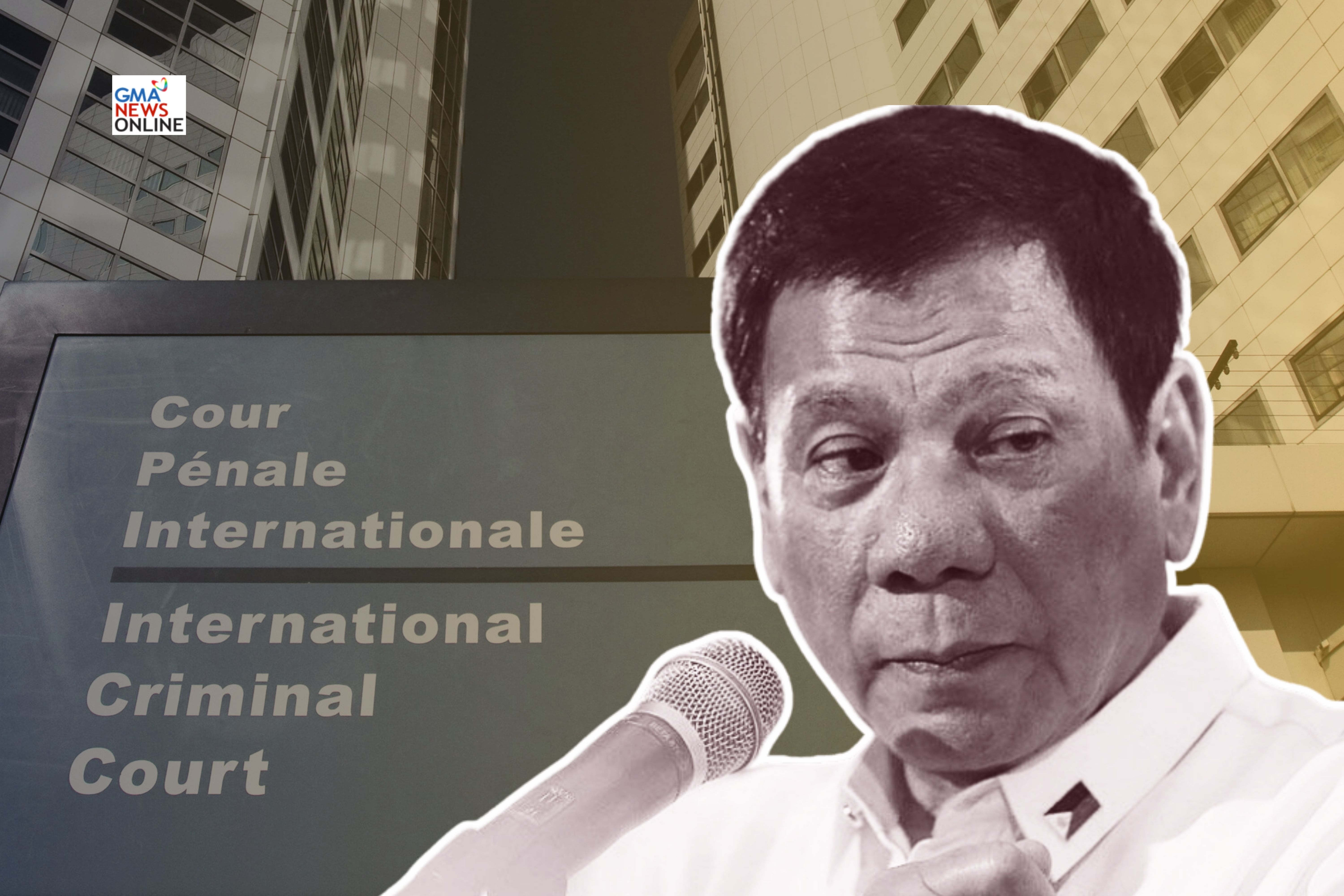
The International Criminal Court has rejected the challenge to its jurisdiction by the defense counsel of former President Rodrigo Duterte, who is detained in the Hague penitentiary for the crimes against humanity of murder and attempted murder in line with his war on drugs in the Philippines.
In a 32-page decision signed by all three judges of the Pre-Trial Chamber 1, the tribunal also rejected the defense's request to postpone the issuance of its decision on the challenge to its jurisdiction.
"For all of the above reasons, as a result of the Prosecution’s preliminary examination having commenced prior to both the Philippines depositing its written notification of withdrawal from the Statute and the date on which that withdrawal became effective, the Chamber finds that the Court can exercise its jurisdiction in the present case over the crimes alleged against Mr. Duterte that were committed on the territory of the Philippines while it was a State Party," the decision reads.
Duterte's defense counsel, Nicholas Kaufman, said in the challenge filed in May that the preconditions for the exercise of jurisdiction in the Situation of the Philippines were not met at the time the Pre-Trial Chamber authorized the opening of an investigation on September 15, 2021.
"The Philippines’ withdrawal from the Rome Statute became effective on 17 March 2019. When the former Prosecutor filed her request, and the Pre-trial Chamber issued its decision, more than two years later," the challenge read.
"As a consequence, all procedural steps taken in the Situation and, subsequently, in the case against Mr Rodrigo Roa Duterte, lack legal foundation and should be nullified forthwith," it added.
However, said the ICC judges, "The jurisdictional regime set out in Part 2 of the Statute continues to apply to this case as if the Philippines were still a Party to the Statute, so as to ensure that, pursuant to article 127(2) of the Statute, the withdrawal of the Philippines from the Statute “shall not... prejudice in any way the continued consideration of any matter which was already under consideration by the Court prior to the date on which the withdrawal became effective."
Jurisdiction
To recall, Duterte pulled the Philippines out of the Hague-based ICC's Rome Statute in 2018, with the withdrawal taking effect in 2019, after the tribunal began a preliminary probe into his administration's drug war.
The ICC, however, said that it has jurisdiction over crimes that were committed when the Philippines was still a signatory to the statute—in this case, from 2011 to 2019. Furthermore, the Philippine Supreme Court said that the government is obligated to cooperate with the ICC, citing the same provision in the statute.
Moreover, the ICC judges said in their October 23 decision, the Philippine government continued its engagement with the court despite its withdrawal.
“In this case, after the withdrawal of the Philippines had taken effect on 17 March 2019, the Philippines continued to engage with the Court. In particular, in November 2021 the Philippines requested a deferral of the investigation by the Prosecution pursuant to article 18(2) of the Statute; and, on 12 March 2025, Mr. Duterte was arrested by the authorities of the Philippines 149 and surrendered to the Court,” the decision stated.
“This continued engagement of the Philippines with the Court, notwithstanding its withdrawal from the Statute, lends further support to the interpretation that the Court retained jurisdiction over the alleged crimes in this case as they were a matter which was already under consideration by the Court prior to the date on which the withdrawal became effective, pursuant to article 127(2) of the Statute.”
Further, the Pre-Trial Chamber I judges argued that article 127(2) of the Statute provides that “the Court may exercise its jurisdiction over any matter which was already under consideration by the Court prior to the date on which the withdrawal became effective.”
The ICC also said that while the Statute respects the right of a State to withdraw, it also ensures that “it is not able to abuse that right by shielding persons from justice in relation to alleged crimes that are already under consideration by the Court in a manner that undermines the object and purpose of the Statute and the specific terms of withdrawal set out in article 127(2) of the Statute to which a State agrees at the time that it ratifies the Statute.”
Deadly drug war
Duterte was flown to The Hague after his arrest on March 11 and was placed in detention at the Hague Penitentiary Institution for charges of crimes against humanity for the extrajudicial killings during the drug war.
In September, the ICC disclosed that Duterte is charged with 49 incidents of murder and attempted murder during his time as mayor of Davao City and as President of the Philippines, "although the actual scale of victimization during the charged period was significantly greater."
Duterte, who gained national fame as the tough-talking mayor of Davao, was elected president in 2016 on the promise that he would wipe out illegal drugs and corruption in the Philippines within "three to six months."
He later acknowledged that he had failed to keep his promise, even as he sought extensions on his self-imposed deadline.
In the meantime, thousands of mostly poor Filipinos were killed, largely without due process and in the course of the police's "Oplan Tokhang." The police claimed that many of the fatalities had fought back, and the government estimated that about 6,000 people were killed, though rights groups and ICC prosecutors say the actual toll is much higher. –NB/BM/LDF, GMA Integrated News

