

 GMA Brandtalk
 Tracking
 Archives

OCTA: 80% of Filipinos prefer democracy, but fewer satisfied with results
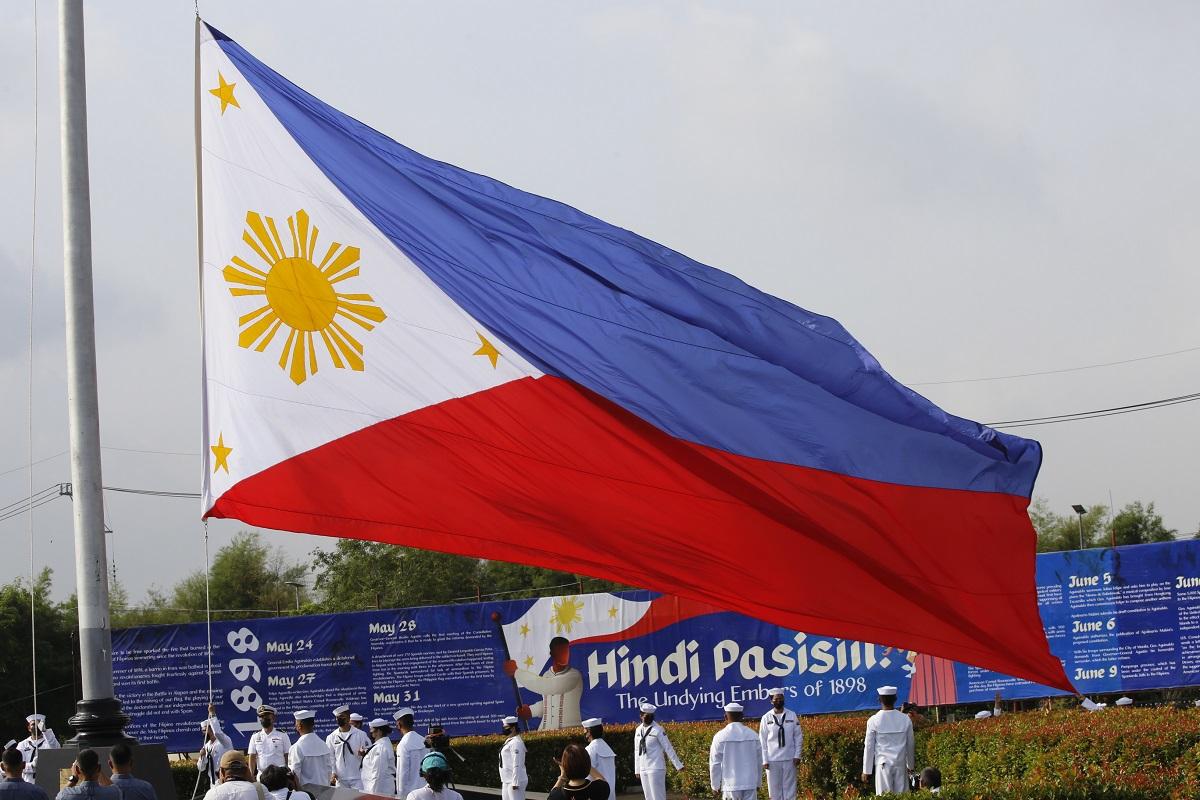
A great majority or 80% of Filipinos still prefer democracy in the country despite its problems, but fewer are satisfied with how it works, according to a recent survey by OCTA Research.
Based on its Q3 2025 Tugon Ng Masa (TNM) survey, only 18% disagree and 2% remain undecided about democracy.
However, only four in 10 Filipinos or 41% are satisfied with how democracy functions in the country. Meanwhile, one-third or 31% are dissatisfied, and one-fourth or 26% remain ambivalent about it.
"The study reveals a dual narrative among Filipinos: a strong commitment to democracy as a principle, but weak satisfaction with its outcomes," OCTA Research reported on Saturday.
"Based on OCTA's various probes over the past four years, the findings suggest that public trust in democracy is resilient but conditional—dependent on tangible improvements in governance, accountability, and service delivery," it added.
The public opinion pollster said sustaining confidence in democracy would require addressing citizens' day-to-day concerns while strengthening democratic norms, civic participation, and institutional integrity.
Survey fieldwork was held from September 25 to 30, 2025 through face-to-face interviews. A total of 1,200 male and female respondents aged 18 and above were interviewed for the study. The margin of error was placed at ±3% at a 95% confidence level.
"The results of the Tugon ng Masa (TNM) Q3 2025 Survey show a complex but lasting relationship between Filipinos and democracy. Most citizens continue to believe that democracy is the best system of government. However, many are divided in their satisfaction with how it actually works," the OCTA Research said.
Trust in democracy 'changes'
The polling firm found that Filipinos continue to value democratic principles, even as they question whether institutions truly uphold them.
Further, the findings demonstrate that trust in democracy "changes over time," which rises and falls depending on public views about governance, corruption, accountability, and how responsive institutions are.
The OCTA Research observed that moments of optimism were followed by renewed doubt, showing how closely the public links trust in democracy to leaders' performance and their delivery of good governance and social justice.
It added that Filipinos' continued preference for democracy despite their widespread dissatisfaction shows a form of civic maturity.
"Filipinos are not rejecting democracy; they are asking for its renewal. This means that democracy in the Philippines remains resilient. It is based not on blind loyalty but on the hope for reform, inclusion, and fairness," it said.
Support for democracy
Respondents were asked if they agree with the statement: "I still prefer democracy in the Philippines, even if it has many problems."
In terms of geography, support for democracy was strongest in Balance Luzon (84%) and lowest in the Visayas (72%).
Northern Mindanao showed strongest support among regions at 95%, followed by the Cordillera Administrative Region at 92%, and Bicol at 92%. Disagreement was most felt at Mimaropa at 44% and Negros Island Region at 40%.
Among socioeconomic classes, support was strongest among Class D at 81%, followed by Class E at 78%, and Class ABC at 75%.
Preference for democracy was strong across age groups, including 18-24 year olds at 75%, and 45-54 year old and 75 and above age groups at 85%.
Varies sharply across regions
Further, respondents were also asked to rate their satisfaction with the current state of Philippine democracy.
Satisfaction was highest in Balance Luzon at 55% and lowest in the Visayas at 25%. On the other hand, dissatisfaction was most evident in the Visayas (44%) and Mindanao (39%), as compared to the National Capital Region and Balance Luzon which registered lower numbers at 31% and 23%, respectively.
In terms of socioeconomic class, satisfaction with democracy was highest in Class E at 47%.
The range of satisfaction varied sharply across regions, from as low as 3% in Northern Mindanao to a high of 84% in Calabarzon.
Younger adults aged 18-24 had higher satisfaction with democracy at 55%, as compared to older respondents aged 75 and above who were at 31%. — VDV, GMA Integrated News

