

 GMA Brandtalk
 Tracking
 Archives

SC institutionalizes use of Filipino Sign Language in court proceedings
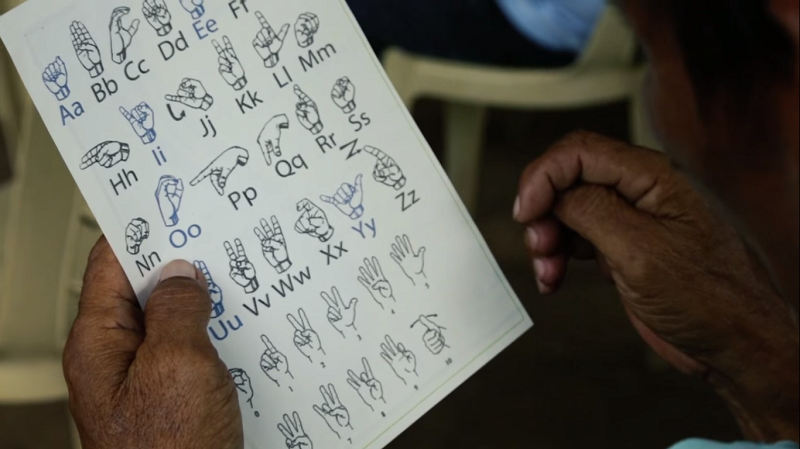
The Supreme Court (SC) En Banc has institutionalized the use of Filipino Sign Language (FSL) in court proceedings to ensure the deaf community’s full and equal access to justice.
In a press briefer on Wednesday, the High Court said the SC En Banc approved the Rules on Filipino Sign Language Interpreting in the Judiciary during its session on Tuesday, Oct. 28.
“The FSL Rules operationalize Republic Act 11106 or the Filipino Sign Language Act and affirm the State’s commitment under the UN Convention on the Rights of Persons with Disabilities (UNCRPD), to guarantee the full participation of d/Deaf Filipinos in judicial processes,” it said.
The FSL Rules stated that qualified and accredited interpreters must be provided in all judicial proceedings involving deaf parties or witnesses to ensure their full and equitable access to justice.
It also established ethical and professional standards to guide court interpreters in the performance of their duties, with clear procedures for interpreter accreditation and payment.
The rules also provided for both on-site and remote interpreting, with built-in safeguards to maintain the accuracy, confidentiality, and reliability of interpretations across all modes.
The SC said the FSL Rules is part of its Access to Justice Program under the Strategic Plan for Judicial Innovations 2022–2027 (SPIJ).
The FSL Rules will take effect after it is published in the Official Gazette or in two newspapers of national circulation.
In addition, the SC En Banc also approved the 2025 Code of Conduct and Accountability for Court Officials and Personnel – another deliverable under the SPJI – to update its 2004 Code of Conduct for Court Personel to address “contemporary ethical challenges.”
“It includes new provisions on the responsible use of social media and artificial intelligence; prohibition against accepting gifts, tips, or other gratuities for assisting or attending to litigants, lawyers, or other court users; and the use of gender-fair, child-friendly, and culturally sensitive language across judicial communications,” the SC said.
This will take effect 15 calendar days after its publication in the Official Gazette or two newspapers of general circulation, and its posting on the SC website. — JMA, GMA Integrated News

