

 GMA Brandtalk
 Tracking
 Archives

DepEd pushes for unified class suspension rules amid learning loss
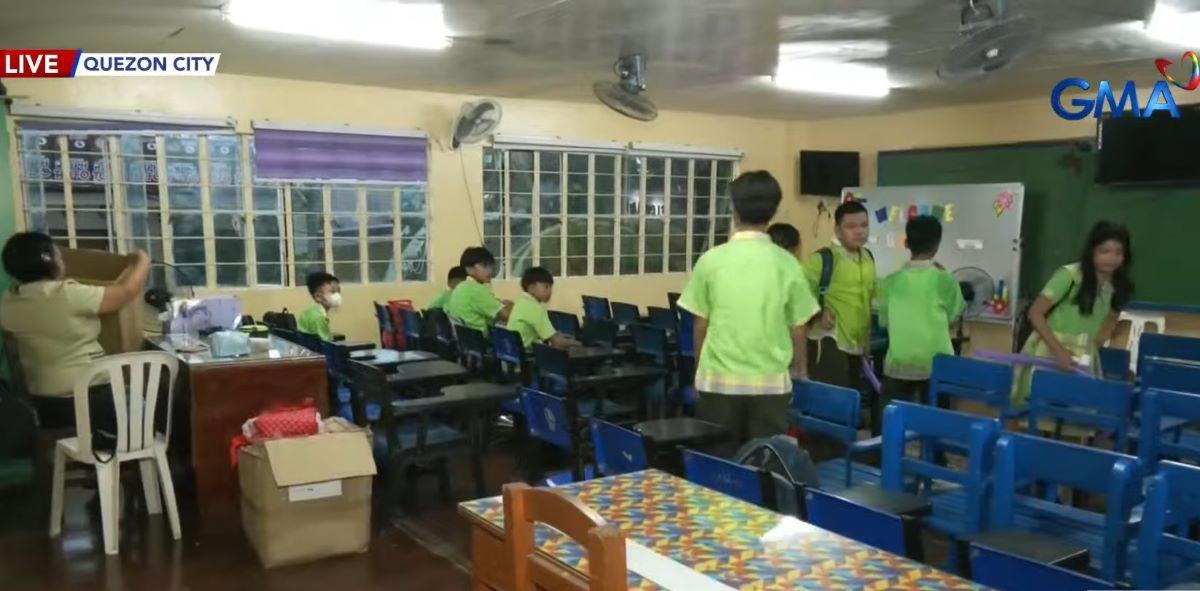
The Department of Education (DepEd) is working with other government agencies to establish a unified and science-based guideline for class suspension announcements to balance learners’ safety with the long-term impact of lost school days on education outcomes.
In a recent inter-agency meeting with the Department of the Interior and Local Government (DILG), Commission on Higher Education (CHED), Philippine Science High School (PSHS), and the Second Congressional Commission on Education (EDCOM II), the DepEd pushed for a national protocol on class suspensions to ensure consistency and minimize learning loss during calamities.
“Gaya ng sabi ni Pangulong Ferdinand R. Marcos Jr., kailangan nating harapin at paghandaan ang mga hamon ng kalamidad sa edukasyon,” Education Secretary Sonny Angara said. “Hindi natin kayang pigilan ang bagyo, pero kaya nating paghusayin ang ating paghahanda para maging mabilis, malinaw, at maayos ang mga desisyon kapag kaligtasan at kinabukasan na ng mga bata ang nakataya.”
(As President Ferdinand R. Marcos Jr. said, we must face and prepare for the challenges that disasters bring to education. We cannot stop a typhoon, but we can improve our readiness so that decisions are swift, clear, and orderly when the safety and future of our children are at stake.)
The DepEd cited research which showed that every missed day of class carries measurable consequences.
Findings from the 2019 Trends in International Mathematics and Science Study (TIMSS) revealed that each additional day of school closure can lower a Grade 4 student’s achievement by up to 12.4 points in mathematics and 13.9 points in science.
The data also suggested that losing just 10 school days could drop a child’s science score from 500 to below 380.
EDCOM II data also revealed that during School Year 2023–2024, the country lost more than 20 school days due to climate-related events, affecting over 11 million learners – or roughly 42 percent of the public school population.
The DepEd said this underscored how climate change continues to disrupt learning across the Philippines.
“Our challenge now is to adapt. Disasters will keep coming, but learning should not stop. We need clear, coordinated, and science-based decisions that keep our students both safe and learning,” Angara said.
Among the agreed measures are the creation of a DILG advisory template to help local government units issue timely and consistent suspension announcements, the requirement for DepEd regional and division offices to report the frequency and impact of suspensions, and the publication of official data on lost school days to guide policy decisions.
The DepEd is also aiming to enhance its make-up class policy and strengthen Alternative Delivery Modes (ADM) to ensure learning continuity when in-person classes are suspended.
However, the government agency acknowledged that remote and modular learning cannot fully substitute for face-to-face instruction, particularly for younger students who depend heavily on teacher interaction.
“We understand that safety must always come first. But we also need to be ready to help students recover from lost time. Our goal is to make every day of learning count, rain or shine,” Angara added. — JMA, GMA Integrated News

