

 GMA Brandtalk
 Tracking
 Archives

PHA bats for basic life support response teams in communities
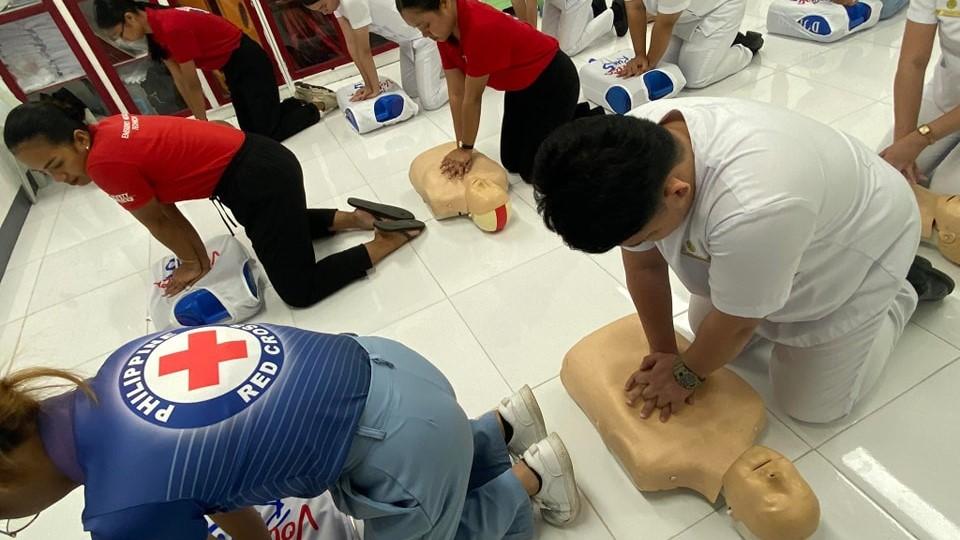
The Philippine Heart Association (PHA on Tuesday called for the establishment of basic life support (BLS) teams in communities to improve emergency response and save more lives.
During the Usapang Puso sa Puso media conference, Dr. Don Robespierre Reyes underscored the importance of cardio-pulmonary resuscitation (CPR) and emergency response to be done immediately during cardiac episodes.
“If you do CPR at the right time, at the right place, at the right time, the chances of survival goes up to 30% at least. Dugtong buhay po talaga yan (That can actually extend lives),” said Reyes, chair of the PHA Council on Cardiopulmonary Resuscitation.
He shared the PHA’s advocacy of pushing for local first responder teams in communities, which he said should include policemen, barangay health workers, barangay tanods, and other key members of the community.
Reyes said policemen should also be trained in administering basic life support as he pushed for mandatory BLS education as an integral part in police training.
“Kung titignan natin, 70,000 ang namamatay [sa cardiac arrest] taon-taon… Now, take a look into the workforce of the PNP as of September 2025… Deployed all over the country, makakapagligtas ng buhay,” he said.
(If we look at it, 70,000 people die [of cardiac arrest] yearly… Now, take a look into the workforce of the PNP as of September 2025… Deployed all over the country, we can save lives.)
He added that barangay health workers and barangay tanods should also be trained to administer basic life support.
“Ang DOH, they train [pero] alam ko po konti lang ang workforce ng DOH at di nila kaya itrain ang lahat. Nagtutulungan po kami sa pagtre-train ng barangay health workers,” he said.
(DOH, they train [but] I think the workforce of the DOH is low and they cannot train everybody. We are working on training barangay health workers.)
“Kung mayroong 42,000 barangays or more in the country, ilan po yung barangay tanod [at barangay health workers] na pwede magligtas ng buhay?” he added.
(If there are 42,000 barangays or more in the country, how many barangay tanods [and barangay health workers] are capable of saving lives?)
Reyes added that personnel of the Bureau of Fire Protection (BFP), Disaster Risk Reduction Management Office (DRRMO), and teachers can be also part of first responder teams in communities.
“We just need to tackle [with] them, and establish connections in a system that will make them work. Cardiac arrest ay isang form of disaster din… Kung susuriin po natin ang lahat na sinabi ko kanina, ilan po ang pwedeng rumesponde, kahit di na natin turuan yung community, kung mayroon tayong responder team? How about yung 70,000 na namamatay taon-taon, pwede bang maging 35,000 nalang yan?” Reyes said.
(We just need to tackle [with] them, and establish connections in a system that will make them work. Cardiac arrest is also a form of disaster… If we analyze everything that I said earlier, how many people would be able to respond, even if we don’t teach the community, if we have a responder team? How about the 70,000 that die yearly, can we bring that down to 35,000?)
Earlier, the PHA stressed that “time is gold” during a cardiac emergency, given that a patient is at risk of death if there is no immediate action within five minutes.
On Tuesday, the PHA urged local government units and the national government to designate key persons and create localized first responder teams.
They also called for more legislation and movements to further boost emergency medical services and BLS training in the Philippines.
The PHA added that they are boosting their CPR-Ready Philippines flagship advocacy through 15 regional chapters nationwide that partner with communities in BLS training.
“We go to the grassroots level. If we can partner with the BMP, PNP, the Philippine Coast Guard… We’re trying to help the government talaga capacitate our key people in the community to be experts on the BLS. BLS, ito yung tunay na training talaga na hindi lang to na basic hand CPR, (BLS is actual training that’s not just the basic hand CPR),” Reyes said.
For their part, the Department of the Interior and Local Government (DILG) said it is also working with their partners to bolster emergency first response efforts at the grassroots level.
“We are in coordination right now doon sa response times, response units, and sa hospitals available,” said DILG Emergency 911 National Office Executive Director Francis Fajardo said.
(We are in coordination right now about the response times, response units, and available hospitals.) — JMA, GMA Integrated News

