

 GMA Brandtalk
 Tracking
 Archives

Konektadong Pinoy law implementing rules signed — DICT
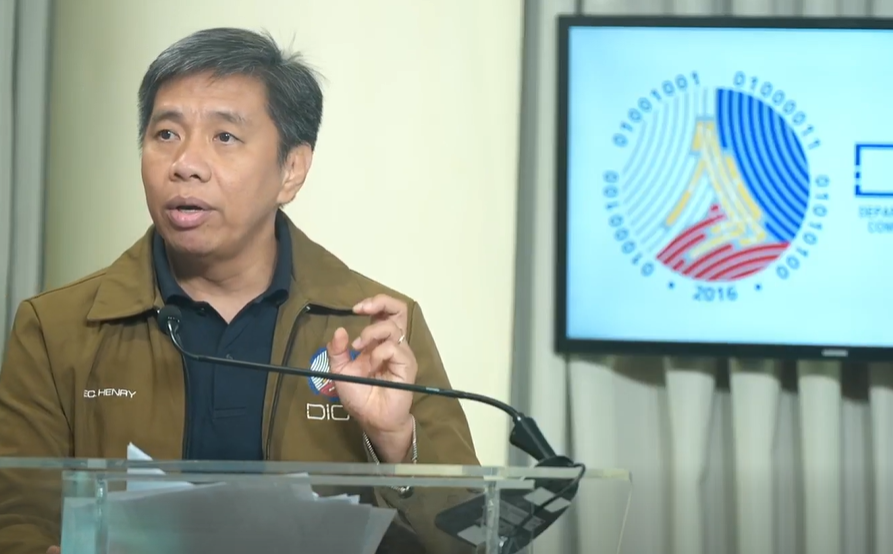
The Department of Information and Communications Technology (DICT) on Wednesday said the implementing rules and regulations (IRR) of the Konektadong Pinoy Act has been signed.
“Kaninang umaga ay napirmahan na po ang implementing rules and regulations ng Konektadong Pinoy. Ang batas na ito ay priority measure sa ilalim ng Legislative Executive Development Advisory Council o LEDAC at isa sa mga pangunahing direktiba ng Pangulo sa ilalim ng Bagong Pilipinas,” DICT Secretary Henry Aguda said at a press briefing in Malacañang.
(This morning, the implementing rules and regulations of Konektadong Pinoy has been signed. This law is a priority measure under the Legislative Executive Development Advisory Council or LEDAC and this is among the main directives of the President under Bagong Pilipinas.)
The Konektadong Pinoy Act allows new data transmission players to operate without a legislative franchise or Certificate of Public Convenience and Necessity (CPCN)
“This law is a priority measure under LEDAC and one of the key directives of the President under Bagong Pilipinas... Its goal is to make internet faster, more affordable, and accessible to every Filipino, especially in GIDAs (geographically isolated and disadvantaged areas),” he explained.
Aguda said the measure lapsed into law on Aug. 24 and took effect on Sept. 14.
The DICT chief said the department conducted extensive stakeholder consultations in Metro Manila, Cebu, and Davao, received over 50 position papers from the public and private sectors, and worked with the World Bank to ensure that the IRR responds to the needs of both the industry and the public.
Aguda said the agency held consultations with various sectors and stakeholders and went over 50 position papers from the private and public sector to iron out the law’s issues and concerns.
Previously, the measure drew flak from some groups, such as the Philippine Chamber of Telecommunications Operators (PCTO), made of the country’s leading telecommunications companies, and the Philippine Association of Private Telecommunications Companies (PAPTELCO).
The PCTO stressed that while it supports the measure’s goal of expanding internet access across the country, it could lead to national security vulnerabilities, weaken regulatory oversight, and destabilize the telecommunications sector.
The measure was backed by the DICT, which assured that it would not allow deregulation at the expense of security or public interest.
'Qualified players'
Under the measure, foreign entities looking to enter the data transmission industry will be subject to existing Philippine laws including the Foreign Investments Act of 1991 and the Public Service Act, which provides that foreign participation can be reviewed for potential national security implications.
“Sa ilalim ng bagong IRR, binubuksan natin ang data transmission industry sa mas maraming qualified players. Ibig sabihin, kung walang congressional franchise, basta pumasa sa ating technical and security standards… Makapagserbisyo sila,” the DICT chief said.
(Under the new IRR, we will open the data transmission industry to more qualified players. This means, even if there is no congressional franchise, as long as they pass our technical and security standards they can offer services.)
Aguada added that the law and its IRR will further encourage investments and competition in the country’s telecommunications space. He said that six to seven new telecommunications investors have expressed interest in entering the Philippine market — up from just four before the law’s implementation.
The DICT estimates that this could generate between US$1 billion and US$1.5 billion in annual investments in the telecom sector.
Aguda also disclosed that under the agency’s cooperation with the Australian government’s Partnerships for Infrastructure (P4I) program, the national mapping of fiber cables all over the country has been completed.
The initiative, he said, would fast track the fiberization and reduction of connectivity costs.
Aguda said the DICT looks forward with achieving its goal to connect every household in the country to fast, reliable, and affordable internet service by 2028. —with reports from Mariz Umali/ JMA/ VAL, GMA Integrated News

