

 GMA Brandtalk
 Tracking
 Archives

AFP holds ‘DAGIT-PA’ exercise to bolster defense readiness; PAF helps Typhoon Tino victims
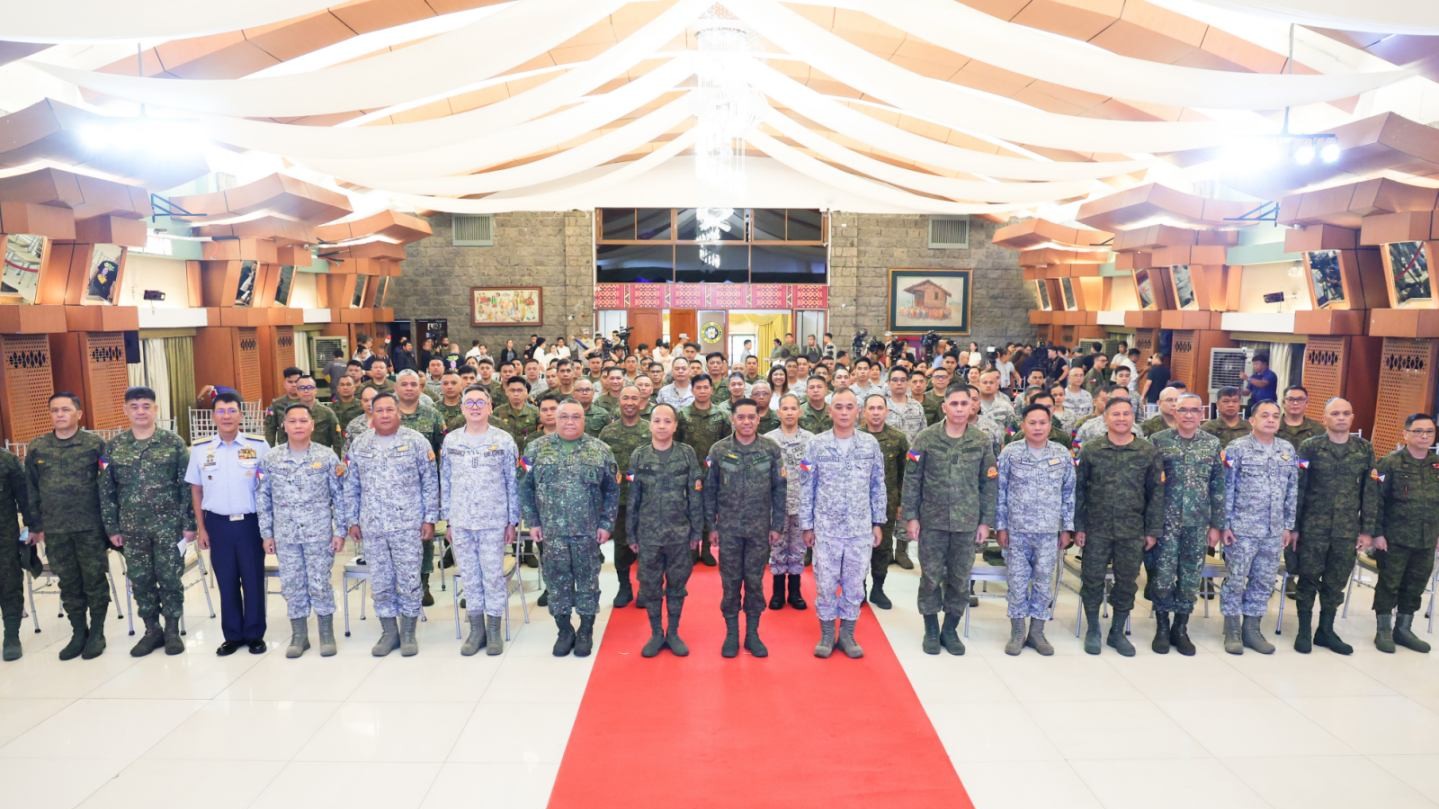
The Armed Forces of the Philippines (AFP) has launched its annual joint military training, AFP Joint Exercise (AJEX) “DAGIT-PA”, to strengthen the country’s defensive capabilities and enhance coordination among service branches amid growing challenges faced by the country.
Formally opened Tuesday, the exercise involves integrated drills among the Philippine Army, Philippine Navy, and Philippine Air Force to improve joint operations across land, sea, air, and cyber domains. The name DAGIT-PA stands for dagat, langit, lupa (sea, air, and land), reflecting its goal of achieving interoperability across all fronts.
In a public briefing Wednesday, Colonel Maria Christina Basco, spokesperson for the Philippine Air Force (PAF), said the exercise is part of the AFP’s transition from internal security operations to territorial defense, under the government’s Comprehensive Archipelagic Defense Concept (CADC).
Basco said the AFP is enhancing its “warfighting competencies” through joint simulations, including cyber and information warfare exercises, to prepare for both physical and digital threats.
“Magkakaroon tayo ng readiness exercise para sa digital and cognitive threats. Kasama rito kung paano natin itatama ang fake information at paano mapapalakas ang strategic communications,” she said.
(We will have readiness exercises for digital and cognitive threats, including countering fake information and strengthening strategic communications.)
Unlike other bilateral or multinational exercises involving foreign partners, Basco emphasized that DAGIT-PA is conducted solely by Filipino forces.
“Ito po ay exclusively sa atin lang. We will be relying on our own to see where we can further improve and strengthen our readiness,” she said.
The joint drills will test the AFP’s new assets acquired under the military modernization program and identify areas for improvement in coordination, communication, and equipment utilization. It also includes cooperation with the Philippine National Police (PNP) and Philippine Coast Guard (PCG) to advance a “whole-of-government” approach to national defense.
Basco noted that the exercise supports the AFP’s readiness not only for external threats but also for natural disasters and other emergencies, strengthening coordination and response systems down to the community level.
Coordination is crucial
When asked if the training is linked to tensions in the West Philippine Sea, Basco clarified that it is part of a broader effort to secure the entire Philippine archipelago.
“Generally, the exercise is for territorial defense — not only the West Philippine Sea, but 360 degrees of our territory,” she said.
“As an archipelago, the Philippines is challenging to defend, so coordination among our forces is crucial.”
She also assured that all live-fire exercises are conducted safely and far from civilian communities, in coordination with local government units to avoid risks to residents.
Typhoon Tino responseAlongside the ongoing exercises, the Philippine Air Force has mobilized assets to assist communities affected by Typhoon Tino, particularly in Central Visayas.
She said the PAF coordinates closely with the Office of Civil Defense (OCD) and the National Disaster Risk Reduction and Management Council (NDRRMC) to deliver relief goods and transport personnel to affected areas.
Basco also addressed the fatal Super Huey helicopter crash that resulted in the deaths of six air crew saying the incident remains under investigation but has not disrupted relief operations.
“Nakakalungkot po talaga itong nangyari. (What happened was really sad.) But our mission continues. We have other air assets such as the Black Hawk, Sokol, Bell helicopters, and C-130 and C-295 cargo planes that continue to deliver assistance,” Basco said.
She underscored that safety remains a top priority in all Air Force missions.
“Walang aircraft ang nagte-takeoff nang hindi full mission capable. (No aircraft takes off unless it is fully mission capable.) All are inspected before flight, and we always consider weather conditions to ensure safe operations,” she noted. —RF, GMA Integrated News

