

 GMA Brandtalk
 Tracking
 Archives

ICC not a state; extradition proceedings questionable —Atty. Conti
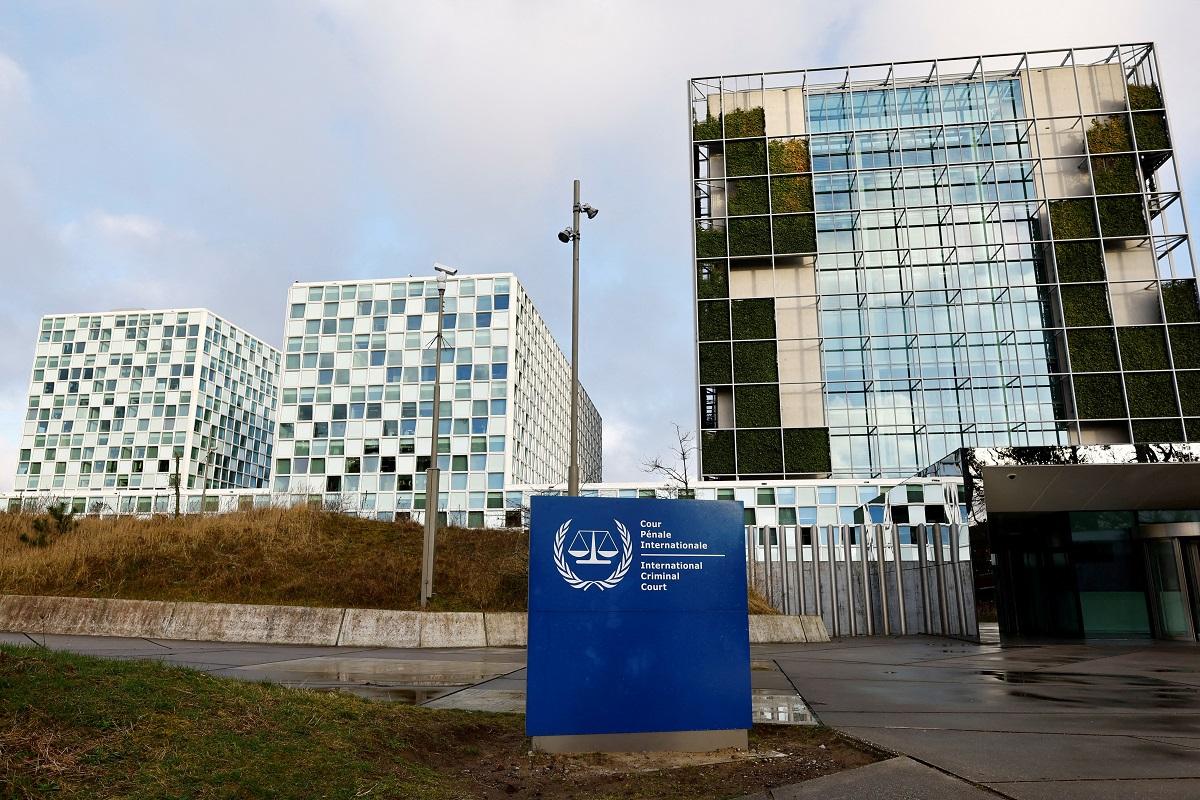
International Criminal Court (ICC) assistant to counsel Atty. Kristina Conti has questioned whether the approved rules on extradition proceedings should be applied in the drug war cases in the ICC, when it is not a state.
“Doon pa lang may duda na kasi ang nakalagay sa extradition, requesting state. May bansang nagre-request. Dito, wala because it's an international court,” Conti told Super Radyo dzBB on Sunday.
(There is doubt because the extradition rules mention a requesting state. A country is making the request, but in this case, there is none, since it involves an international court.)
According to the Supreme Court, any offense is extraditable when the act is punishable under the laws of both the Philippines and the requesting state by imprisonment or other deprivation of liberty.
However, it shall only be granted if the remaining sentence to be served is at least six months.
Conti made the statement after Ombudsman Jesus Crispin "Boying" Remulla said the ICC issued an arrest warrant against Senator Ronald “Bato” dela Rosa.
However, the Department of Justice said it is verifying the information.
Executive Secretary Lucas Bersamin was also asked if Dela Rosa would undergo the same process as former president Rodrigo Duterte, in which the Philippine National Police and the Philippine authorities cooperated to act on a notice from the Interpol.
“Not anymore. The Supreme Court has come out with a new rule on extradition requiring a prior resort to a court before the person subject of extradition may be brought out of the country,” the executive secretary replied.
Conti told dzBB that the extradition proceeding could be an obstacle to a prompt investigation.
“Balakid siya in the sense na ginagamit ng ilang tao, maski ‘yung ibang opisyal, parang magiging proseso raw,” Conti said.
“Hindi eh, ang extradition rule ay may isa pang malaking proseso. May hadlang kung baga sa mabilis na proseso dahil magkakaroon ka ng petition for extradition, ipro-prove mo 'yung batas, ipro-prove mo 'yung kaso, ipro-prove mo 'yung ganito,” she added.
(It’s an obstacle in the sense that some people, and even some officials, say it might become the process. That’s not the case because the extradition rule is another process. There’s a hindrance, so to speak, to a prompt process because you’ll have to file a petition for extradition, prove the law, and prove the case.)
Conti further said there should be a process done in the local court, but it is not as long as an extradition process.
She explained that it should be similar to the initial hearing at the ICC of former President Rodrigo Duterte, where his identity was determined.
The local court should also ask whether the accused's rights were respected in accordance with the country’s laws and whether the accused wished to seek interim release or avail of other legal remedies under the law.
Duterte is currently detained in the Scheveningen Prison in The Hague for his alleged crimes against humanity in relation to the deadly war on drugs when he was mayor of Davao City and when he was president of the Philippines.
Meanwhile, Dela Rosa was the chief of the Philippine National Police when former Duterte launched his controversial campaign against illegal drugs through “Oplan Tokhang” and “Oplan Double Barrel Reloaded.”
Government records showed that there were over 6,000 drug suspects killed in police operations during the previous administration's drug war, but human rights organizations reported that the death toll may have reached 30,000 due to unreported incidents. —KG, GMA Integrated News

