

 GMA Brandtalk
 Tracking
 Archives

ICI seeks immunity from criminal, civil suits
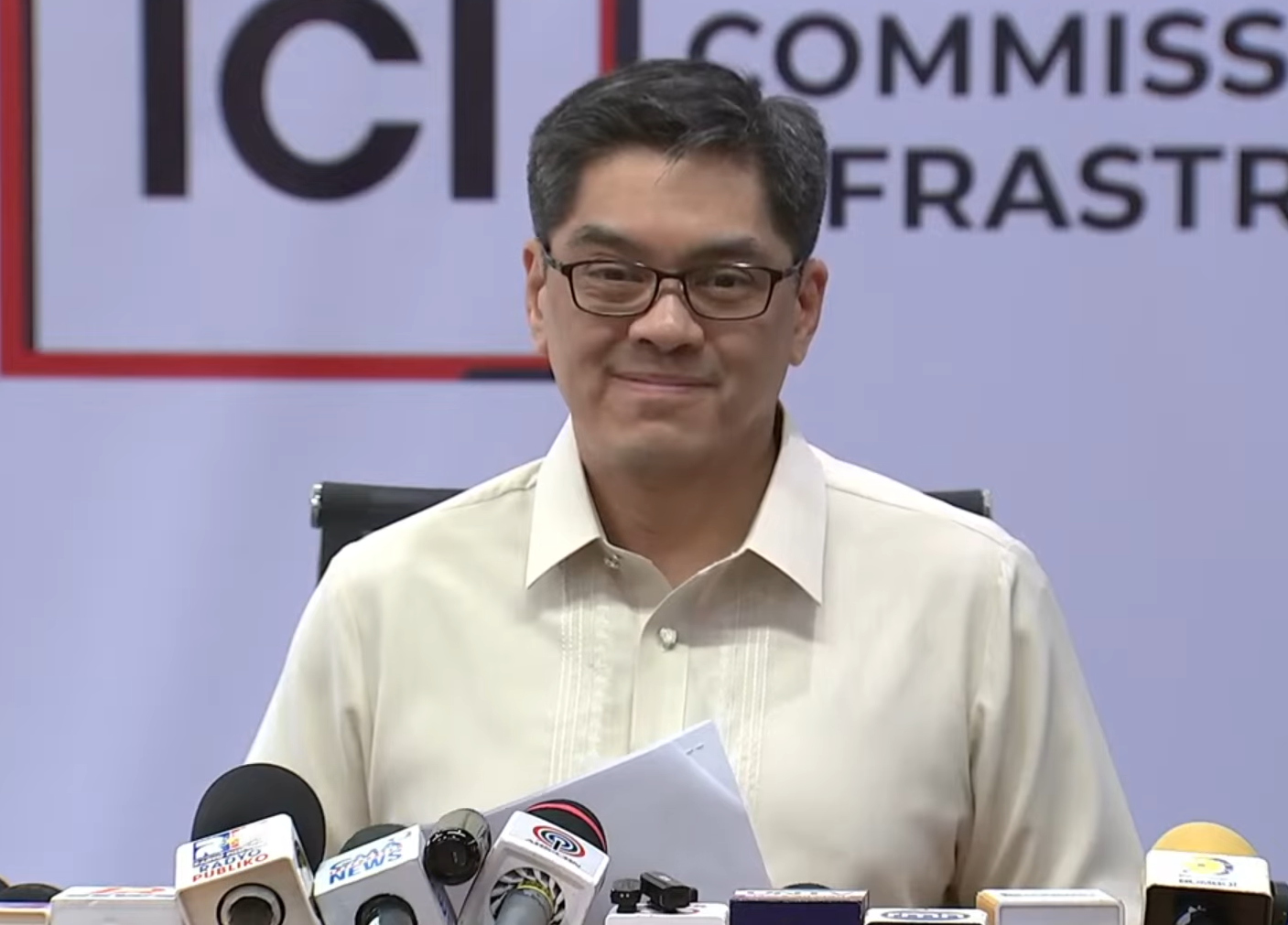
The Independent Commission for Infrastructure (ICI) is seeking immunity from criminal and civil charges in the course of investigating allegedly anomalous flood control and other government projects, ICI Executive Director Brian Hosaka said on Tuesday.
Hosaka made the appeal during the initial hearing of House Bill 4453, which seeks to grant the commission additional powers before the House Committee on Government Reorganization.
A counterpart measure, Senate Bill 1215, has been filed in the Upper Chamber.
“This (provision) is very important, considering that we are recommending an exemption from criminal and civil liability--that no criminal or civil action shall lie against the commission or any member thereof for acts done or omitted in the discharge of its mandate under this (proposed) Act,” Hosaka said.
Hosaka said the ICI is also pushing for a provision barring courts, except the Supreme Court, from issuing restraining orders or injunctions against the ICI.
This proposed provision is similar to safeguards under Republic Act 8975, which prohibits lower courts from halting government infrastructure projects, he said.
“No court except the Supreme Court should issue any temporary restraining order, preliminary injunction, or preliminary mandatory injunction against the commission, its members, or its secretariat with respect to any matter within the commission's mandate — including hearings, investigations, and the filing and handling of criminal or administrative cases,” he said.
Other additional powers being sought by the ICI include:
Having a chairperson who is a retired justice from the Court of Appeals or Court of Tax Appeals, given their extensive experience and knowledge of court proceedings.
Including as ICI members a licensed civil engineer, a licensed architect, a member of the academe with a strong background in law, a representative from a reputable NGO, and an expert on disaster risk management.
Authority to exercise preliminary measures on asset preservation, such as recovering and sequestering assets accumulated by persons involved in the flood control mess.
Complete access to information from government agencies, local government units, and government-owned and controlled corporations, including but not limited to the Anti-Money Laundering Council, Bureau of Internal Revenue, Bureau of Customs, Securities and Exchange Commission, Land Registration Authority, and the Land Transportation Office.
The power to issue closure orders or revoke the registration of establishments found responsible for anomalous infrastructure projects.
The power to directly recommend to the Philippine Regulatory Commission the automatic cancellation of professional licenses of professionals found responsible for implementing anomalous flood control projects or other infrastructure works.
Adoption of a transitory clause to transition the current ICI into the newly established Independent Commission Against Infrastructure Corruption (ICAIC).
“This [transitory] clause would ensure the continuity of the Commission’s investigatory work and provide security of tenure to its existing employees who will be absorbed by the newly created ICAIC,” Hosaka said.
Mamamayang Liberal party-list Rep. Leila de Lima, a former Justice secretary, stressed the need to explicitly state in the law granting additional powers to the ICI that it will not curtail the existing authorities of other constitutional bodies.
She said that nothing in the proposed law should be interpreted as limiting or weakening the investigatory, prosecutorial, or disciplinary powers granted by the Constitution to the Office of the Ombudsman, the Commission on Audit, or the Civil Service Commission.
"We should make that clear, because these are constitutional bodies with their respective mandates,” de Lima said.
“I don’t think Congress can just deprive them of their respective mandates. We better state this clearly so the bill won’t be misconstrued,” De Lima added.
The ICI was created by President Ferdinand Marcos Jr. as part of his administration’s crackdown on corruption in flood control projects.
The body, however, currently lacks contempt powers, limiting its ability to sanction individuals who defy its subpoenas.
At present, the ICI can only recommend the filing of charges before the Office of the Ombudsman and the Department of Justice, similar to the authority exercised by Congress in inquiries in aid of legislation.—MCG, GMA Integrated News

