

 GMA Brandtalk
 Tracking
 Archives

NUP lawmakers push new Cha-cha bid
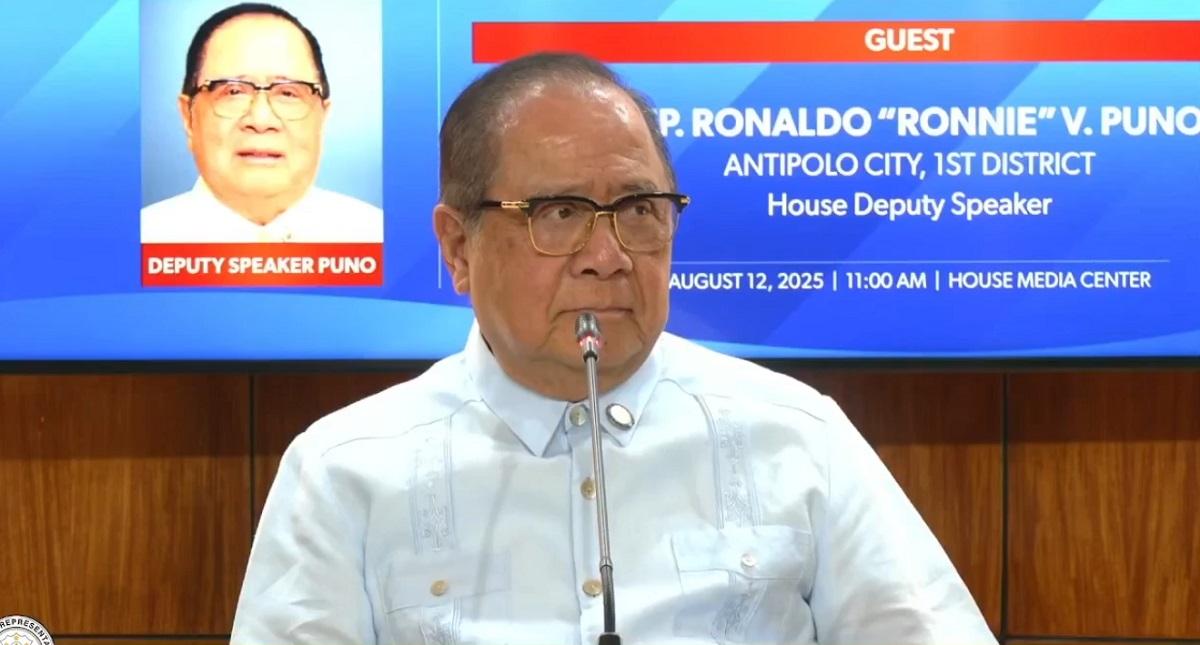
Lawmakers from the National Unity Party (NUP) in the House of Representatives on Wednesday pushed for a Constitutional Convention (Con-Con) to amend the 1987 Constitution, citing what they called its “vague” provisions.
The NUP lawmakers, led by House Deputy Speaker Ronaldo Puno of Antipolo City, made the fresh proposal through House Bill (HB) 5870.
The NUP bloc has at least 43 members in the House, making it the second-largest political party in the chamber.
Under the Con-Con method of amending the Constitution, voters elect delegates who will draft proposed amendments, which are then submitted to a plebiscite for ratification.
“For nearly four decades, the 1987 Constitution has anchored our democracy. But experience has shown that ambiguities, procedural lapses, and outdated provisions have created confusion and weakened institutional accountability,” the bill’s explanatory note read.
“This measure seeks to fulfill—not discard—the 1987 Constitution,” it added.
The authors said HB 5870 aims to correct errors, complete the intent, and reinforce the authority of the 1987 Constitution “with clarity and coherence.”
Among the provisions that the NUP lawmakers want to amend are:
- Article XI, Section 3 (4) on the Accountability of Public Officers, which states that a verified complaint or resolution of impeachment filed by at least one-third of House members “shall constitute the Articles of Impeachment, and trial by the Senate shall forthwith proceed.”
The term forthwith has sparked debate, as Senate President Francis Escudero argued that while forthwith is synonymous with immediately, the Charter’s wording does not mandate instant trial since it does not explicitly say “immediately.” - Article VI, Section 28 (4), which provides that “no law granting any tax exemption shall be passed without the concurrence of a majority of all the Members of the Congress,” but does not clarify whether Congress should act jointly or separately.
- Article VII, Section 19, on the President’s power to grant amnesty “with the concurrence of a majority of all the Members of the Congress,” again without specifying whether Congress must act jointly or separately.
- The provision on the composition of the Judicial and Bar Council (JBC), which allows for “a representative of Congress” without indicating whether this representative should come from the House or the Senate.
- Article VI, Section 28 (4) (referred to twice in the bill), concerning the exercise by Congress of the power to grant tax exemptions, which the authors said assumes a unicameral structure.
“A Constitution that lacks textual precision ceases to serve as a reliable guide for government action. It becomes vulnerable to manipulation and incapable of protecting the rule of law,” the bill noted.
Under the NUP’s proposal, 150 delegates will be elected on May 11, 2026, representing the country’s 18 regions, including the Bangsamoro Autonomous Region in Muslim Mindanao (BARMM).
Each region will elect three delegates, with additional delegates to be allotted based on population “to ensure balanced and inclusive representation.”
The bill provides no appointed delegates to insulate the Con-Con from political interference.
Delegates must be natural-born Filipino citizens, at least 25 years old, college degree holders, and independent from any political office. They will also be barred from seeking any public office for one year after the Convention adjourns.
“The Constitutional Convention offers the most prudent, participatory, and legitimate mechanism for reform. This framework—of a delegate not occupying public office—seeks to shield the Con-Con from political capture and guarantee that its members deliberate solely on the merits of reform,” Puno said.
“It invites the nation to confront enduring constitutional ambiguities through reasoned debate, anchored in the rule of law and the people’s voice,” he added.
HB 5870 mandates that the Convention be convened no later than July 15, 2026, and complete its work within one year, unless extended by law.
Any proposed amendments or revisions will be submitted to a plebiscite within 60 to 90 days after approval, in accordance with Article XVII of the Constitution.
“The National Unity Party is fully supportive of efforts to correct ambiguities in the text of the Constitution as a means of further strengthening our democracy," the NUP said in a separate statement.
"This process must be participatory and insulated from political influence. It must be rooted in consultation, scholarship, and the people's collective will,” it added.—MCG, GMA Integrated News

