

 GMA Brandtalk
 Tracking
 Archives

Youth council notes decline in crimes involving minors
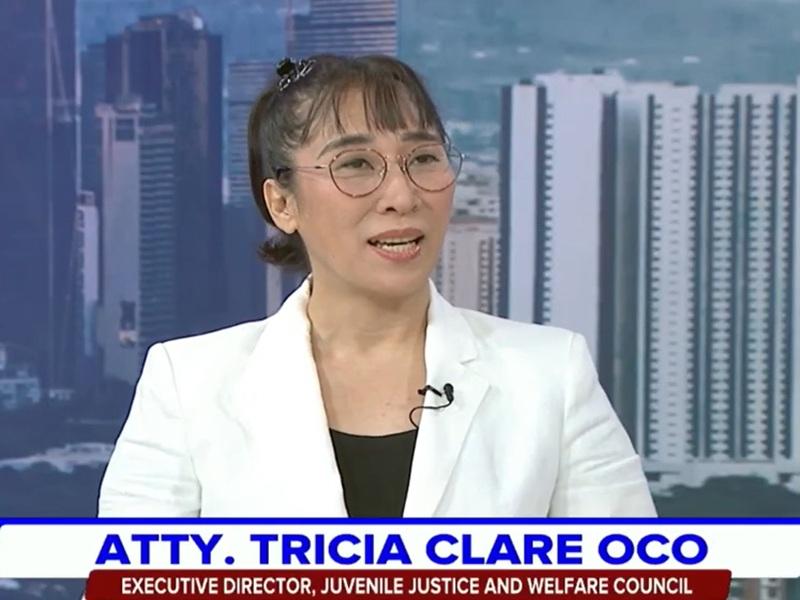
The Juvenile Justice and Welfare Council (JJWC) said on Tuesday that it has noticed a decline in the number of crimes involving minors in the past 10 years.
Atty. Tricia Clare Oco, Juvenile Justice and Welfare Council executive director, said there were over 20,000 crimes recorded in 2016.
“Tinignan namin yung whole trend ng ten years, nag-start kami nung 2016 up to 2025. Ang nakikita natin medyo pababa na yung trend talaga ng reported crimes related to children or kung saan involve ang mga bata," said Oco in “Bagong Pilipinas Ngayon.”
(We looked at the whole trend for ten years, we started from 2016 up to 2025. What we are seeing is that the trend of reported crimes related to children or where children are involved is declining.)
"Nung 2016, halimbawa, lumampas talaga ng 20,000 yung bilang. I think 24,000 if I’m not mistaken. Pinakamataas nung 2017, it was 26,000 plus,” she added.
(In 2016, for example, the number exceeded 20,000. I think 24,000 if I’m not mistaken. The highest was in 2017, it was 26,000 plus.)
A huge decline in trend was noted in 2024 with only more than 4,000 crimes recorded.
“Nung 2024, naging 4,000 plus na lang. Ngayon medyo tumaas nang bahagya, naging 5,000. Pero hopefully, hindi na siya tumaas,” she said.
(In 2024, it became just 4,000 plus. Now it has slightly increased to 5,000. But hopefully, it won't rise further.)
The council emphasized the importance of proper parenting, adding that the Department of Social Welfare and Development (DSWD) is offering parenting seminars and making sure that homes will be suitable after minors are arrested.
“Kasama natin ang DSWD dito…meron silang program na tinatawag na Parent Effectiveness Seminar para marunong sila mag-handle ng bata…Dapat mayroon tayong training sa kanila bago sila mag-alaga ng bata. Doon pa lang prevention level na ‘yun,” said Oco.
(The DSWD is with us here... they have a program called the Parent Effectiveness Seminar so that parents know how to handle a child... We should have training for them before they take care of a child. That in itself is already a prevention level.)
“Paano kapag nagkasala yung bata? Kailangan din natin suportahan yung family para kapag binibigyan natin ng programs yung bata, pagbalik niya sa community at sa pamilya, [ay] maayos din yung babalikan nila.”
(What if the child commits an offense? We also have to support the family so that when the child undergoes the program, then they return to their community and their family, the environment they will return to is also stable.)
"Isa doon actually, livelihood. Kailangan silang bigyan ng livehood. Kaya sila nagko-commit ng crime ay dahil hindi sila pinag-aaral. Doon sila sa streets, they keep begging. So, talagang at risk sila of coming into conflict with the law," said Oco.
(One of them actually, livelihood. They need to be given livelihood. That's why they commit crime because they are not educated. They are on the streets, they keep begging. So, they are really at risk of coming into conflict with the law.)
Minors detained in September 21 riot
On the minors, aged 15 and above, who participated in the riot at Mendiola last September 21 were charged, Atty. Oco explained that case management was only done to those below 15 years old.
“I think 45 up doon ay 15 years old and above, pwede sila actually kasuhan. Pero pinili lang natin yung pwedeng kasuhan, yung iba dinivert na kasi di naman masyadong malaki ang kasalanan nila,” said Oco.
(I think more than 45 are 15 years old and above, they can actually be charged. But we only chose those who can be charged, but we only chose those who can be charged, the others were diverted because their offense wasn't too serious.)
“Doon naman sa the rest na below 15, may as young as 9 years, nagke-case management din po tayo. Tinitignan kung ano yung background ng mga magulang…yung iba hindi agad naibalik kasi tiningnan kung worth it na maibalik sila sa community nila. Ni-ready po yung community at pamilya bago sila binalik,” she added.
(For the rest who are below 15, some as young as 9 years old, we also conducted case management. We look at the background of the parents... some were not immediately returned because we checked if it was worthwhile to return them to their community. The community and family were prepared before they were returned.) — BAP, GMA Integrated News

