

 GMA Brandtalk
 Tracking
 Archives

How many times has the ICC granted interim release?
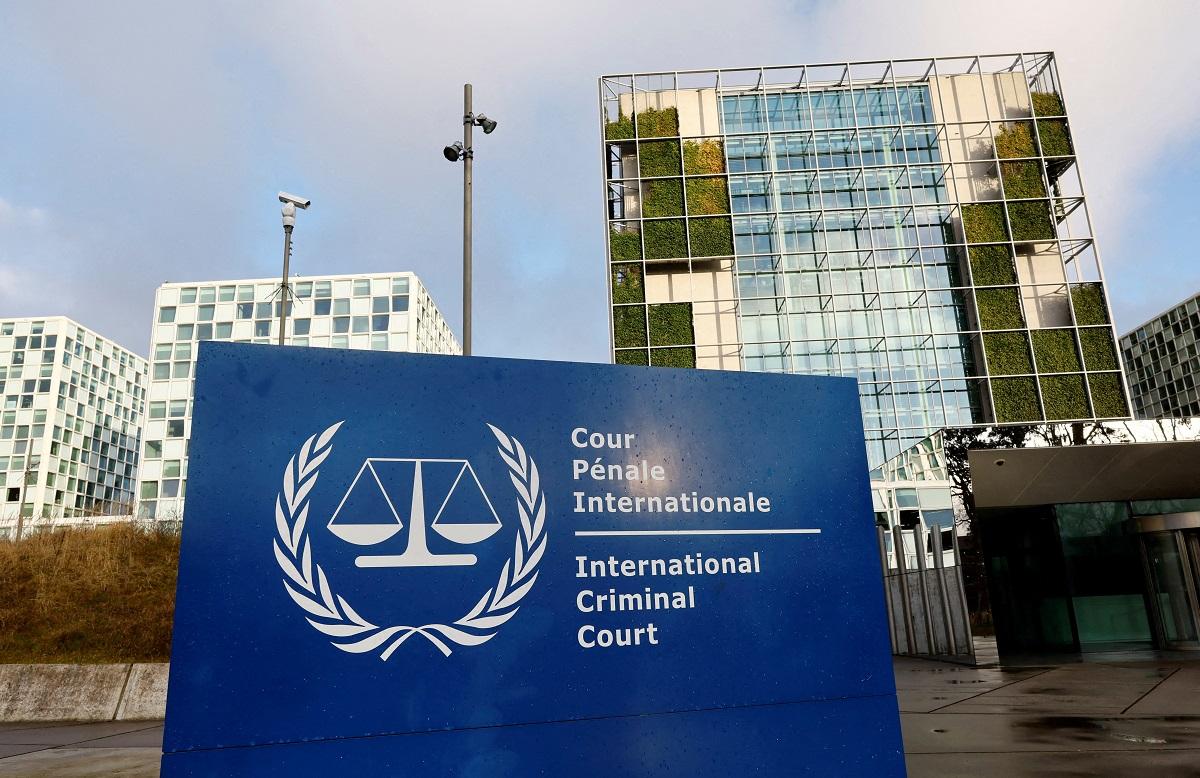
The International Criminal Court (ICC) Appeals Chamber is set to decide in an hour former President Rodrigo Duterte’s appeal following the Pre-Trial Chamber’s denial of his request for interim release.
Duterte's defense team argued that the chamber erred in finding that the former president posed a risk, in rejecting state guarantees, and in failing to take into account humanitarian considerations.
But how many times has the international tribunal granted an accused their request for temporary liberty?
Only two cases
According to Atty. Gilbert Andres, executive director of the Center for International Law Philippines and an ICC accredited counsel, and ICC assistant to counsel Kristina Conti, the international court has granted interim release in only two cases involving six individuals.
These were the cases of Paul Gicheru, who faced witness interference charges, and the case of Jean-Pierre Bemba and his co-accused, who were charged for witness tampering.
“The crime is an international crime ano, such as crimes against humanity, genocide, and war crimes. The ICC has not yet issued an interim release for a detainee,” Andres told GMA News Online.
“It only issued, at the best of my knowledge, two instances. The crime charged was not for international crime under Article 5. It was for an offense against the administrational justice,” he added.
Article 5 of the Rome Statute, which established the ICC, lists the four core under the ICC’s jurisdiction: the crime of genocide, crimes against humanity, war crimes, and the crime of aggression.
In contrast, Gicheru and Bemba faced charges under Article 70 or offences against the administration of justice.
In 2018, Bemba was granted provisional release with the Trial Chamber VII saying that none of the risks justifies his further detention.
The chamber noted that he was already acquitted in his main case.
Meanwhile, in 2021, the ICC Pre-Trial Chamber A granted Gicheru’s request for interim release, noting that his voluntary surrender demonstrated his willingness to subject himself to the jurisdiction of the court.
It also noted that the Prosecution did not oppose Gicheru’s request for interim release.
What does this mean for Duterte?
Asked what the lack of any interim release in core crimes could mean for Duterte’s bid, Andres said this shows that the Appeals Chamber is likely to dismiss the former state leader’s appeal.
“Well, it means that, if the Appeals Chamber will just be consistent with the ICC’s jurisprudence, then most probably it will actually dismiss the appeal,” he said.
The former president is currently detained at The Hague, Netherlands.
He is facing charges for crimes against humanity, a core crime under the international tribunal, over 49 incidents of murder and attempted murder related to the drug war during his time as Davao City mayor and later as president.
In rejecting his first interim release request, the ICC Pre-Trial Chamber I found that his continued detention continued "to remain necessary under article 60(2) of the Statute based on each of the requirements set by article 58(1) of the Statute."
Included in the decision was Duterte's contention against his arrest and detention, his family's demands that he should be brought back to the Philippines, and remarks by his daughter, Vice President Sara Duterte, on breaking the former president out of ICC detention.
In appealing this, Duterte’s camp argued that Duterte “has neither the desire nor capacity to flee or to return to a life of power or politics.” It also cited his weak state of mental and physical health.
Meanwhile, the ICC Prosecutor has opposed Duterte’s appeal on his interim release request, saying the defense failed to "establish any legal or factual error" in the decision for his continued detention.
Asked about what makes it difficult to get an approval for interim release, Andres said that this is because the charges involve international crimes.
“What’s charged before the ICC is an international crime and secondly, a person is detained because there might be a flight risk. So I think that’s really the context. The context is international criminal justice. That’s why there has never been an interim release granted for those who are charged with international crime,” he said.
Duterte has also waived his right to be present during the reading of the judgement on his appeal.
In an interview with Balitanghali, Andres said if Duterte's appeal will not be granted, the former leader will stay at the Scheveningen Detention Center.
If it will be granted, Andres believed the Appeals Chamber will set conditions.
"Sa tingin ko po may mga kondisyon po 'yan na ibibigay kagaya po ng doon lang siya sa bansang willing po siyang tanggapin at siyempre hindi po niya pwedeng i-contact, whether directly or indirectly, ang mga biktima at witnesses po," he said.
(I think it will set conditions such as staying in the country that will accept Duterte and prohibiting him from contacting, whether directly or indirectly, the victims and witnesses.)
Asked if Duterte can go back to the Philippines if ever the interim release is granted, Andres said the country has no agreement with the ICC to accept the former leader.
"In the unfortunate event na mapagbigyan, hindi po siya dapat pumunta sa Pilipinas kasi wala naman pong agreement with the Philippines, wala naman pong sinasabi ang Pilipinas na willing itong i-accept si Mr. Duterte," he said.
(In the unfortunate event that the appeal is granted, he should not go to the Philippines because the ICC has no agreement with the Philippines, the country did not say that it is willing to accept Mr Duterte.)
He added that since the Philippines is no longer a member of the ICC, the tribunal has no assurance that the country will follow the conditions that will be set for the interim release.
The Philippines withdrew from the ICC in 2018, during the administration of then President Duterte.
“I therefore declare and forthwith give notice, as President of the Republic of the Philippines, that the Philippines is withdrawing its ratification of the Rome Statute effective immediately,” the President said in a statement.—AOL, GMA Integrated News

