

 GMA Brandtalk
 Tracking
 Archives

DOLE: Employers should have safety protocols for workers amid disruptive events
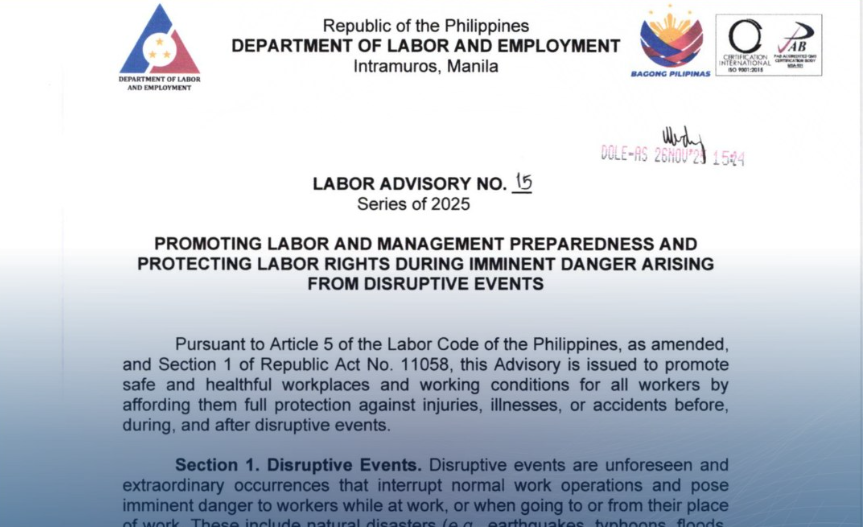
Employers in the private sector are now required to adopt a comprehensive safety program that reinforces their readiness and ensures the protection of employees amid disruptive events like earthquakes, typhoons, and volcanic eruptions.
In Labor Advisory No. 15, series of 2025, the Department of Labor and Employment (DOLE) underscored the need for stronger workplace preparedness and reinforced labor protections.
It also stressed the importance of promoting “safe and healthful workplaces and working conditions for all workers by affording them full protection against injuries, illnesses, or accidents before, during, and after disruptive events.”
Disruptive events are unforeseen and extraordinary occurrences that interrupt normal work operations and pose imminent danger to workers while at work, or when going to or from their place of work.
These include natural disasters like earthquakes, typhoons, floods, and volcanic eruptions; human-induced disasters such as armed conflict, cyberattacks, and industrial accidents; public health emergencies; social and political events, and other similar occurrences.
The labor advisory, signed by DOLE Secretary Bienvenido Laguesma on November 15, required all employers to “formulate and adopt a comprehensive and responsive occupational safety and health (OSH) program, which shall include a business continuity and disaster preparedness plan for disruptive events.”
This should include planning, engineering safeguards to protect facilities and utilities, administrative measures such as evacuation protocols and communication systems, and the provision of personal protective equipment to support safe movement and response actions during emergencies.
The DOLE advised employers to suspend work when conditions pose an immediate danger and implement flexible work arrangement to reduce their employees’ exposure to hazards.
For establishments engaged in public utilities, health services, and other vital operations, employers were encouraged to maintain a minimum number of personnel to ensure continuity of critical processes.
The labor advisory also affirmed that the principle of “no work, no pay” applies during work suspensions unless company policies or collective agreements provide more favorable terms.
Workers were reminded to follow their employers’ established safety procedures, use assigned protective equipment, avoid actions that increase their risk or hinder emergency operations, and promptly notify their employers of any imminent danger.
Workers who report imminent danger or refuse to report to work due to danger arising from disruptive events must not face administrative sanctions, the DOLE added. — JMA, GMA Integrated News

