

 GMA Brandtalk
 Tracking
 Archives

UP Law associate dean: Cha-cha could be used to address flood control mess
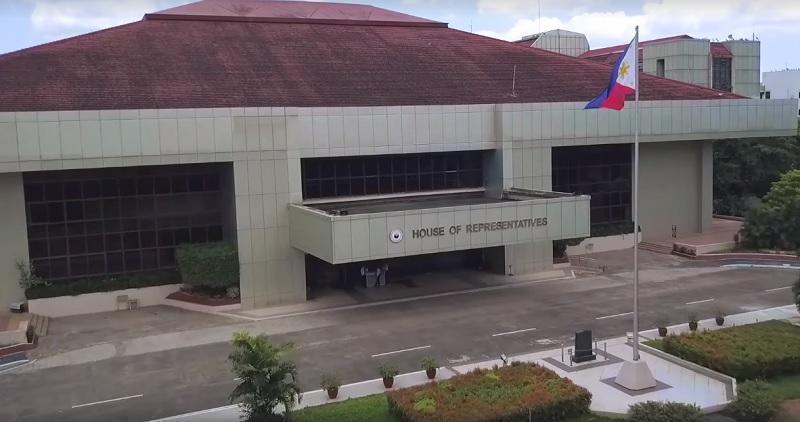
The raging flood control mess and the loss of billions of public funds to ghost or substandard projects should prompt members of Congress to push for Charter change (Cha-cha) to address the systemic failure in governance, a University of the Philippines law professor said on Wednesday.
UP College of Law associate dean Paolo Tamase made the remarks during a House hearing on pending House bills and resolutions calling for amendments to the 1987 Constitution.
The measures pushed for the establishment of a constitutional convention (con-con) wherein voters elect delegates who will draft proposed amendments, which are then submitted to a plebiscite for ratification.
“We would suggest that any process to change the Charter must be done in a transparent manner and not cut corners [because] in the past, I understand that there may have been ideas or suggestions, for example, for the House and the Senate to vote jointly because it would be the faster process,” Tamase said.
“But unlike past occasions, we are perhaps, just from a scholarly perspective, from an academic perspective, in the highest constitutional moment that we’ve had since 1987 in the sense that the people, because of the flood control issue, have come to the realization that if the failure is systemic, then maybe the system needs changing,” he said.
Tamase added: “So, the House may wish to take advantage of that earnest desire of the people [for change] to seriously talk about their Constitution in a mature democracy by going through the longer, more difficult process.”
Under the 1987 Constitution, the Constitution can be amended using three modes:
- by Congress, upon a vote of three-fourths of all its members (Constituent Assembly)
- by Congress calling for a Constitutional convention (Concon), and
- by people’s initiative, meaning through initiative upon a petition of at least 12% of the total number of registered voters, of which every legislative district must be represented by at least 3% of the registered voters therein.
Any amendments to, or revision of, the Constitution must be ratified by a majority of the votes cast in a plebiscite.
The Constitution, however, does not explicitly state if the House and the Senate should vote jointly or separately on proposed Charter amendments.
This ambiguity on voting is one of the provisions that the National Unity Party lawmakers in the House wants addressed by the con-con.
Tamase agreed that the lack of an explicit provision pertaining to a joint or separate voting on constitutional amendments should be addressed for Cha-cha change to proceed.
“That means that if the House were to propose amendments to the Charter directly or if it were to call for a con-con, then the least common denominator would be for the House and the Senate to vote separately but meet jointly. Now, as to the actual amendments, one important amendment may actually be clarifying Article 17. And that involves, you know, clearing up, Mr. Chair, members of the committee, the ambiguity between whether the process really requires the houses to meet and vote jointly or separately,” he said.
“It seems like a very minor change to the Constitution. But the idea is to have a Constitution that balances both the required rigidity of a fundamental document that is not subject to policy changes for every few years, and at the same time being a current document that addresses really the fundamental needs of the people,” Tamase added.
Ako Bicol Party-list Rep. Alfredo Garbin then pointed out that the House and the Senate voting jointly in amending the Constitution is also compliant with the Charter.
This is given that the House and the Senate vote jointly on certain proposals such as the suspension of the writ of habeas corpus (right against illegal detention), extension of martial law, declaration of war, among others.
“The manner of voting jointly in the 1987 Constitution is not a new concept. There are instances in the 1987 Constitution considered of supreme and paramount importance that Congress (the House and the Senate) vote jointly,” Garbin said.
However, Tamase said such circumstances of joint voting are under different contexts and as such cannot be applied in amending the 1987 Charter.
“If we look at the instances where voting jointly is allowed such as the declaration of the state of war or the revocation of martial law, those instances are not so much because of the importance of the matter, but because of the expediency. Because in a war or an emergency, it is necessary to gather Congress in one assembly rather than try to have them vote separately,” Tamase said.
He added that in every other instance, Congress is bicameral and that the Constitution acknowledges the independence of the House and the Senate.
“That is why in the impeachment process, the UP College of Law Constitutional Law Faculty's observation was that the Senate could not dictate upon the House on how it would proceed with the process. Even in non-legislative settings, the default is bicameralism, except in rare instances of expediency,” Tamase said. — JMA, GMA Integrated News

