

 GMA Brandtalk
 Tracking
 Archives

SC: Votes for nuisance bets under AES are stray
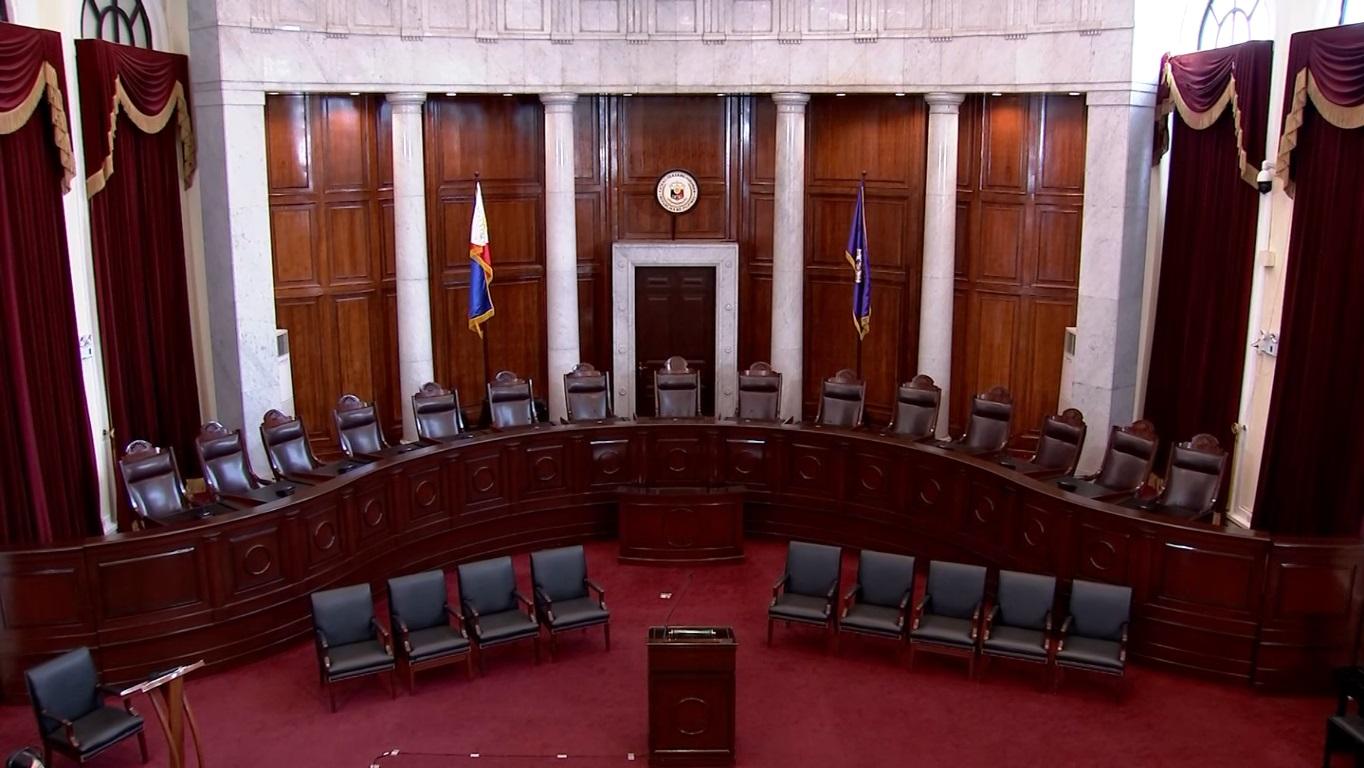
The Supreme Court has issued a decision abandoning a precedent and clarifying that votes cast for a nuisance candidate under the automated election systems (AES) shall be considered as stray votes and shall not be counted in favor of any candidate.
This will be the applicable rule on the votes for a nuisance bet, whose certificate of candidacy is cancelled or is not given due course, according to a decision penned by Associate Justice Maria Filomena Singh on the petition for certiorari and prohibition filed by Marcos “Macoy” Cabrera Amutan.
Amutan ran as a board member of the Sanggunian Panlalawigan for Cavite’s fifth district in 2022.
In a news release, the SC said Amutan was initially proclaimed as one of the winners, bagging a board seat. However, Alvic Madlangsakay Poblete, a losing candidate, was declared a nuisance bet; the votes cast for him were counted in favor of Francisco Paolo Poblete Crisostomo.
The Commission on Elections proceeded to annul the proclamation of Amutan and declare Crisostomo as one of the winning bets.
The SC said that in deciding the case, the it traced existing jurisprudence, such as Dela Cruz v. Comelec, Santos v. Comelec, and Zapanta v. Comelec, where the prevailing doctrine on the treatment of votes for nuisance candidates in manual elections required that “votes cast for the nuisance candidate, or such votes where the intent of the voter cannot be determined on the face of the ballot, are counted in favor of the legitimate candidate, as no other candidate is deemed to have run for that position as of the day of the election.”
“The SC found it imperative to revisit these pronouncements. Under the AES, the Court said that there will no longer be vague votes because the voting machines will base their count on the full names with aliases of each candidate, as shaded in the ballots,” the SC said.
“As opposed to the manual elections where the voters had to handwrite the name of their chosen candidates, there should no longer be any room for confusion under the AES,” it added.
In cases where a nuisance candidate is declared as such, the SC said the following will be the effects on the kinds of votes reflected in the ballot:
-The votes clearly cast for the legitimate candidate are counted in favor of the legitimate candidate; and,
- The votes clearly cast for the nuisance candidate, whose certificate of candidacy is cancelled or not given due course, are considered stray votes and shall not be counted in favor of any other candidate.
The SC said that the previous rule “had no basis in law as the clear tenor of Sections 69 and 211 of the Omnibus Election Code provides that a nuisance candidate is deemed to have never filed a certificate of candidacy and therefore the votes cast for such nuisance candidate are considered stray.”
“Thus, there can be no crediting of votes cast for a nuisance candidate in favor of any other candidate,” the SC added.
“A rule that is without unequivocal basis in law and supplants people’s choices on the basis of perceived errors in the way they had cast their vote usurps the very sovereign will that the rule intends to protect,” the SC said.

