

 GMA Brandtalk
 Tracking
 Archives

US, Canada condemn China water cannon attack vs Filipino fishers
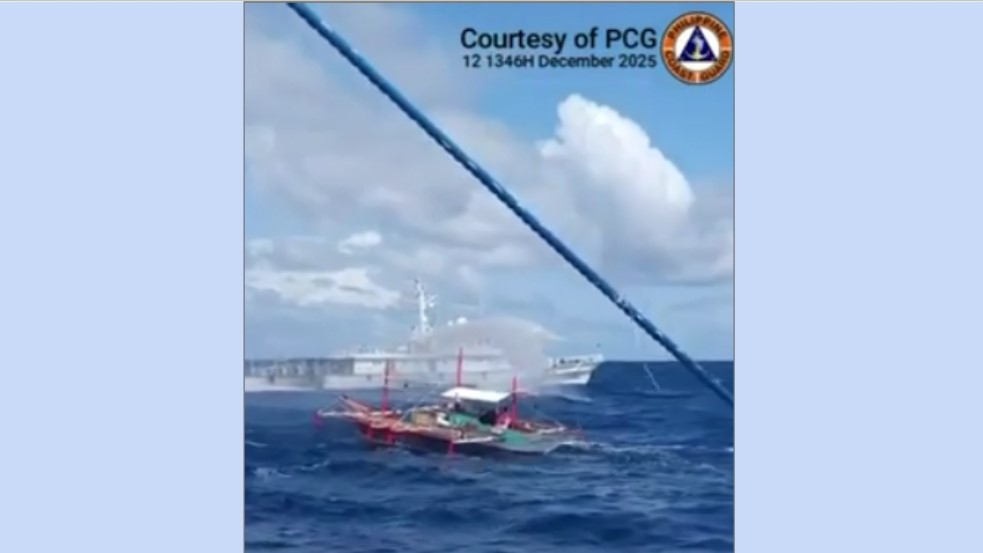
The United States and Canada on Monday condemned China's recent water cannon attack against Filipino fishermen at Sabina Shoal (Escoda Shoal), an atoll within the Philippines' exclusive economic zone.
"These aggressive actions endangered Filipinos fishing for their livelihoods. We stand with our Philippine allies as they confront China’s provocative actions and increasingly dangerous tactics against its neighbors, which undermine regional stability," said Thomas Pigott, principal deputy spokesperson at the US State Department.
Three fishermen were injured in the attack off Sabina Shoal, which also caused “significant damage” to two fishing vessels, according to the Philippine Coast Guard (PCG).
The PCG said some 20 Filipino fishing boats at the vicinity of Escoda Shoal were "targeted with water cannons and dangerous blocking maneuvers" by two China Coast Guard (CCG) vessels and accompanying Chinese militia ships.
"In a brazen escalation, small CCG Rigid Hull Inflatable Boats (RHIBs) deliberately cut the anchor lines of several FFBs, endangering the vessels and their crews amid strong currents and high waves," the PCG said.
"As a direct result of these aggressive actions, three Filipino fishermen sustained physical injuries, including bruises and open wounds," it added.
On Friday, China's coast guard said it had driven away multiple Philippine vessels and taken "control measures."
"The United States condemns China’s water cannoning and cutting of anchor lines of Filipino fishers close to Sabina Shoal in the South China Sea," the State Department said.
"China Coast Guard’s aggressive tactics—water cannoning and cutting anchor lines—against Filipino fishers at Sabina Shoal threaten lives and livelihoods. We strongly condemn these illegal actions and applaud @coastguardph for aiding fishers and defending sovereign rights," US Ambassador to the Philippines MaryKay Carlson said in a post on X on Sunday.
China Coast Guard’s aggressive tactics—water cannoning and cutting anchor lines—against Filipino fishers at Sabina Shoal threaten lives and livelihoods. We strongly condemn these illegal actions and applaud @coastguardph for aiding fishers and defending ???????? sovereign rights.
— Ambassador MaryKay L. Carlson (@USAmbPH) December 14, 2025
Meanwhile, the Embassy of Canada in the Philippines expressed concern over the incident.
"Canada is seriously concerned by the Chinese Coast Guard aggressive actions against Filipino civilian fishing vessels near Sabina Shoal,” Ambassador David Hartman said.
“These actions jeopardize regional peace and stability. Disputes must be resolved peacefully and in accordance with international law,” he added.
Located 75 nautical miles or about 140 kilometers off Palawan, Escoda Shoal is a coral reef formation with a central lagoon surrounded by discontinuous shallow sections. It is also called Sabina Shoal, which China refers to as Xianbin Reef.
READ: EXPLAINER: What is the Sabina Shoal and why is it important?
China's increasingly aggressive actions in the South China Sea prompted serious concerns and condemnations from several countries after its coast guard vessels have repeatedly blasted water cannons, used military-grade lasers and blocked Philippine government ships from conducting patrols in the West Philippine Sea, that part of the South China Sea that is nearest to the Philippine archipelago, but being claimed by China as its own.
The Hague-based tribunal in the Netherlands ruled in favor of the Philippines in July 2016 and declared China's massive and historic claim on the South China Sea illegal and baseless under international law. China does not recognize the ruling. —KG, GMA Integrated News

