

 GMA Brandtalk
 Tracking
 Archives

Marcos tells PCG: ensure Pinoy fisherfolk's safety
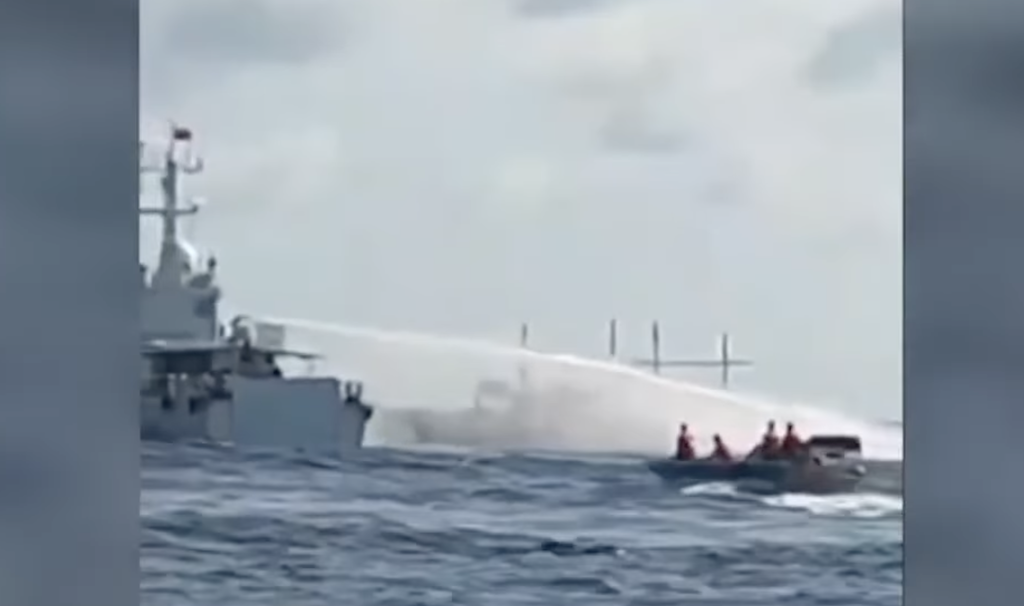
President Ferdinand “Bongbong” Marcos Jr. has directed the Philippine Coast Guard (PCG) to ensure the safety of Filipino fisherfolk following China’s latest water cannon attack against Filipino fishermen at Sabina Shoal, also known as Escoda Shoal, an atoll within the Philippines’ exclusive economic zone (EEZ).
During a press briefing, Palace Press Officer Undersecretary Atty. Claire Castro said the President also ordered the deployment of forces in "strategic locations" to protect fisherfolk.
“Nakausap po mismo natin si Commodore (Jay) Tarriela, at ang ipinagbilin at direktiba po ng Pangulo ay unahin ang kaligtasan ng ating mga kababayan—ang mga mangingisda na minsan ay nanganganib ang kanilang buhay,” Castro said.
(We spoke with Commodore Tarriela, and we conveyed to him the President’s directive to prioritize the safety of our citizens, particularly our fishermen, whose lives are at times in danger.)
“At ipinag-utos din po na magkaroon ng deployment sa mga strategic location para mabantayan at mabigyan ng proteksyon ang ating mga mangingisda,” she added.
(He also ordered the deployment of personnel in strategic locations to monitor and provide protection to fisherfolk.)
The PCG said three fishermen were injured in the incident, which also caused “significant damage” to two fishing vessels.
According to the PCG, around 20 Filipino fishing boats in the vicinity of Escoda Shoal were “targeted with water cannons and dangerous blocking maneuvers” by two China Coast Guard (CCG) vessels and accompanying Chinese maritime militia ships.
“In a brazen escalation, small CCG rigid-hull inflatable boats (RHIBs) deliberately cut the anchor lines of several Filipino fishing boats, endangering the vessels and their crews amid strong currents and high waves,” the Coast Guard said.
“As a direct result of these aggressive actions, three Filipino fishermen sustained physical injuries, including bruises and open wounds,” it added.
On Friday, China’s coast guard said it had driven away multiple Philippine vessels and taken what it called “control measures.”
Castro said the President supports the purchase of additional vessels for the PCG to help protect the country’s maritime interests.
“Sinusuportahan po ng Pangulo ang pagbili ng mga coast guard vessels para mas marami ang makapagbantay sa ating interes at sa interes ng ating mga kababayan. Ito ang panahon upang ang bawat Pilipino ay magkaisa at iangat ang interes ng bansa at ng kapuwa Pilipino,” she said.
(The President supports the purchase of Coast Guard vessels so more can be deployed to protect the interests of the country and its people. This is a time for Filipinos to unite and uphold the interests of the nation and fellow Filipinos.)
Located about 75 nautical miles, or roughly 140 kilometers, off Palawan, Escoda Shoal is a coral reef formation with a central lagoon surrounded by discontinuous shallow sections. It is also known as Sabina Shoal, which China refers to as Xianbin Reef.
China claims almost the entire South China Sea, a major shipping route for more than $3 trillion in annual shipborne commerce, including areas claimed by the Philippines, Vietnam, Indonesia, Malaysia, and Brunei.
Parts of the South China Sea within Philippine territory have been designated by the government as the West Philippine Sea to reinforce the country’s claim.
The West Philippine Sea refers to maritime areas on the western side of the Philippine archipelago, including the Luzon Sea and the waters within and adjacent to the Kalayaan Island Group and Bajo de Masinloc.
In 2016, the Permanent Court of Arbitration in The Hague ruled in favor of the Philippines, declaring that China’s expansive claims in the South China Sea had “no legal basis.” China, however, has refused to recognize the ruling.—MCG, GMA Integrated News

