

 GMA Brandtalk
 Tracking
 Archives

DSWD to reach out to more street dwellers amid holidays
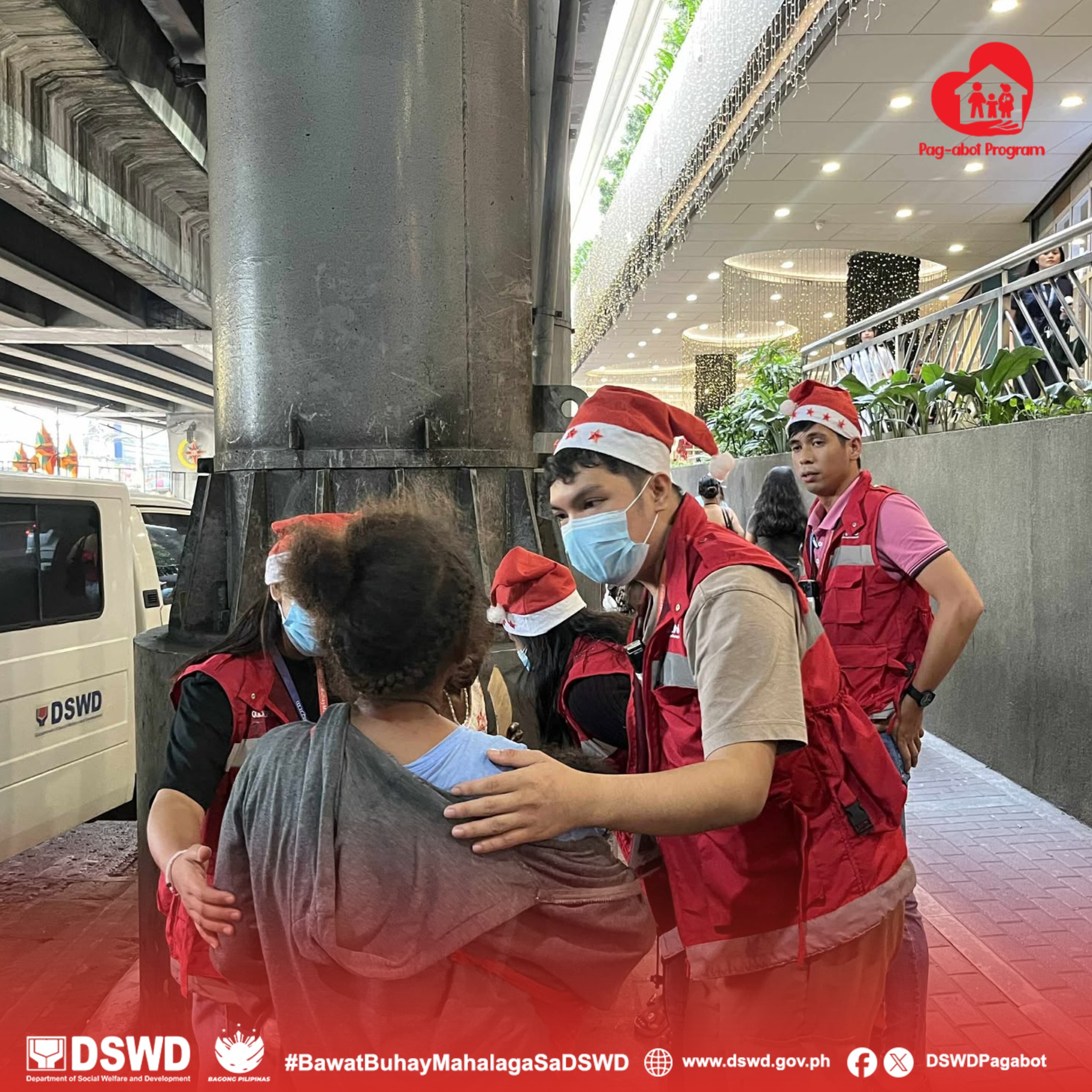
The Department of Social Welfare and Development (DSWD) on Monday assured that it will ramp up its interventions for vulnerable families and persons in street situations as it is expecting an increase in street begging and vagrancy amid the upcoming Christmas holidays.
This is as the DSWD said its Pag-abot Program has reached out and extended assistance to 10,570 families and persons living on the streets since its inception.
In a statement, DSWD spokesperson and Assistant Secretary Irene Dumlao said they are expecting an increase in the incidence of street begging and vagrancy amid the holidays.
She also underscored the importance of proactive interventions to protect vulnerable sectors, especially children, from abuse, exploitation, and other risks.
“Tuloy-tuloy po ito, hanggang sa dumating ang panahon na wala na tayong makikitang naninirahan sa kalsada, hindi po kami titigil sa pagtulong. Kaya asahan pa yung pagtaas ng bilang ng aming mare-reach out,” Dumlao said.
(We will continue to do these efforts. We will not stop helping until we no longer see street dwellers. So you can be assured that we will be reaching out to more people.)
The DSWD’s Pag-abot Program reaches out to families and persons in street situations to protect and guide them towards safer and more stable living conditions.
“Hindi lang rescue ang ginagawa dito, kung ‘di tuloy-tuloy na suporta tulad ng shelter, referral, at pangkabuhayan para magkaroon ng mas maayos at ligtas na panibagong buhay,” Dumlao said.
(We are not just rescuing them, but continuous support like shelter, referrals, and livelihood for them to have a better and safer new life.)
So far, the Pag-abot Program assisted 1,296 children in street situations (CISS), 1,894 individuals in street situations (IISS), and 7,380 families in street situations (FISS).
Pag-abot teams reached out to them through sustained and well-coordinated daily field operations.
Beneficiaries were provided with interventions like shelter in transitional facilities, referrals to DSWD residential care centers, transportation assistance for persons and families returning to their home provinces, and livelihood packages to reduce the risk of returning to street life.
Dumlao assured that the DSWD is committed to facilitate their reintegration into their communities of origin, provide appropriate social protection services, and push for long-term solutions to prevent them from returning to a life on the streets.
“Sa bawat pamilyang naiuuwi sa kanilang probinsya at bawat batang nailalayo sa kapahamakan sa lansangan, nakikita ang tunay na layunin ng programa,” Dumlao said.
(With each family that returns home to their province and each child that is rescued from risks on the streets, we see the true goal of our program.)
The DSWD also encouraged the public to help protect at-risk individuals and families.
Reports and referrals may be submitted through the DSWD Pag-abot Program Facebook page, via hotline 8-931-9141 from Mondays to Fridays, or through email at pagabotprogram@dswd.gov.ph. — JMA, GMA Integrated News

