

 GMA Brandtalk
 Tracking
 Archives

Support for passage of Zero Hunger Law gains ground
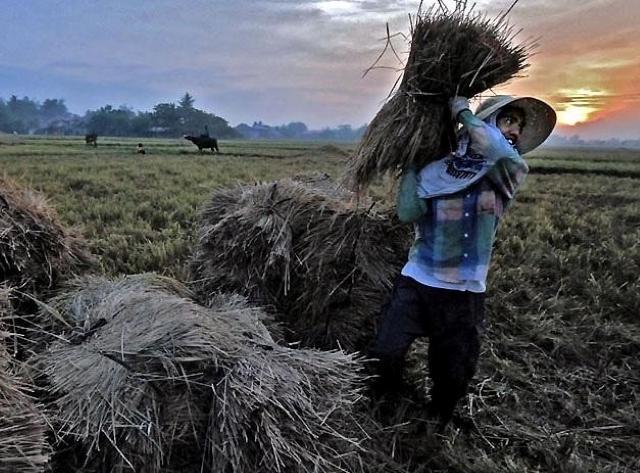
The House Committee on Human Rights has called for the passage of specific legislation to address hunger in the Philippines.
During a hearing on Thursday, concerned agencies and groups—including the Department of Health (DOH), Department of Science and Technology (DOST), Department of Agriculture (DA), and UNICEF—expressed support for several House bills aimed at achieving Zero Hunger.
The proposed measures include:
- House Bill (HB) 239 – Establishing a comprehensive legal and institutional framework to secure every Filipino’s right to adequate food, and appropriating funds therefor;
- HB 3050 – Ensuring zero hunger for all Filipinos (authored by Rep. Bienvenido Abante Jr.);
- HBs 3125 and 3173 – Providing a framework to protect and promote the right to adequate food (Reps. JB Bernos and Brian Poe); and
- HB 3545 – Ensuring the availability, adequacy, accessibility, and safety of food for every Filipino (House Speaker Faustino “Bojie” Dy III)
During the hearing, National Food Coalition president Aurea Miclat-Teves pointed out what she described as a policy gap in addressing hunger and poverty in the country.
She said this finding underscores the need for a Zero Hunger Bill or law that would serve as a legal framework guaranteeing Filipinos access to food, with considerations for availability, accessibility, cultural acceptability, and freedom from harmful substances.
“While we have the Magna Carta of the Poor, it is not a framework on the right to adequate food based on UN human rights principles and declarations that can rationalize all government legislation and programs,” Miclat-Teves said.
“Meanwhile, the 1987 Constitution has no explicit provision on the right to adequate food, particularly on freedom from hunger,” she added.
According to Miclat-Teves, the proposed Zero Hunger Law would serve as a national food policy to rationalize the legal framework governing food systems.
“This law is built on human rights principles, including participation, accountability, non-discrimination, transparency, human dignity, and the rule of law,” she said.
Miclat-Teves also cited existing executive issuances—such as Executive Order No. 101, which mandates the full implementation of the Sagip Saka Act, and Executive Order No. 27, which reorganized the Inter-Agency Task Force on Zero Hunger (IATFZH)—that aim to protect the right to food.
However, she stressed the need for a specific law to ensure continuity regardless of changes in administration.
“These are executive orders. We need a law to guarantee that the right to food will continue even with a change of government,” she said.
Among the provisions discussed were statutory definitions allowing displaced individuals, such as victims of war or disasters, to legally claim assistance, as well as penalties for local government units that obstruct access to food.
The committee directed concerned agencies to submit their official position papers on the proposed bills and called for additional hearings and expert panels to further discuss Zero Hunger targets.—MCG, GMA Integrated News

