

 GMA Brandtalk
 Tracking
 Archives

ICC wants more comments on Duterte's appeal on court jurisdiction
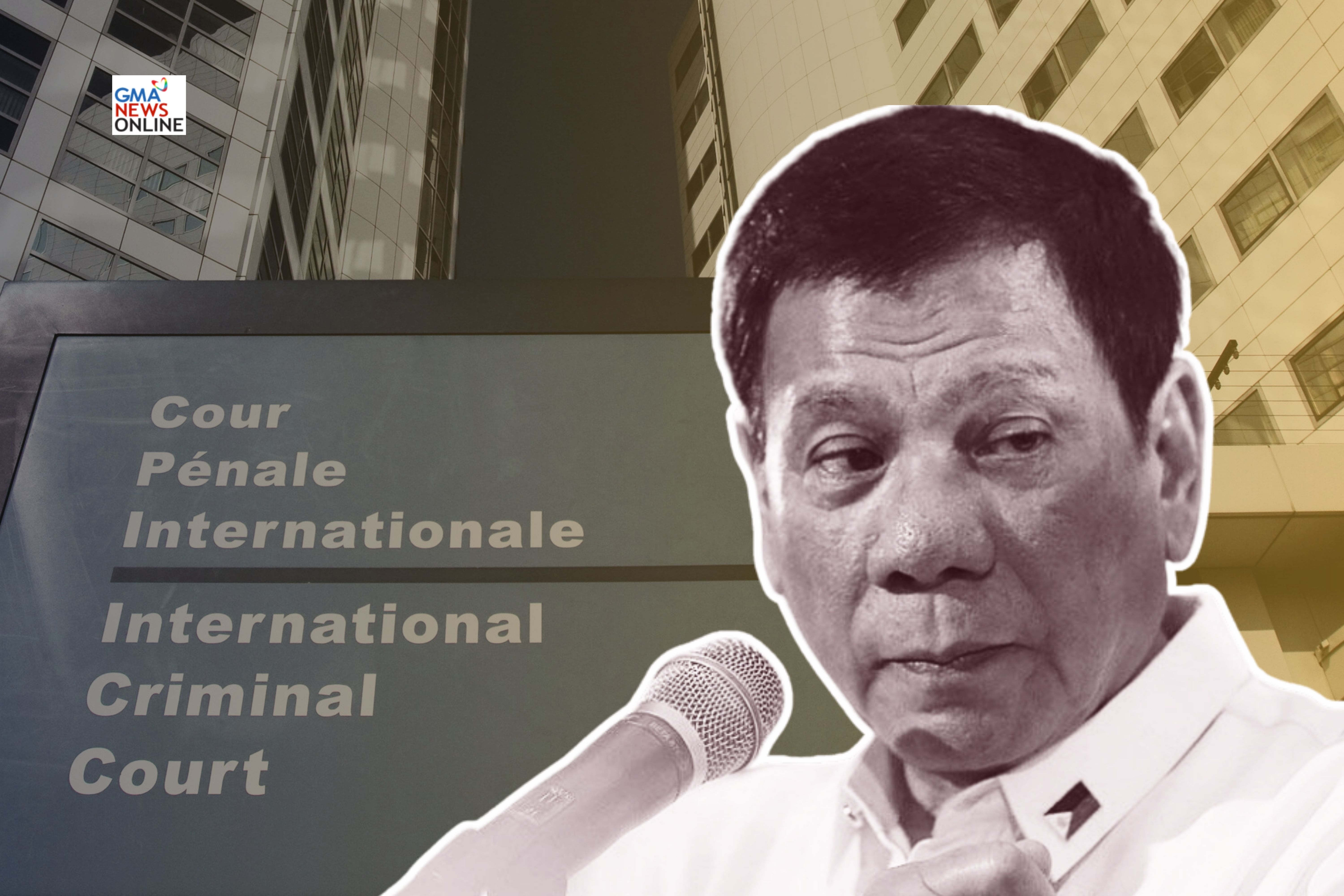
The Appeals Chamber of the International Criminal Court (ICC) has invited the Office of the Prosecutor and the Office of Public Counsel for Victims (OPCV) to submit their additional observations on former President Rodrigo Duterte’s appeal on an earlier ruling that rejected his challenge to the court’s jurisdiction.
In a six-page order dated December 16, the ICC Appeals Chamber said it is necessary “for the proper disposal of the appeal for the parties and participants to address specific issues which have not been fully developed in the Impugned Decision and in the submissions presented before the Appeals Chamber thus far.”
“The Appeals Chamber, may, proprio motu, order the parties and participants to address specific issues in written or oral submissions within a time limit specified by the Appeals Chamber,” the order noted.
It gave the Office of the Prosecutor and the OPCV until 4 p.m. of Friday, Jan. 16, 2026 to submit additional observations, with Duterte’s legal team allowed to respond by 4 p.m. of Friday, Jan. 23, 2026.
However, the ICC Appeals Chamber rejected the defense request to reply to the Deputy Prosecutor’s earlier response to the Appeals Brief lodged by Duterte’s lawyers.
It said the additional observations should discuss the following issues pertaining to provisions in the Rome Statute and the ICC’s jurisdiction:
“How should articles 12(2) and 13(c) of the Statute be understood within the Court’s legal framework on jurisdiction? How do articles 12, 13, and 127 of the Statute interact? What are the consequences of such an interaction, both generally and in the specific case at hand?”
Article 12 of the Rome Statute outlined the preconditions to the exercise of ICC jurisdiction, while Article 13 discusses the exercise of the ICC’s jurisdiction.
Article 12 (2) provided the preconditions for the ICC to exercise its jurisdiction: if the state is a party to the Rome Statute or has accepted the jurisdiction of the ICC, if the crime or conduct in question occurred on the state’s territory, and if the person accused of the crime is a national of the said state.
Article 13 (c) stated that the ICC may exercise its jurisdiction with respect to a crime if the Prosecutor has initiated an investigation of the alleged crime.
Meanwhile, Article 127 discussed the withdrawal of a state from the Rome Statute.
It may be recalled that in October, the ICC Pre-Trial Chamber I rejected the challenge of Duterte’s legal team to the court’s jurisdiction.
The 80-year-old Duterte has been detained in The Hague penitentiary while facing cases of crimes against humanity in line with his war on drugs in the Philippines.
In November, his lawyers filed an Appeals Brief that detailed its arguments in seeking a reversal of the ICC Pre-Trial Chamber I’s decision. It also sought his immediate and unconditional release.
However, the Office of the Prosecutor and the OPCV asked the ICC Appeals Chamber to dismiss the defense’s appeal on the ruling that upheld the ICC’s jurisdiction over Duterte.
In separate pleadings, they pointed out that Duterte’s lawyers failed to show any legal error in the decision that warranted a reversal and only repeated “previously rejected arguments.” — JMA, GMA Integrated News

