

 GMA Brandtalk
 Tracking
 Archives

House official urges more funds, support for PH research institutions
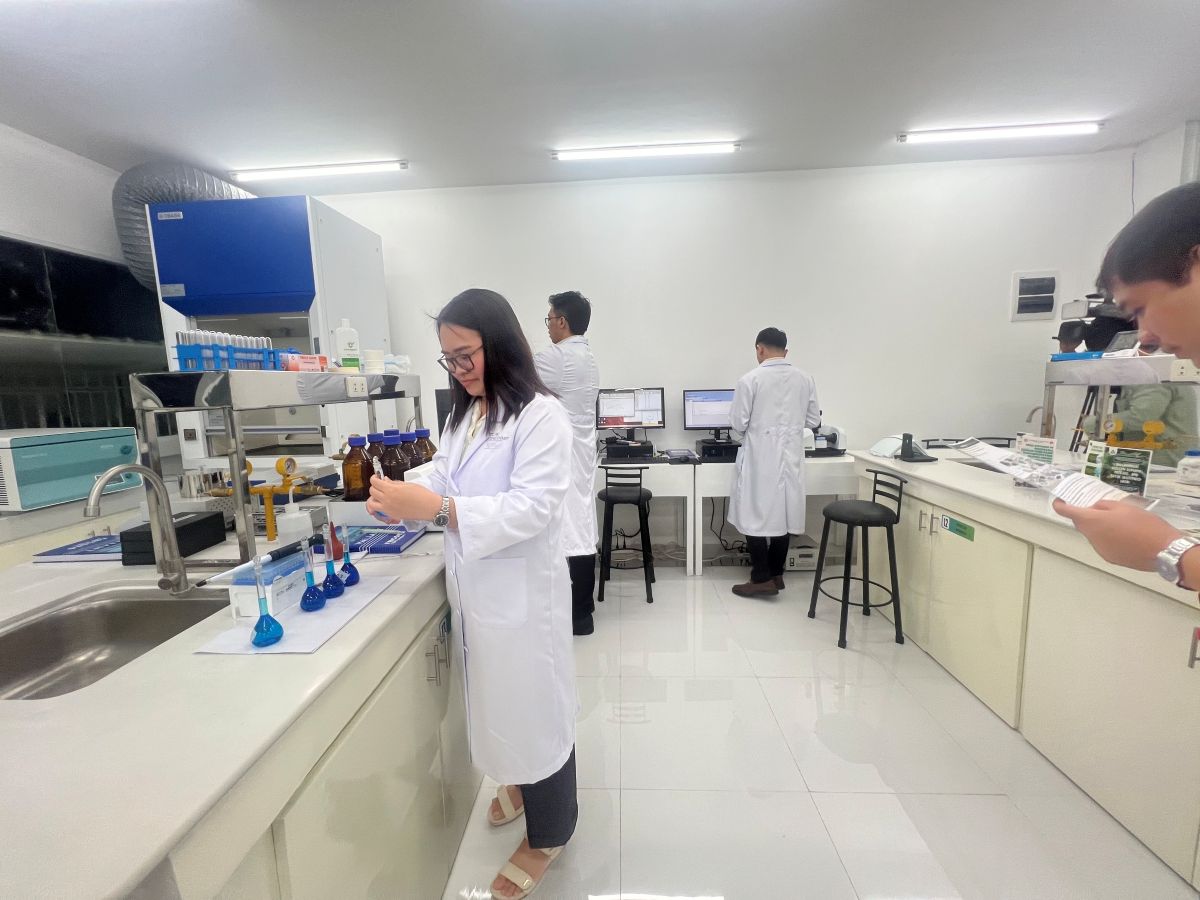
House higher and technical education panel chair and Tingog Party-list Rep. Jude Acidre on Wednesday called for more support and investments in Filipino researchers and institutions to strengthen the country’s research ecosystem.
Acidre made the appeal at the 2025 RDLead Conference and Year-End Assembly in Pasay City on Wednesday.
“Let us fund research generously. Let us champion it publicly. Let us connect it deeply to the work of governance, the pulse of our communities, and the hopes of our people,” Acidre said.
The House official stressed that policy and research must work hand-in-hand with efficient and effective legislation to improve the country.
He noted that policies enacted without research and evidence are often “detached from the very realities they seek to address” and that research with no policy-making makes it invisible and limited in impact.
“I have always believed, and continue to advocate, that policymaking and research must walk together. One cannot flourish without the other. Their partnership is not optional… It is essential,” Acidre said.
“They may look good on paper, but fall short in practice. They may be well-meaning, but ultimately ineffective. On the other hand, when research exists in isolation from the policy-making process, it risks becoming invisible – valuable, yes, but with limited reach, and with little influence on how real problems are actually solved,” he added.
Acidre also underscored the need to make the impact of research reach beyond journals and classrooms and to make it the focus of governance and the center of decisions, budget allocations, programs, and evaluations.
He then called on the government as well as the private sector to pour in more funding in Filipino researchers, laboratories, and research programs nationwide to ensure the continuing evolution of the Filipino research ecosystem.
The solon stressed that collaborations between the academe and the government is key to achieve a situation in which “mentorship is the norm.”
“We often speak about research as a way to solve problems. But research is also a way to see possibilities. To discover untapped talent. To unlock regional strengths. To nurture future leaders,” Acidre said.
He went on: “We need to stop operating in silos. We need our HEIs (higher education institutions) to talk to each other. We need government agencies to collaborate with academic institutions. We need industries to invest in joint research. We need international partners to believe in what Filipino researchers can do.”
The congressman pointed out that policy without research is mere guesswork and that research without policy would only delay the impact of potential change.
“But together, they can change lives. They can rewrite futures. They can transform systems… Let us build a research ecosystem where evidence is respected, where partnerships are valued, where ideas are shared freely across disciplines and geographies,” he said.
He noted that initiatives such as the Department of Science and Technology’s (DOST) RDLead Program helped Filipino researchers create an ecosystem that can help improve the country.
“The Philippines is rich in knowledge. Across our 18 regions, we have public and private universities that are doing outstanding work in agriculture, marine science, public health, education, engineering, energy, and the arts,” he said.
“The problem is not the absence of talent – it is the absence of opportunity, support, and visibility,” he added.
As chair of the House committee on higher and technical education, Acidre assured that he will keep on calling for investments in research institutions and pushing for policies that highlight the role of research in Philippine governance.
“I will continue working to ensure that our research ecosystem is not only strengthened but made more inclusive, more connected, and more empowered to serve the needs of the Filipino people,” he added. — JMA, GMA Integrated News

