

 GMA Brandtalk
 Tracking
 Archives

LTFRB OKs fixed pick-up fare for ride-hailing services during holiday rush
The Land Transportation Franchising and Regulatory Board (LTFRB) has approved a fixed pick-up fare system for ride-hailing services during the peak of the holiday season, a move the agency said is meant to balance passenger protection with fair compensation for drivers amid heavy traffic.
In a memorandum circular issued on December 17, the LTFRB said fares for transport network vehicle services (TNVS) will now begin once a driver accepts a booking, instead of only from the actual passenger pick-up point.
Under LTFRB Memorandum Circular 2025-058, the distance traveled by a driver from the point of booking acceptance to the passenger’s pick-up location will be included in the chargeable per-kilometer fare. The pick-up fare, however, will be limited to a maximum radius of five kilometers and will be computed at a fixed rate per kilometer.
LTFRB Chairperson Atty. Vigor D. Mendoza II said the fixed pick-up fare will vary depending on the type of vehicle—subcompact, sedan, AUV/SUV, or premium and will be added on top of the regular fare from the actual pick-up point to the passenger’s destination.
The new fare scheme will take effect on December 20, the same day the LTFRB implements a separate memorandum reducing the surge pricing cap for TNVS by 50%. Both measures will be in force until January 4, 2026.
“We understand the concerns raised by the TNVS drivers, and their arguments are backed by studies on travel time, especially in Metro Manila,” Mendoza said. “That is why we are implementing this measure as an acceptable and justified solution to balance the impact of the reduction in surge pricing on the TNVS community.”
He added that the move follows President Ferdinand “Bongbong” R. Marcos Jr.’s directive to protect commuters while remaining sensitive to the situation of workers in the public transport sector.
In a separate statement, TNVS Community Philippines (TCP) welcomed the LTFRB’s heeding their position in relation to the surge price cut, thus the approval of the compensatory adjustment in pick-up fares from December 20 to January 4.
The group said it held a consultation with the LTFRB and stood firm that the surge price mechanism should not be cut abruptly especially during holiday rush when the traffic volume is high which lengthens the travel time of each booking.
“Isinusulong na natin noon pa man ang pagkakaroon ng compensatory adjustment sa pick-up fares. Ito ay upang mabalanse ang gastusin ng TNVS drivers at hindi sila malugi sa gitna ng pagbawas sa surge cap at makapagpatuloy sila sa pagseserbisyo sa ating mga komyuters, lalo na ngayong Kapaskuhan,” TCP said.
(We are pushing for a compensatory adjustment in pick-up fares. This is to balance the expenses of TNVS drivers to avoid incurring losses amid the cut in surge pricing and for them to continue servicing the commuters especially during holiday rush.)
“Nagpapasalamat tayo sa LTFRB sa pagdinig sa ating hinaing. Gayunpaman, hindi dito nagtatapos ang laban,” TCP said.
(We thank the LTFRB for hearing our grievances. However, the fight is not yet over.)
TCP said that after the holidays, TNVS drivers and operators will still face inflation issues and rising operational costs.
According to the LTFRB, operational data show that drivers often spend significant time and fuel traveling from their current location to passenger pick-up points, particularly during periods of heavy congestion.
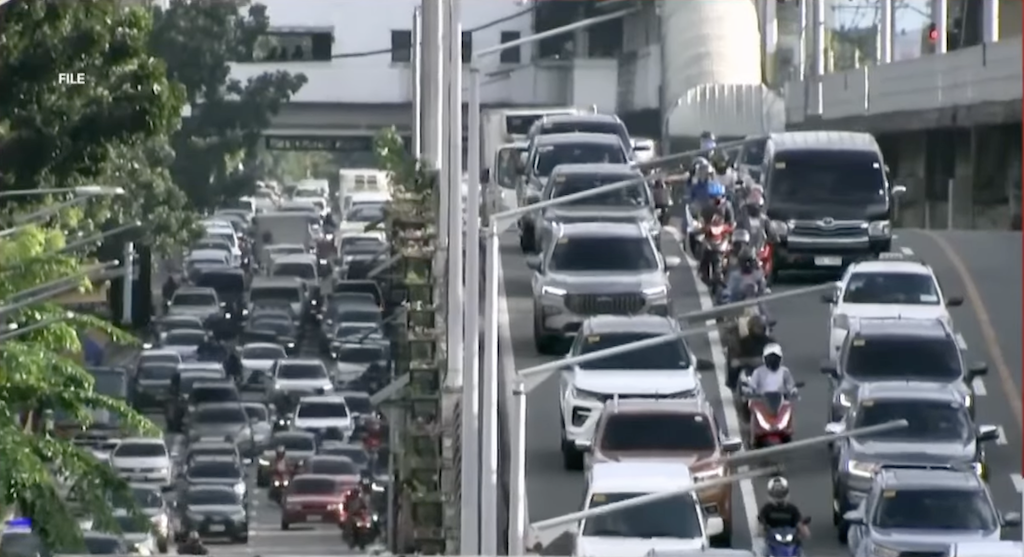
The agency cited a Metropolitan Manila Development Authority (MMDA) report showing that average vehicle speed along EDSA can drop to as low as one kilometer per hour during peak traffic, from the usual 17 to 20 kilometers per hour—equivalent to around five minutes per kilometer. It also referenced an April 2024 report by the House of Representatives’ Congressional Policy and Budget Research Department, which found that average travel time in Metro Manila is 25 minutes and 30 seconds per 10 kilometers, worsening to 28 minutes during morning rush hour and 34 minutes in the evening.
“The pick-up fare system is really aimed at aligning fare computation with actual service costs, promoting equitable compensation for TNVS drivers, and ensuring the availability of rides across all areas,” Mendoza said.
The memorandum also bars transport network companies (TNCs) from taking any share or commission from the fixed pick-up fare, to maximize drivers’ earnings. This follows an earlier LTFRB directive prohibiting TNCs from collecting commissions on surge pricing.
“This is proof that we are sensitive to the issues and concerns being raised by various sectors,” Mendoza said. “Naiintindihan namin ang lahat ng ito, kaya patuloy kaming naghahanap ng paraan upang mabalanse ang hinaing ng mga pasahero at ng ating mga kasama sa public transportation sector.”
The LTFRB said it will monitor the implementation of the measures throughout the holiday period. —with a report from Ted Cordero/AOL, GMA Integrated News

