

 GMA Brandtalk
 Tracking
 Archives

Not just a Christmas craving: How Filipinos are connected by bibingka, puto bumbong
_2025_12_23_16_50_07.jpg)
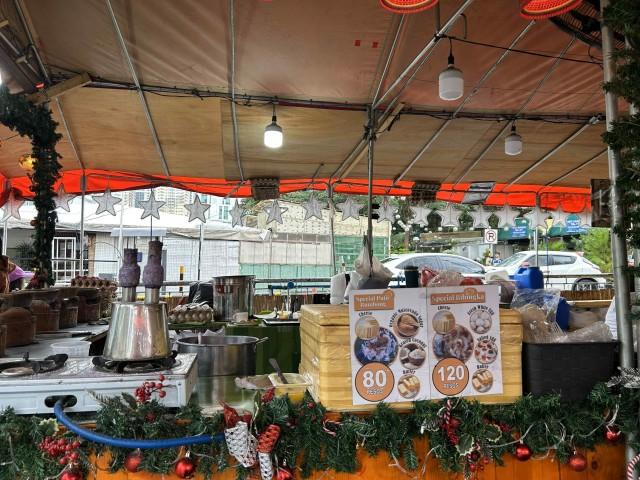
On a rainy afternoon just a few days before Christmas, Ate Jocelyn was busy catering to customers – both locals and foreigners – queuing for their piping hot, mouth-watering bibingka and puto bumbong.
Ate Jocelyn has been making bibingka and puto bumbong for the past 20 years – and even if Christmas comes just once a year, selling the popular rice cakes is a job that continues throughout the year.
“Hindi naman, ganun pa rin. Malaki pa rin ang kita nila,” she said when asked if sales are lower outside of peak season.
(It’s still the same, actually. Our sales are still high.)
However, the demand for the native rice cakes is really high during the holiday season: “Kapag Pasko, maraming service. ‘Yung kumukuha kapag may Christmas party, mayroon service kami niyan.”
(We cater to many orders every Christmas. We have many orders for Christmas parties.)
For Ate Jocelyn, bibingka and puto bumbong will always a staple of Christmas celebrations in the Philippines.
“’Yun talaga kasi ‘yung ano ng Pilipino. Di ba kapag nag-Simbang Gabi tayo, paglabas talaga ‘yan ang hinahanap – bibingka at puto bumbong. Kapag labas ng simbahan, tradisyon na talaga ng mga Pilipino ‘yan,” she said.
(That’s what Filipinos really look for. When we attend the Simbang Gabi, as soon as you step out, that is what you look for – bibingka and puto bumbong. Once people leave the church, that’s already a tradition for many Filipinos.)
Sociologist Mark Godwin Villareal said eating bibingka and puto bumbong goes back to pre-Hispanic times or even before the arrival of Christianity in the country.
“According sa mga Filipino historians, mati-trace pa natin siya during the pre-colonial Philippines. Kasi meron na talagang delicacy or let’s say, sabihin na nating kakanin na puto bumbong or bibingka. So mayroon na tayo nito dahil isa tayong agricultural country. Ang karamihan mga Pilipino, pre-colonial or during the period of colonization, karamihan sa ating mga kababayan ay mga magsasaka. So ‘yung mga ingredients na ginagamit for bibingka at puto bumbong ay kasama na sa kanilang kultura,” he said in an interview with GMA News Online.
(According to Filipino historians, we can trace it back to pre-colonial Philippines. Because there was already a delicacy, or let’s say a rice cake like puto bumbong or bibingka. We had these back then because we are an agricultural country. Most of our countrymen, pre-colonial or during the period of colonization, were farmers. So the ingredients used for bibingka and puto bumbong were already part of their culture.)
As Christianity spread throughout the islands, the Filipino faithful thought of having something to eat after attending the Dawn Masses and before going to work in the fields.
“So pagdating ng mga Kastila, nagkaroon tayo ng konsepto ng Simbang Gabi, lalong-lalo na kapag malapit na ‘yung Pasko o kapanganakan ni Kristo. Inincorporate natin ‘yung pagkain ng puto bumbong at bibingka dahil mayroon tayo mga Misa de Gallo,” said Villareal, who teaches at the University of Santo Tomas (UST).
(So when the Spaniards arrived, we developed the concept of Simbang Gabi, especially when Christmas or the birth of Christ is near. We incorporated the eating of puto bumbong and bibingka because of the Misa de Gallo.)
“At dahil karamihan sa mga, sabihin nating nananampalatayang mga Pilipino ay mga magsasaka, nawawalan sila ng oras para makapaghanda ng kanilang almusal dahil kailangan nilang umattend ng misa. At dahil dito, naisip nila ano ba ‘yung mga madaling gawin na pwede nating kainin pagkatapos ng misa para diretso na tayo sa ating trabaho, sa ating pagsasaka sa bukid. At ito ay magiging at para na rin gagawin nilang source ng kanilang energy.”
(And because most of the Filipino faithful were farmers, they didn’t have time to prepare their breakfast because they had to attend Mass. Because of this, they thought of food that was easy to make and could be eaten after Mass so they could go straight to working in the fields. And this also served as their source of energy.)
Sensory experience
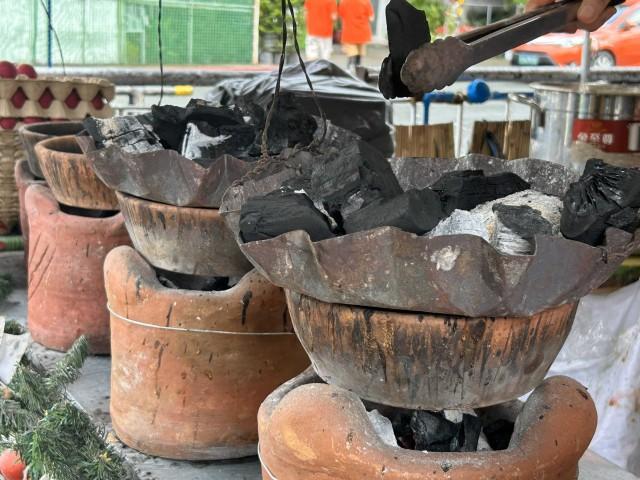
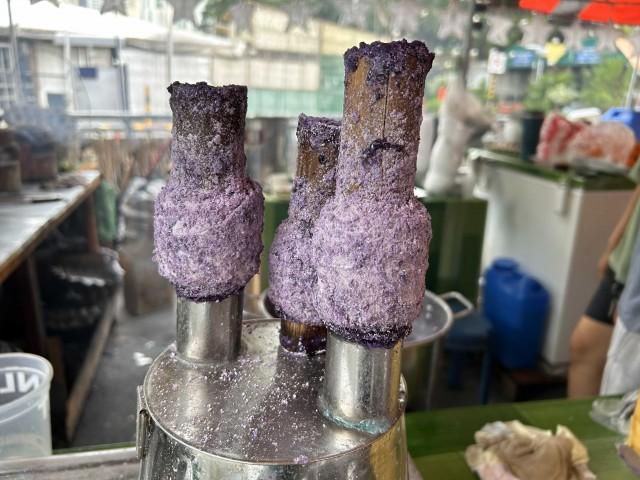
The preparation of the two Filipino Christmas specialties is a sensory experience – the smell of the burning charcoal combining with the aroma from the banana leaf and the cooking bibingka, and the sight of the steam coming from the bamboo tubes, where the purple puto bumbong is being steamed to perfection.
“Hindi na ito nawawala dahil kapag merong puto bumbong o bibingka, parang hudyat na malapit na ‘yung Pasko dahil ‘yung simoy ng hangin. Kasama rito ‘yung parang amoy o ‘yung aroma ng banana leaf kapag niluluto yung bibingka, o kung hindi naman ‘yung steam na nagmumula kapag niluluto naman ang puto bumbong. So ganoon, kaya naging associated ‘yung pagkain ng puto bumbong at ng bibingka kapag panahon ng Pasko,” Villareal said.
(These will not go away, because when there is puto bumbong or bibingka, it’s like a signal that Christmas is near and the air is cooler. There’s also the scent or the aroma of the banana leaf when the bibingka is being cooked, or the steam coming from the puto bumbong as it cooks. That is why eating puto bumbong and bibingka became associated with the Christmas season.)
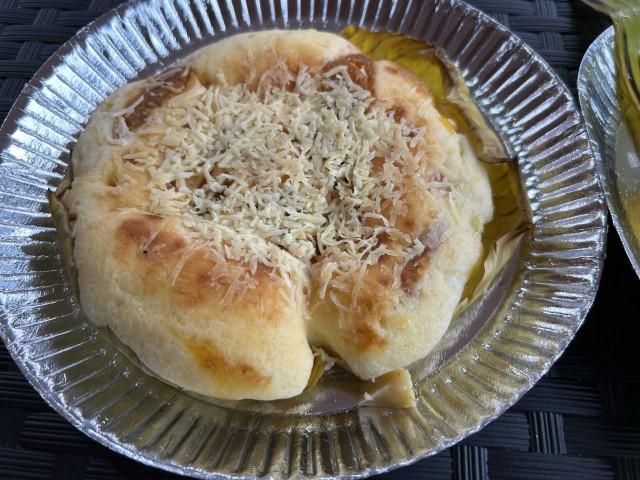
Aside from its appetizing aroma, bibingka and puto bumbong are also visually appealing. The fluffy bibingka is usually a bright yellow rice cake with salted egg and slightly toasted brown spots that also add texture to the rice cake.
On the other hand, the puto bumbong’s vibrant purple nicely contrasts with the yellow shredded cheese and butter, with brown muscovado sugar on top.
Villareal added that the preparation of the two Christmas delicacies also have symbolisms linked to religion and spirituality.
“Agree ako dun sa na ‘yung purple or violet simbolismo ng Advent preparation before or bago ang kapanganakan ni Kristo. Meron pa nga dyan, maririnig mo na kung saan ‘yung steam na lumalabas, even pre-colonial, ay talagang masasabi natin na meron na siyang religious association na para bang offering ‘to sa mga gods,” the sociologist said.
(I agree that purple or violet is a symbolism of the Advent preparation before the birth of Christ. You will even hear that the steam that comes out of cooking, even in pre-colonial times, has a religious association as if an offering to the gods.)
“May maririnig ka rin ng mga interpretation o simbolismo ng bibingka. Circle ‘to, di ba? Parang nagsisimbolismo nga ito ‘yung pagkakaisa or union ng mga pamilya, pwede rin natin itong masabi na ito ‘yung sumisimbolo sa isang haring araw na kung saan ina-associate natin kay Kristo.”
(You will also hear interpretations or symbolisms of the bibingka. It’s a circle, right? It symbolizes the unity or union of families; we can also say it symbolizes the sun, which we associate with Christ.)
Close family ties
Although both rice cakes, the bibingka and puto bumbong are made from different kinds of rice. The bibingka is made of galapong, while the puto bumbong is usually made purely from pirurutong, a brownish-violet glutinous rice or mixed together with white glutinous rice.
Villareal said both delicacies can also be associated with Filipinos’ close family ties.
“Kaya nga di ba mga kakanin, ibig sabihin gawa ito sa malagkit na bigas. So pinapakita nito ‘yung close family ties na kung saan pag sinabi natin close family ties, hindi masaya ang Pasko kapag hindi natin kasama ang kapwa natin, lalong-lalo na ‘yung kapamilya natin,” he said.
(That’s why they are called kakanin, meaning they are made from malagkit rice. This shows close family ties, and when we say close family ties, Christmas is not happy if we are not with our family members.)
“Kaya masasabi natin na ang sinisimbolismo ng pagkain ng puto bumbong at bibingka ay talagang masasabi natin yung familial or communal celebration. Dahil, masaya ang Pasko kapag salo-salo, masaya ang Pasko kapag magkakasamang pamilya, masaya ang Pasko kapag pinagsasaluhan natin ‘yung mga comfort food natin, kagaya ng puto bumbong at bibingka.”
(So we can say that what the eating of puto bumbong and bibingka symbolizes is really a familial or communal celebration. Because Christmas is happy when there is a feast, Christmas is happy when the family is together, and Christmas is happy when we share our comfort food, like puto bumbong and bibingka.)
Food also plays an important role in Filipino holidays because Filipinos like to talk about their experiences while bonding over a meal.
“Mahilig tayong kumain dahil mahilig tayong makipag-kwentuhan. Mahilig tayong kumain dahil mahilig tayong magbahagi ng ating mga karanasan. Di ba kaya nga mayroong handaan, hindi lang para pagsaluhan, ‘yung masarap na pagkain na nakahain sa harap natin. Kung hindi, pag-usapan kung ano ‘yung mga pinagdaanan natin nung nakaraang taon o nagdaang taon,” Villareal said.
(We love to eat because we love to chat. We love to eat because we love to share our experiences. That’s why there are feasts – not just to partake in the delicious food served in front of us, but to talk about what we’ve gone through over the past year or years.)
Modern times, innovation
The bibingka and puto bumbong business where Ate Jocelyn is working has been in operation for nearly 30 years.
Even with other establishments offering the same delicacies throughout the year, Ate Jocelyn said they don’t feel threatened as they bank on the authenticity of their recipe.
“’Yung sa iba kasi harina, sa amin kasi galapong. Tapos malagkit talaga ‘yang puto bumbong naman namin,” she said. “Ayan naman ang sinasabi ng mga customer namin, yung sa lasa, kaya bumabalik sila.”
(With others, they use flour, but with us, we use galapong. Also, our puto bumbong is made of real glutinous rice. That’s what our customers say, they like the taste, which is why they keep coming back.)
For his part, Villareal said the availability of the two delicacies even after Christmas has led Filipinos to innovate and give their unique take on these recipes.
“Hindi natin maitatanggi yung pagkakaroon ng komersyalismo. Magandang negosyo ‘to, siyempre… Pero dapat tingnan din natin ito sa anggulo na kung saan pwedeng mas pinagbibigyan pa nito ng pagpapahalaga kung gaano ka resourceful o kung gaano ka-creative ang mga Pilipino sa pag-evolve at pag-innovate ng ating pagkain, kagaya na lamang ng puto bumbong at bibingka,” he pointed out.
(We cannot deny the presence of commercialism. This is a good business, of course… But we should also look at it from a perspective where we can further appreciate how resourceful or creative Filipinos are in evolving and innovating our food, just like with puto bumbong and bibingka.)
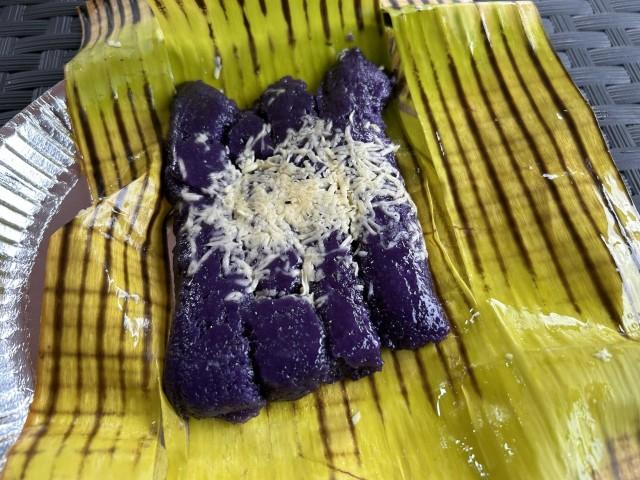
“Makikita natin sa kasaysayan natin na basic lang ‘yung ingredients ng puto bumbong at bibingka. Pero ngayon sa mga ino-offer sa mga restaurants, sa mga stalls na makikita natin sa mall or kahit nga sa mga nagtitinda mismo sa simbahan – na kung saan andoon na yung tinatawag nating innovation,” he added.
(Our history has shown that the ingredients for puto bumbong and bibingka are very basic. But now, innovation is present when you look at what’s offered in restaurants, stalls in malls, or even those selling these outside the churches.)
Villareal noted that some vendors gave their own twist to the two rice cakes, such as adding leche flan and all sorts of toppings to make it more delicious.
Just like Ate Jocelyn, Villareal is optimistic that the bibingka and puto bumbong – which have stood commercialism and test of time – are here to stay.
“Talagang masasabi natin na ang bibingka at puto bumbong, it transcended time and culture. Makikita natin, di ba? Pre-colonial to the Spanish regime. Talagang it endured different generations, challenges, innovations, at andito pa rin siya,” he said.
(We can truly say that the bibingka and puto bumbong transcended time and culture. We can see it, right? From pre-colonial times to the Spanish regime. It has really endured different generations, challenges, and innovations, and it’s still here.)
“It endured because first and foremost, it is part of our Filipino identity. It is something that is part of our culture that cannot be taken away from us.” — JMA, GMA Integrated News

