

 GMA Brandtalk
 Tracking
 Archives

September Christmas in PH? Partly due to mall culture, Jose Mari Chan, say experts
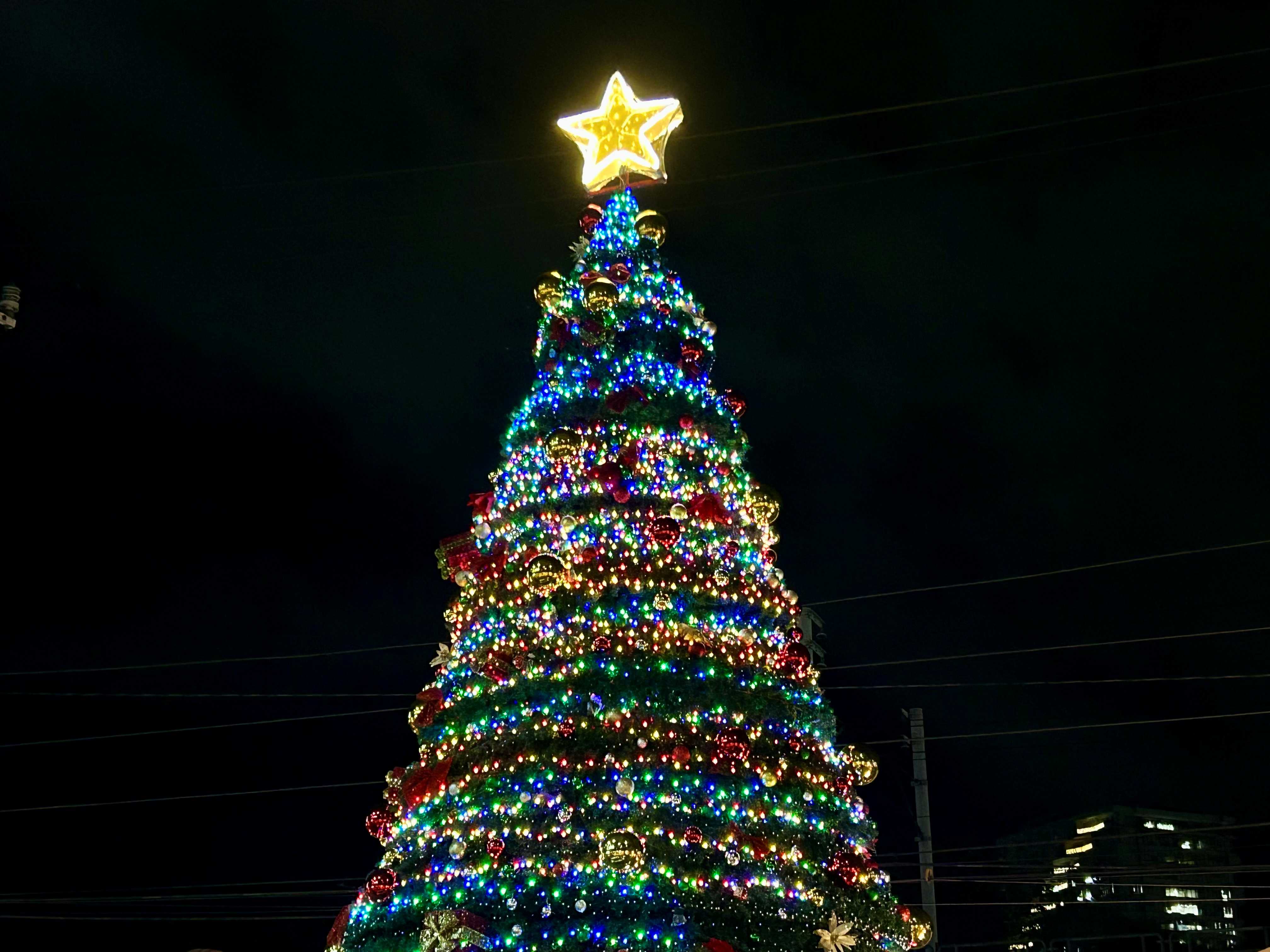
You know that Christmas is around the corner when you hear Jose Mari Chan’s “Christmas in Our Hearts” on the radio or there are social media memes featuring Chan as September approaches.
Apparently, there is some truth to the meme that Chan’s Christmas songs – and the rise of malls and other popular Christmas songs on the radio – influenced the Filipino tradition of celebrating the holidays as soon as the -ber months come in.
According to cultural anthropologist Dr. Nestor Castro, the Philippines’ unique practice of getting into the Christmas spirit as early as September began in the mid-20th century when the popularity of radio and malls began to rise.
In an interview with GMA News Online, he said the Philippines is the only country in the world with an extended Christmas season that begins in September and lasts until early January of the following year.
In the Catholic Church, the celebration of Christmas begins on December 25, with an anticipated Mass on December 24. It ends on the Feast of the Baptism of the Lord in January.
Castro noted that Christmas cards were introduced during the American colonial period. The practice of exchange gifts then followed, as well as the popularity of Christmas songs such as Chan’s “Christmas in Our Hearts” and “A Perfect Christmas.”
Role of Jose Mari Chan
“Andiyan ‘yung mga musika, mga kanta ni Jose Mari Chan na sinisimulan nang September,” Castro said.
(You have the music, the songs of Jose Mari Chan that are played starting December.)
He also pointed to the rise of malls that put up Christmas décor and offer Christmas sales or bargains when the -ber months kick in.
“Mayroon nang malls ang nagtitinda ng greeting cards. Mayroong bookstore noon na ‘yan ang kanilang specialization. Mayroon nang mga sale. Tapos papasok ka sa mall, maririnig mo na ‘yung kanta ni Jose Mari Chan,” Castro said.
(There are malls selling greeting cards. There were bookstores that used to specialize in that. There are sales. Then you enter the mall, you hear Jose Mari Chan’s songs.)
“Tapos sa radyo, mainly sa radyo, naririnig na natin ng Christmas carols, Christmas music. So na-ingrain sa mga Pilipino na talagang importante ang Pasko at maraming pinagdiriwang. So kasama ng maagang pagdiriwang, yung paghahanda sa Pasko,” he added.
(Then on the radio, you hear Christmas carols, Christmas music. So it is ingrained in Filipinos that Christmas is really important and there are many celebrations. So part of the advanced celebration is the preparation for Christmas.)
Cultural and religious factors – and brrr season
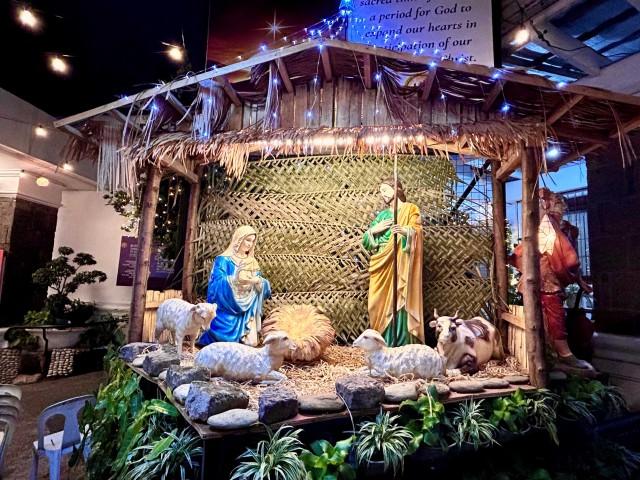
These modern-day factors, he said, partly influenced the country’s long observance of the Christmas season, which already has cultural and religious roots.
He pointed to the Filipinos’ high regard for families and children, their Christian faith, and even the relatively cooler weather during the -ber (or brrr) months as some of these factors.
“Isa ay ang pagpapahalaga natin sa mga bata, sa sanggol. Kaya mapapansin natin, mas ang Pasko ay araw ng pagbibigay ng aguinaldo sa mga bata. So ang konsepto natin ng isang pamilya, ang katutubong termino ay mag-anak, ay naka-focus sa anak o sa bata. So isa ‘yun sa mga nakaka-attract sa mga Pilipino sa pagpapahalaga sa Pasko,” he said.
(We value our children, our infants. If you will notice, Christmas is also a day of giving gifts to children. As to family, our native term for it is mag-anak, which is focused on the child or the young. That’s one of the things that attract Filipinos in placing a high value on Christmas.)
Castro added that being family-oriented, Filipinos view Christmas as an occasion for togetherness, love, and forgiveness, may it be during the Noche Buena or in attending the Simbang Gabi (Dawn Masses).
His observations were shared by historian Xiao Chua, who recalled that the practice of preparing for the Christmas holidays as early as September began as more malls were constructed all over the country.
As a kid in the mid-1990s, he said the idea of a “September Christmas” was not yet a popular a thing then.
“During our time, noong lumalaki tayo, kakaunti lang ‘yung malls. But eventually kasi, the malls, dumami ‘yung malls. This has something to do with the shopping display window. At ‘yung mga sale, ganyan,” Chua said in a separate interview.
(During our time, when we were growing up, malls were few. But eventually the malls began increasing. This has something to do with the shopping display window. And the sales.)
Mall Christmas
He noted that malls had displays that mark the start of the season, such as summer, the start of the school year, and even Halloween for late October. But there was no display theme associated with September back then.
“Wala kang maitema. So, kaya para to encourage people to actually buy already, as early as September. Para daw hindi na sumama sa Christmas rush, magdi-display na sila sa September before Halloween na Christmas,” Chua said.
(You have no theme. So to encourage people to actually buy already, as early as September. So that you won’t join the Christmas rush, they will put up Christmas displays in September, even before Halloween.)
Like Castro, Chua pointed to the songs of Chan as well as Mariah Carey’s “All I Want for Christmas” and other songs as music staples that also marked the start of the holiday season in the malls.
“Kaugnayan ‘yan ‘yung pagiging staple ni Mariah Carey at ni Jose Mari Chan sa September Christmas. Because, ‘yun na rin ‘yung kapag kasama noong display, kasama ‘yung music sa mall,” he said, adding that the malls served as the new town plaza that used to herald the start of the Yuletide season.
(Mariah Carey and Jose Mari Chan are also staples of a September Christmas. Because the music comes with the displays in the mall.)
These modern-day creations, he explained, enhanced the love, generosity, and taking care of one’s brothers and sisters that are highlighted during the Filipinos’ celebration of Christmas.
Growing up in traditions
For Evangeline Laxamana, a housewife from Pampanga, she grew up in a family that put up Christmas decors and played Christmas songs as early as September.
“Nakalakihan ko kasi yung ganun. So, gusto ko ma-feel din ng mga anak ko yun,” said Laxamana, a mother of two.
(That’s the tradition I grew up with, so I want my children to feel it too.)
She said counting down the days to Christmas as early as September is indeed a unique Filipino tradition that makes the celebration happier and something to truly look forward to.
“Masarap maging Pilipino, kaya dapat hindi mawala ‘yung ganitong kaugalian,” she told GMA News Online.
(It’s wonderful to be a Filipino, so this kind of tradition should not disappear.)
Every Christmas, her husband’s relatives would get together in one household for a potluck celebration on December 24 and 25. They also play the “white elephant” game in which they take turns in choosing or stealing gifts from each other until the three rounds are finished.
“Literal na talagang masaya. Dahil ‘yun lang ‘yung potluck na gagawin mo, kasi ‘yun lang ‘yung sinabi mo. Magiging marami sa pagkain kasi malaking pamilya namin. Bale mga sampu na putahe,” Laxamana said.
(It’s really fun. You only have to prepare one potluck dish, but there will be a lot of food, around 10 dishes, because we have a big family.)
Others said they prefer to prepare for Christmas in December, or close to Christmas Day itself. Jonnabelle Peñana, a corn farmer from Isabela, said she usually prepares spaghetti for Christmas Day as it is a favorite among the children in their household.
If the budget allows it, the New Year’s fare will be spaghetti and chicken as a treat for the children.
Copywriter Brandon Talip, who hails from Cavite, said his family usually buys ingredients for the Noche Buena usually around the second week of December.
He said celebrating Christmas ahead of time is also a good practice.
“Bukod sa celebration kasama ang pamilya, nandyan din ‘yung kasama ang mga kaibigan. At dahil adults na, siyempre maghahanap pa ng schedule na kasama lahat. Kaya okay rin na maaga ang celebrations, para lahat ng mahal mo sa buhay, makasama mong mag-celebrate,” Talip said.
(Besides family celebrations, some people celebrate Christmas with their friends. And since everyone’s already an adult, of course, they’ll try to find a schedule that will include everyone. That is why it’s also good to have early celebrations so that we can celebrate Christmas with all our loved ones.)
Taking care of one’s brothers
Chua noted that even before the Spaniards came, Filipinos already observed giving thanks to Bathala for a bountiful harvest, as well as exchanging of gifts and taking care of others in the community.
“Ine-enhance nung commercialismo, ‘yung ating pagtingin sa Pasko bilang isang mahalagang bagay… ‘Yung family. Kasi pag-Pasko, pagsasama-sama ng pag-ibig Niya. And then you share, kapwa ulit, kapwa culture. Tapos ‘yan ‘yung ding nagbibigay ka sa mahihirap,” he said.
(I think the commercialism enhances our view of Christmas as an important thing… Family. Christmas is joining together in His love. And then you share, you think of the other, kapwa culture. And then you share with the poor.)
He added that even the opening lines of Chan’s “Christmas in Our Hearts” also underscored the value of looking after one another in the community.
“’Yung kanta ni Jose Marie Chan, ganoon pa rin ‘yung message. ‘Whenever I see girls and boys selling lanterns on the street.’ It’s really about taking care of your brothers in the name of Jesus Christ,” Chua said.
(Even Jose Mari Chan’s song has the same message. ‘Whenever I see girls and boys selling lanterns on the street.’ It’s really about taking care of your brothers in the name of Jesus Christ.)
Happy Filipinos
Another factor for the extended holiday season in the Philippines is Filipinos’ happy outlook that somewhat translates to looking forward to celebrations, Castro said.
Castro remarked that the holidays is sometimes a form of “escape” from the problems or crisis that Filipinos face.
“Mahilig tayo na magsaya, kahit ang puna sa atin ang mga dayuhan, kahit panahon ng kalungkutan ay masaya tayo, tumatawa tayo. Kasi ito ‘yung paraan natin na umangkop sa dangerous times,” he said.
(We are fond of merrymaking, even if foreigners notice that even in times of crisis that we are happy, we are laughing. Because this is our way of adjusting to dangerous times.)
He said other cultures have similar occasions and that it is also important to release some tension at some point during the year. However, he stressed that problems and issues that need to be resolved should not be forgotten or set aside.
Castro added that technological advancements such as the Internet also introduced new practices during Christmas, such as celebrating the holiday with far-away loved ones through video-conferencing, sending gifts to godchildren through digital wallets, etc.
He said the fast evolution of technology will continue to introduce changes in Filipino Christmas traditions even as the Philippines observes its own, unique Christmas culture.
“Naniniwala naman ako na lahat ng kultura nagbabago, walang kultura na statiko. Kahit na ang kultura natin ay hindi siya ganitong-ganito as it was in the past,” he said.
(I believe that all cultures change, there is no culture that remains static. Even our culture was not like this as it was in the past.)
“Ang bawat lipunan, namimili siya ng kung ano ‘yung mga tradisyon na ipagpapatuloy niya at alin ‘yung hindi niya ipagpapatuloy. Sa aking palagay, despite mga advancement sa technology, lalong-lalo ng Internet, magpapatuloy ito. Pero may mga pagbabagong-anyo,” Castro added.
(Each society chooses what traditions it will continue and what it will not keep. In my opinion, despite advancements in technology especially the Internet, this will continue. But there will be changes.)
He noted that in the past, sending Christmas cards used to be a popular practice – although it is now the practice nowadays to send one’s Christmas greetings through social media.
Giving gifts or aguinaldo to one’s inaanaks used to be done in person when the godchild visits his or her ninong or ninang on Christmas Day. Now, some godparents send gifts via popular e-wallet platforms.
Despite these changes, Castro said some Christmas traditions are likely to continue, such as the parol, which he said has become an icon of the Filipino Christmas.
“Okasyon para sa mga bata, ‘yung caroling kasi barkadahan yan, sama-sama na nandoon lang ‘yung saya nila,” he said.
(Caroling as an occasion for the children, because they go as a group, together and happy.)
Even the practice of exchange gifts has also evolved as some families or groups are now adopting more practical exchange gift ideas, but the core of giving is still there.
Retaining the true spirit of Christmas
What should not change and be highlighted, Castro said, is the essence and meaning of Christmas.
“Dapat i-highlight, ano ba ‘yung pinaka essence ng lahat ng ito. Kasi marami, lalong-lalo na ang mga kabataan, Gen Z, alam na lang nila bilang tradition, bilang ritual. Pero hindi talagang malalim ang pagkaunawa kung bakit natin ito ginagawa,” he said.
(What should be highlighted is the essence of this all. Many youths, the Gen Z, they only know it as a tradition, as a ritual. But there is no deep understanding why we do this.)
“Hopefully ‘yung mga essence tulad ng spirituality, closeness of the family, pagpapahalaga sa mga bata, paggalang sa matatanda – dahil ‘yan ang panahon ng mga nagmamano – sama-samang pagkain. Sana ‘yung mga magpatuloy,” Castro added.
(Hopefully, the essence of it like spirituality, closeness of the family, valuing our children, respect for the elders – because this is the time for practice of mano po – eating together. I hope these are the traditions that will be continued.) — JMA, GMA Integrated News

