

 GMA Brandtalk
 Tracking
 Archives

DOH to fireworks victims: Seek immediate treatment, get anti-tetanus shots
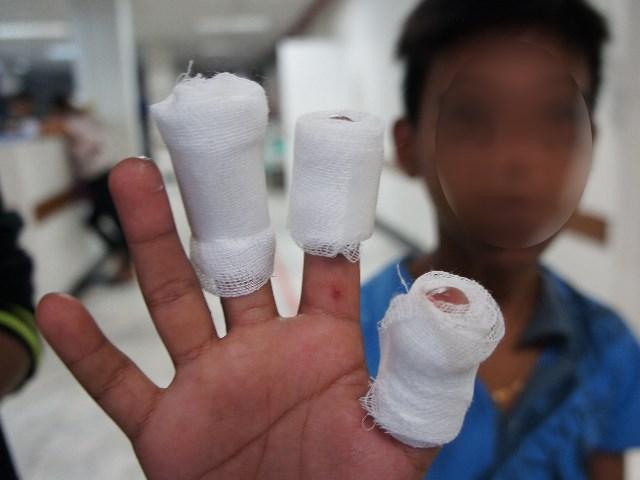
The Department of Health on Thursday urged victims of fireworks or firecrackers to seek immediate medical treatment and get vaccinated to avoid being infected with tetanus.
In a Super Radyo dzBB interview, DOH spokesperson Assistant Secretary Albert Domingo said firework-related injuries should be immediately cleanse and dressed.
“Depende kung gano kalalim ang sugat [kung] gaano katagal ang ating benda [at] 'yung mga gasa… Di mo hinahayaang nakapatong 'yung gasa nang matagalan. Mayroon 'yang mga kung hindi man every 24 hours [o] mga 48 hours, pinapalitan 'yan ng bagong sterile na gasa at habang pinapalitan nililinis 'yung sugat at ginagamitan ng ating iodine or any antiseptic solution na binibigay ng ating doktor,” he said.
(How long our casts [and] gauzes would stay depend on how deep the wounds are… You cannot let the gauze stay on for too long. There are some that last every 24 hours [or] 48 hours, then it will have to be replaced with new sterile gauze and the wounds must be cleaned with iodine or any antiseptic solution provided by the doctor while that’s being done.)
He also reminded the public to take the medication or antibiotics prescribed by doctors.
Injuries caused by firecrackers may lead to dirt or other chemicals entering wounds and causing the patient to become infected with tetanus.
According to the Center for Disease Control (CDC), tetanus is an infection caused spores of Clostridium tetani which are common in the environment. It can enter the body through certain breaks in the skin.
The incubation period of tetanus can range from three to 21 days.
It often begins with spasms of jaw muscles or “lockjaw,” followed by trouble swallowing, sudden spasms, painful muscle stiffness, seizures, headaches, fever and sweating, and changes in both blood pressure and heart rate.
Tetanus can lead to several serious health complications, and at a worst case scenario, death.
“Pag yung balat natin nasabugan, pumapasok 'yung mikrobyo. Pwedeng galing sa mismong paputok kasi minsan may halong dumi yan or galing doon sa paligid dahil nga yung ating balat ay nabuksan. Naninigas po ang ating katawan sa tetano,” Domingo said.
(When our skin gets hit with an explosion, the microbes enter it. It might come from the firecracker itself because sometimes it contains dirt or it might come from the environment because our skin was torn open. Our body becomes stiff when infected with tetanus.)
He said tetanus is a deadly infection but can be prevented with early medical treatment.
“Pag maaga dinala sa ospital at nabakunahan ay hindi tayo magkakaproblema. Magpatingin po tayo at magpabakuna,” he reminded.
(If you bring them early to the hospital and vaccinate them then we will not have any problem. Let’s get a consultation and get vaccinated.)
As of 4 a.m., January 1, 2026, the DOH recorded 235 firework-related injuries in different parts of the country. —AOL, GMA Integrated News

