

 GMA Brandtalk
 Tracking
 Archives

Erice, De Lima seek TRO vs. unprogrammed appropriations in 2026 budget
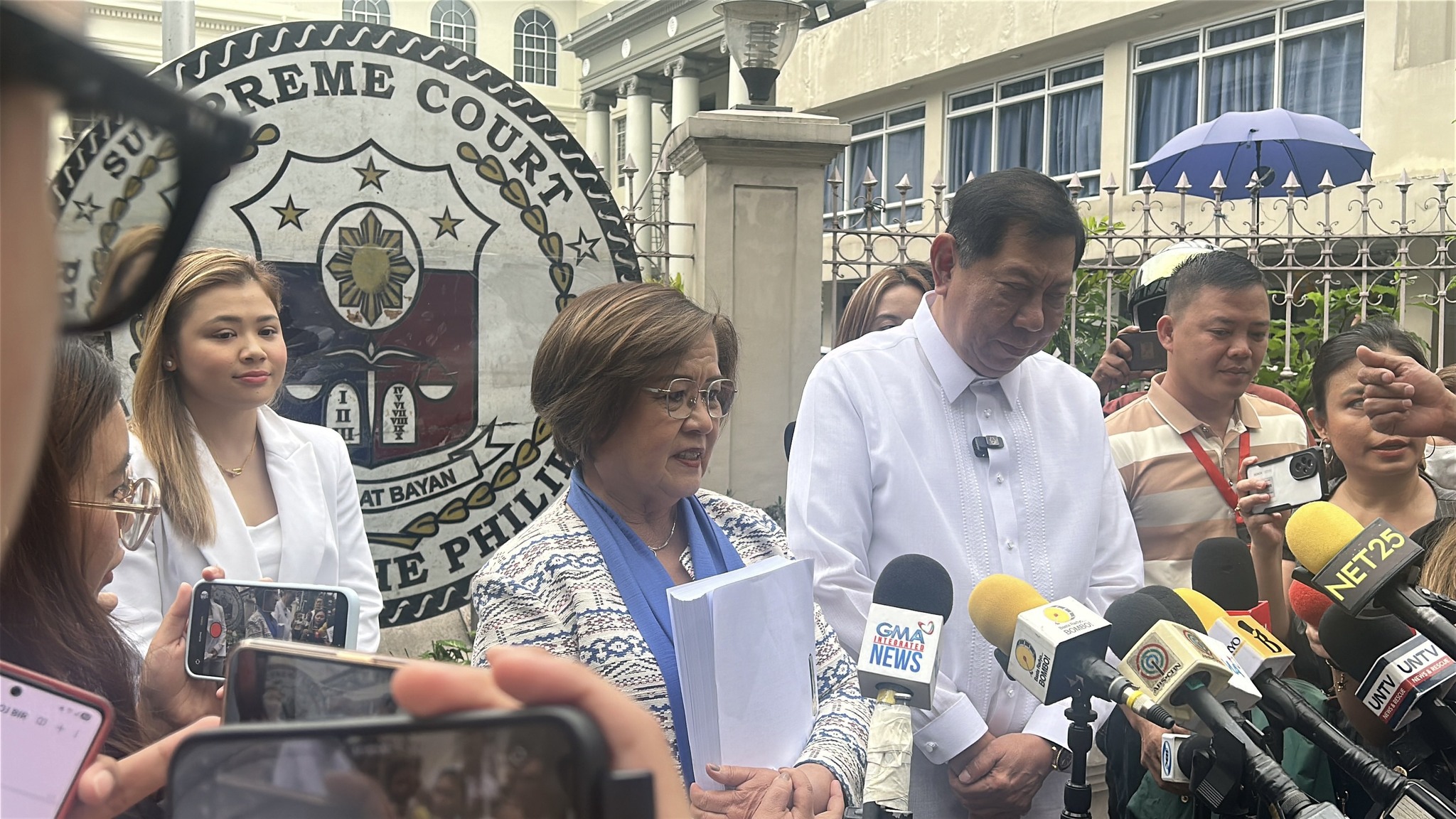
Caloocan 2nd District Representative Edgar Erice and Mamamayang Liberal Representative Leila De Lima on Thursday asked the Supreme Court to issue a temporary restraining order against the unprogrammed appropriations in the 2026 national budget.
In a 41-page petition, the two lawmakers asked the High Court to declare that the inclusion of the unprogrammed appropriations were committed with grave abuse of discretion amounting to lack or excess of jurisdiction.
LOOK: Lawmakers Edgar Erice and Leila de Lima ask the Supreme Court to issue a TRO preventing the implementation of the unprogrammed funds under the 2026 GAA @gmanews pic.twitter.com/4gKQ5oBuX7
— Joahna Lei Casilao (@joahnacasilao) January 8, 2026
Aside from this, they asked the SC to declare null and void Section XLIII of the GAA (General Appropriations Act) for being repugnant to the Constitution.
“Kahit meron na pong vineto ang Pangulo doon sa GAA na P90.5 billion, may natira pa rin na P150.9 billion na unprogrammed appropriations na dapat wala ho talaga,” De Lima said in an ambush interview.
(Even though the President already vetoed P90.5 billion in the GAA, there is still P150.9 billion in unprogrammed appropriations left, which really should not be there.)
“Since 1989 ‘yung unprogrammed appropriations so halos taon-taon nandyan ‘yan. So kailangan natin ng categorical ruling ngayon. Ipapa-interpret natin sa ating Korte Suprema, ano ba talaga? Konstitusyonal ba o hindi ang pagkakaroon ng unprogrammed appropriations sa batas,” she added.
To recall, President Ferdinand "Bongbong" Marcos Jr. earlier this week signed into law the P6.793-trillion budget for this year. He said that he vetoed nearly P92.5-billion worth of line items under the unprogrammed appropriations in the budget.
Executive Secretary Ralph Recto said that only three unprogrammed items remained: the foreign-assisted projects amounting P97.305 billion, the revised AFP Modernization Program at P50 billion, and the Risk Management Program at P3.6 billion.
According to De Lima, the inclusion of unprogrammed funds violates Article VII, Section 2 of the 1987 Constitution.
“Dapat ang isang budget ay nandyan na kaagad ang sources of funding. Hindi lang ‘yung kung ano ‘yung mga programa kung hindi ‘yung sources of funding. At malinaw na binabawasan nito ang kapangyarihan ng Kongreso,” she said.
(A budget should already clearly include the sources of funding. Not just what the programs are, but the sources of funding. And it clearly diminishes the power of Congress.)
Meanwhile, Erice said that unprogrammed appropriations ballooned as the years progressed, reaching up to P800 billion in 2023 and P700 billion in 2024.
“‘Yan ‘yung nagamit sa pinakamalaking nakawan sa bayan. 'Di ba tinanggal ‘yung mahahalagang item sa NEP, nilagay sa unprogrammed funds. At ‘yung dapat sana nating pinakikinabangang proyekto at programa ng gobyerno, nabalewala, napalitan ng mga ghost projects, napalitan ng substandard projects,” he said.
(It was used in the biggest plunder of the nation. They removed important items from the NEP and placed them under unprogrammed funds. And the projects and programs of the government that we should have benefited from were set aside, replaced by ghost projects and substituted with substandard projects.)
The respondents are the Senate of the Philippines, represented by Senate President Vicente “Tito” Sotto III; the House of Representatives, represented by House Speaker Faustino “Bojie” Dy III; Executive Secretary Ralph Recto; and Budget and Management Secretary Rolando Toledo.
‘Legal remedies’
In a statement, Department of Budget and Management (DBM) Acting Secretary Rolando Toledo said, “The DBM respects the right of any individual or official to avail of legal remedies.”
“Anyone who wishes to file a case is free to do so, and the Department will address such actions through the proper legal processes,” Toledo said.
The acting Budget chief further said that the that “the legality of the unprogrammed fund has already been upheld by the Supreme Court,” citing Belgica v. Executive Secretary (G.R. No. 210503, October 8, 2019), in which the “categorically ruled that the appropriation for the unprogrammed fund is constitutional.”
“The Court clarified that the unprogrammed appropriations are not a prohibited lump-sum fund, because they are accompanied by an annex that specifies the public purposes and corresponding amounts for which the funds may be used. As such, the UA complies with the constitutional requirement that appropriations must have a discernible purpose,” Toledo said.
Moreover, the acting DBM chief said that unprogrammed appropriations function as a standby appropriation, intended to be sourced only from excess or windfall revenues, and released strictly upon the satisfaction of clearly defined fiscal conditions and validation requirements.
“This design, according to the Court, is a legitimate budgeting mechanism that allows fiscal flexibility while preserving Congressional control over public funds,” Toledo said.
The acting Budget chief said that the unprogrammed appropriations has been reduced to its lowest level since the pandemic years.
Toledo added that Marcos also made clear that the unprogrammed appropriations are subject to strict controls, stating that releases may only be made when fiscal conditions are met and after careful validation.
“To reinforce this discipline, the President vetoed approximately P92.5 billion worth of proposed unprogrammed appropriations items, including budgetary support to GOCCs, prior years’ LGU shares, personnel services requirements, industry support programs, insurance of government assets and interests, and certain government counterpart funds,” the acting DBM chief said.
“Taken together, Supreme Court jurisprudence and the design of the FY 2026 GAA demonstrate that the Unprogrammed Appropriations are constitutional, clearly defined, and now subject to even tighter fiscal discipline and safeguards. The DBM remains committed to upholding the Constitution, ensuring prudent public spending, and implementing the national budget with transparency, integrity, and accountability,” Toledo said.
House colleagues respond
House committee on appropriations vice chairperson Zia Alonto Adiong defended the unprogrammed appropriations in the 2026 national budget.
"As far as we're concerned, it's constitutional because these are the basis for us to deliberate the budget," Adiong said in an online interview.
The lawmaker explained that unprogrammed appropriations are not like the Priority Development Assistance Fund (PDAF) that the Supreme Court struck down as unconstitutional.
"Unprogrammed appropriations can only be implemented and can only be utilized only for a specific purpose, subject to specific guidelines and criteria. So it has already been identified in the NEP (National Expenditure Program) prior to the submission, I mean prior to the approval of the GAA (General Appropriations Act.) So that makes it different from what they perceive to be PDAF. Kasi PDAF, the identification of the program for specific implementation came after the approval of the GAA," Adiong stated.
He, however, said that he respects the move of Erice and De Lima to go to the Supreme Court.
"Anybody can question naman anything under the sun under our system, 'di ba? Especially if it's very important like the GAA. So talagang if there are questions ng ating mga kasama, the proper venue for that really is to challenge that before the Supreme Court kasi ang Korte lang naman talaga ang magbibigay interpretasyon sa constitutionality ng lahat ng bagay," Adiong said.
Another Appropriations vice chairperson, Palawan 2nd District Representative Jose Alvarez, welcomed the petition.
"Yes, that's good para ma-test case sa [so it can be tested at the] Supreme Court," he said in a message to GMA Integrated News.
He also stated that there is nothing wrong with funding projects through unprogrammed appropriations.
"Siyempre, mga foreign-assisted projects, dapat mapondohan talaga even through UA. Walang masama roon," Alvarez said.
(Of course, foreign-assisted projects must be funded through unprogrammed appropriations. there's nothing wrong with that.)
"Tsaka wala nang infra sa UA. That's very clear," he added.
(There are no funds for infrastructure among the UAs.)
House Deputy Minority Leader and Akbayan Party-list Representative Perci Cendaña maintained that unprogrammed appropriations should be removed from the national budget.
"Bumubukol pa rin ang UA kaya kailangan tanggalin. We've raised during the budget deliberations that the UA should be zeroed out. We hope the Supreme Court will see merit in the petition of Rep. De Lima and Rep. Erice in ensuring that the UA should be removed from the 2026 budget because of the huge opportunity for misuse and abuse," Cendaña said.
GMA Integrated News has also reached out to House Speaker Faustino Dy III, House Appropriations chairperson and Nueva Ecija 1st district Rep Mikaela Suansing, and several members of the minority bloc for comment. — with a report from Tina Panganiban-Perez/AOL/RSJ/BM, GMA Integrated News

