

 GMA Brandtalk
 Tracking
 Archives

DILG reminds politicians about 'anti-epal' rule as Marcos eyes boost in LGU services
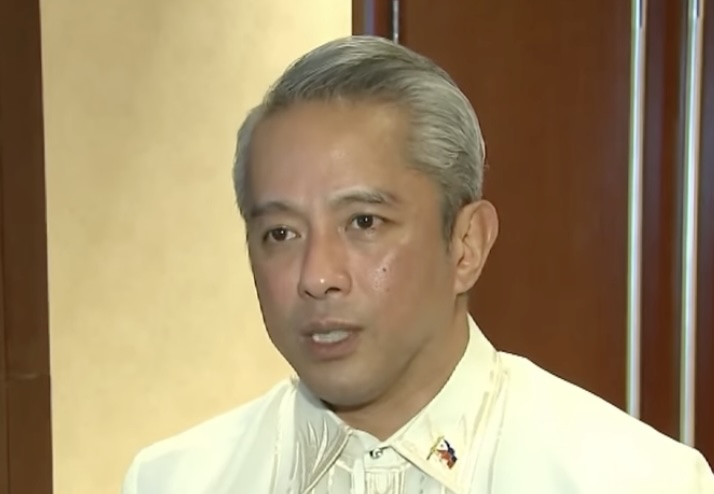
The Department of the Interior and Local Government (DILG) on Tuesday warned politicians against violating anti-epal rules as local government units (LGUs) will have a bigger role in delivering basic services.
At a Palace briefing, DILG Secretary Jonvic Remulla said anti-epal guidelines are already in place under the rules of the Department of Budget and Management and the Office of the President.
These rules prohibit politicians from placing their names, photos, or logos on government-funded projects.
“Kapag may violation ang mga politicians, tinatawag namin ang mga mamamayan, i-post sa Facebook at puwede naming imbestigahan,” Remulla said.
(When politicians commit violations, we call on the citizens, post them on Facebook, and we can investigate.)
“Bawal ilagay ang pangalan na sila ang nagpagawa; bawal ilagay ang kanilang logo; bawal ilagay ang kanilang picture. May basic guidelines kung ano ang nakalagay doon: Project, date awarded, date to be started, contractor, date to be finished, at source of funds, iyon lang,” he added.
(They can’t put their name, they can’t put their logo, and they can’t put their picture. There are basic guidelines on what to put there: project, date awarded, date to be started, contractor, date to be finished, and source of funds—that’s all.)
Sanctions include administrative cases with penalties ranging from suspension to possible referral to the Office of the Ombudsman for repeat offenders.
Remulla also expressed support for legislation for heavier and clearer sanctions to strengthen the anti-epal campaign.
Basic services
The DILG made the warning following the announcement that President Ferdinand “Bongbong” Marcos Jr. will strengthen LGUs for the delivery of basic services.
Among the major initiatives cited was the construction of 40,000 classrooms within one year under a public-private partnership (PPP) scheme.
Remulla said the President approved a proposal to implement the project through LGUs, which could reduce construction costs by at least 40%.
According to him, the administration also plans to channel housing programs through LGUs, particularly for the poorest sectors, including urban and rural informal settlers.
The government is also eyeing the development of communities for rural and agricultural workers.
Under the P6.793 trillion national budget for 2026, LGUs will receive a P1.19 trillion share in the National Tax Allotment, P57.87 billion in Local Government Support Fund, Growth Equity Fund for low-income and resource-constrained LGUs, and a P15.33 billion allocation for disaster rehabilitation and reconstruction, among others. —VAL, GMA Integrated News

