

 GMA Brandtalk
 Tracking
 Archives

From campus to career: Young Filipinos face hopes and hurdles in the job market
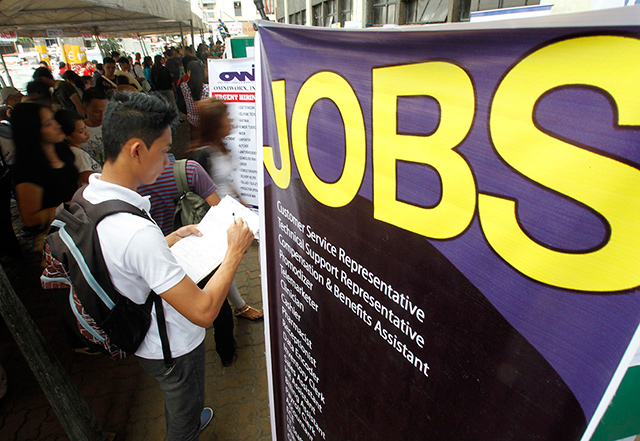
For many young Filipinos, the transition from school to work stretches well beyond graduation.
After earning their diploma, many graduates immerse themselves in job hunting, often laden with uncertainty.
This comes as the labor market shows mixed signals. Data from the Philippine Statistics Authority (PSA) reveal that the number of unemployed Filipinos declined slightly to 2.25 million in November 2025 from 2.54 million in October. This translated to an unemployment rate of 4.4 percent. Still, this was higher than the 1.66 million unemployed recorded in November 2024.
National Statistician and PSA chief Claire Dennis Mapa said employment gains were uneven, noting that strong typhoons in November disrupted economic activity despite the usual increase in hiring toward the end of the year.
Employment rose month on month to 49.26 million, but year-on-year figures remained lower. Underemployment, an indicator of job quality, declined to 10.4 percent, with 5.11 million employed Filipinos seeking additional work or more hours.
For young people entering the workforce, these figures are not abstract. They shape daily decisions about where to apply, how much to accept, and how long they can afford to wait.
Graduation tied to responsibility
For Ralph Manaloto, 21, a Bachelor of Arts in Communication graduate from Systems Plus College Foundation, finishing college immediately translated into an obligation.
“Trabaho. ’Yan talaga ’yun,” he said.
(A job. That’s really what it is.)
“For me and my family, trabaho talaga ’yung kaakibat ng graduation," he added.
(For me and my family, graduation really comes with getting a job.)

Ralph said the pressure to work was not just personal but familial, as he is expected to help pitch in to household expenses. While finishing school brought relief, it was quickly replaced by the urgency to find employment.
During his four years in the Communication program, he said he was challenged by limited resources for hands-on training, forcing students at times to spend out of pocket. Still, he gained experience through internships and freelance work in events management and scriptwriting.
Financial reality, however, shapes his choices.
“Hindi ako privileged enough para maging choosy pagdating sa trabaho.”
(I’m not privileged enough to be choosy when it comes to work.)
Ralph also expressed frustration that communication graduates are sometimes overlooked in favor of celebrity personalities or influencers.
“Walang puso ang reporting at hindi properly captured ’yung emotion na dapat maihatid ng balita.”
(Reporting has no heart, and the emotion that the news should convey is not properly captured.)
On stereotypes about Gen Z workers, he pushed back, saying his generation is simply more aware of what it wants from work.
Licensed, but facing the realities of work
Meanwhile, for Angelica Sotto, 23, a Bachelor of Science major in Pharmacy graduate from the University of Santo Tomas in Manila, graduation was only the first hurdle. Late last year, she passed the Pharmacy Licensure Examination on her first try, a milestone she said validated years of effort.
“It felt validating na after years and years of hard work, it will bear fruit pala talaga.”
(It felt validating that after years and years of hard work, it really does bear fruit.)
Passing the boards, Angelica said, came with a deeper sense of responsibility as she entered the healthcare profession, particularly amid persistent problems in the system and limited recognition for pharmacists.
Preparing for the licensure exam required major personal sacrifice, with much of her life outside academics put on hold. After passing, she allowed herself time to rest before turning to the next challenge: employment.

Angelica said she has begun updating her résumé and setting up professional profiles while completing remaining requirements such as claiming her PRC ID. As she looks ahead, she sees pharmacy as a broad field with opportunities beyond community drugstores.
“I’m just hoping na sana makahanap ako ng akmang path para sa akin and is enough to sustain me in this economy.”
(I’m just hoping I can find a path that suits me and is enough to sustain me in this economy.)
She remains grounded about what her professional license can guarantee.
"In the case of pharmacy, the license is a requirement and, in some way, proof of how capable you are. But it doesn’t necessarily mean that you can secure any job you want," she said.
The bigger picture
The experiences of Ralph and Angelica mirror labor market conditions faced by young Filipinos.
The Department of Economy, Planning, and Development said job losses in November were concentrated in sectors disrupted by severe typhoons, affecting around 873,000 workers.
DEPDev Secretary Arsenio Balisacan said the government is prioritizing investments in skills development, lifelong learning, and social protection systems to help workers transition across sectors.
Meanwhile, the Department of Labor and Employment said employment gains toward the end of 2025 reflected the gradual normalization of economic activity.
Labor Secretary Bienvenido Laguesma also cited improvements in underemployment and expanded employment facilitation programs.
Between hope and hurdles
Despite modest improvements in employment figures, questions of job quality, fair pay, and long-term security remain, especially for young Filipinos just starting their careers.
For Ralph and Angelica, the path from campus to career is shaped less by ceremony and more by everyday realities: finding work, supporting family, and building a future in an economy that does not always make the transition easy.
In the end, the diploma and even the license are only the beginning. What follows is a longer test of resilience as young Filipinos navigate a job market still finding its balance.—LDF, GMA Integrated News

