

 GMA Brandtalk
 Tracking
 Archives

DICT: PH 1st country to put nat’l budget on blockchain
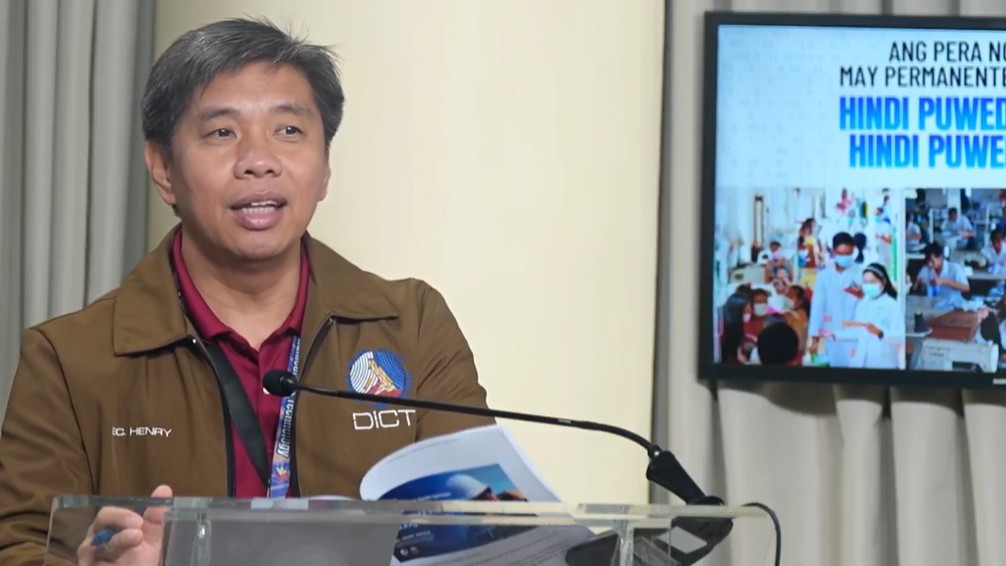
The Department of Information and Communications Technology (DICT) on Thursday touted the government’s efforts to promote transparency, saying that the Philippines has become the first country in the world to put its national budget on blockchain, beginning with the P6.793-trillion 2026 General Appropriations Act (GAA).
At a Palace briefing, DICT Secretary Henry Aguda said that the country is “unang bansa sa mundo na may fully on-chain national budget (first country in the world with fully on-chain national budget).”
President Ferdinand ''Bongbong'' Marcos Jr. earlier said that blockchain is something that could possibly work in ensuring transparency of the national budget.
EXPLAINER: What is blockchain and how is it expected to stop corruption?
Simply put,a blockchain is an immutable or unchangeable and tamper-proof digital ledger or record of all transactions within a network.
Aguda explained that with the national budget now on blockchain, every peso of Filipino taxpayers’ money is recorded in a permanent and tamper-proof digital ledger.
“May permanenteng digital na resibo – hindi pwedeng palitan, hindi puwedeng dayain (There is a permanent digital receipt —which cannot be altered, cannot be tampered with),” the DICT chief said.
The initiative, under the DICT’s “Digital Bayanihan Chain” which was developed in collaboration with Congress, ensures that each government transaction comes with a “digital seal of truth,” which can be verified by anyone, anytime, “even decades from now.”
“The blockchain-powered GAA is more than a technological upgrade. It’s a digital guarantee of integrity,” Aguda said.
“It protects the official copy of the budget, prevents manipulation, and ensures long-term traceability of government funds. Transparency is no longer just visible—it’s permanent,” he added.
The DICT chief said that blockchaining the budget would mean reduced corruption with a tamper-proof system which makes fraudulent manipulations nearly impossible; clear tracking of public funds with citizens, media, and watchdogs can trace the flow of funds from approval to spending; evidence across administrations, meaning that records remain intact even when governments change; and stronger public trust, resulting from confidence in the government growing “when the truth is verifiable.”
Aguda said that the blockchain initiative was developed at no cost for the government, which is being implemented through a grant from the private sector.
DICT Undersecretary David Almirol, for his part, said that the private sector helped in setting up the public blockchain for the national budget.
Almirol said the government is also planning to implement the blockchain for other state services. — RF, GMA Integrated News

