

 GMA Brandtalk
 Tracking
 Archives

House leader sees no grounds yet to impeach Marcos
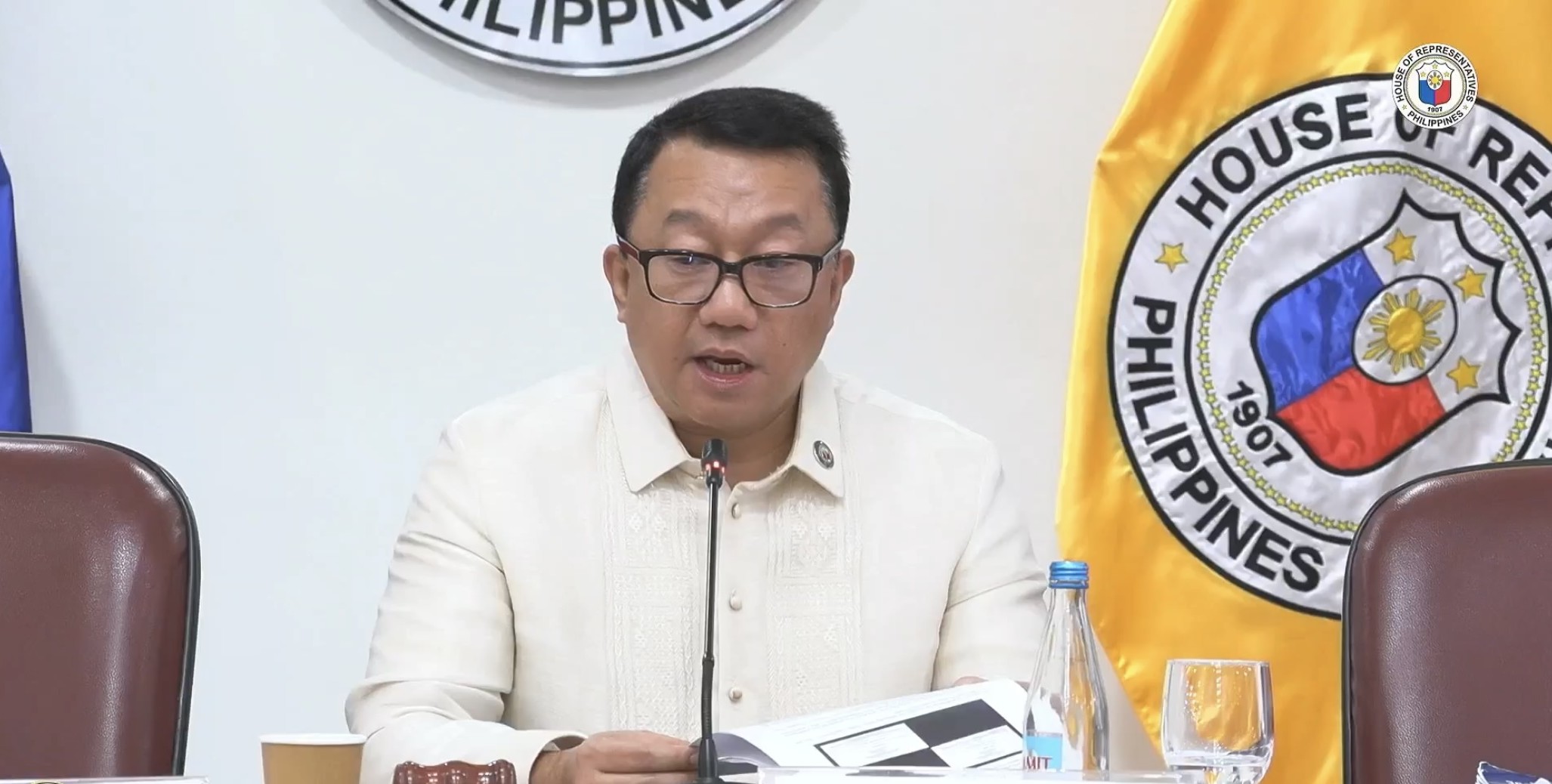
House good government and public accountability panel chair Joel Chua said Monday there are currently no grounds to impeach President Ferdinand Marcos Jr. based on the complaint filed by lawyer Andre de Jesus.
Chua was referring to the impeachment complaint filed by de Jesus and endorsed by Pusong Pinoy Party-list Rep. Jett Nisay on Monday morning.
“We have been informed that an impeachment complaint against President Marcos Jr. was filed today. As with any impeachment complaint, the House of Representatives will accord it the initial consideration required under the Constitution and our rules," he said.
"At the same time, it must be stated frankly that, based on what is publicly known at this point, the complaint faces a steep and difficult path in the House,” Chua added.
The complaint accuses the President of graft and corruption, culpable violation of the Constitution, and betrayal of public trust over the March 2025 arrest and eventual detention of former President Rodrigo Duterte in The Hague, the Netherlands, to face trial for alleged crimes against humanity linked to drug war deaths during his administration.
De Jesus' complaint also cites Marcos’ approval of unprogrammed appropriations, allegations of drug use, and claims that he protected allies from a probe into flood control projects, among others.
Chua said the House would not endorse any impeachment complaint unless it met constitutional standards and was backed by solid evidence.
“Impeachment requires clear, specific, and well-substantiated allegations of impeachable offenses—not conjecture, political disagreement, or generalized accusations. So far, no issue has emerged that clearly rises to the level of an impeachable offense as defined by the Constitution,” he said.
The lawmaker said that while impeachment is a constitutional remedy of last resort, the House will fulfill its mandate to evaluate the complaint filed by de Jesus for sufficiency in form and substance, in observance of due process.
“There will be no shortcuts, and there will be no prejudgment. This assessment, however, does not excuse the House from its duty," he said.
"The House will examine the complaint on its face, determine whether it meets constitutional and jurisprudential standards, and act accordingly—guided by reason, evidence, and law, not by noise or pressure,” Chua added.
The House would follow the Supreme Court’s new rules on impeachment, he said.
Chua was referring to the rules set by the Supreme Court when it declared the impeachment case against Vice President Sara Duterte unconstitutional in July 2025 for violating the one-year bar and due process.
The seven new rules imposed by the High Court on impeachment proceedings—rules that were not yet in place when the House impeached the Vice President on Feb. 5, 2025—include the following:
- The Articles of Impeachment or resolution must include evidence when shared with House members, especially those considering endorsing it.
- The evidence must be sufficient to substantiate the charges in the Articles of Impeachment.
- The Articles of Impeachment and supporting evidence must be made available to all members of the House of Representatives, not only to those being asked to endorse them.
- The respondent must be given the opportunity to be heard on the Articles of Impeachment and supporting evidence prior to transmittal to the Senate, regardless of the number of endorsements.
- The House must be given reasonable time to independently determine whether to endorse an impeachment complaint. The Supreme Court may review whether this period is sufficient, provided the petitioner proves that officials failed to perform their duties properly.
- Charges must be based on impeachable acts or omissions committed in relation to office and during the respondent’s current term. For the President and Vice President, these acts must be sufficiently grave to constitute the offenses listed under Article XI, Section 2 of the Constitution, or betrayal of public trust as determined by the electorate. For other impeachable officers, the acts must be grave enough to undermine respect for their constitutional independence and autonomy.
- The House is required to furnish the respondent with copies of the Articles of Impeachment and supporting evidence and allow a reasonable period to respond, as determined by House rules. The Articles of Impeachment, supporting evidence, and the respondent’s comment must then be made available to all House members.
The House’s appeal of the Supreme Court ruling has yet to be resolved.
He added that the House would follow the Supreme Court’s new rules on impeachment, even with its pending appeal.
"The public can be assured that the House will act deliberately, transparently, and within the bounds of the Constitution,” Chua said.
In a separate statement, Speaker Faustino “Bojie” Dy III agreed that there is no basis to impeach the President.
“Wala tayong nakikitang batayan na magbibigay-katwiran sa isinampang impeachment complaint laban kay Pangulong Marcos Jr. Malinaw na ginagampanan ng ating Pangulo ang mandatong ipinagkatiwala sa kanya ng taumbayan, alinsunod sa batas,” Dy said.
(We see no basis that would justify the impeachment complaint filed against President Marcos Jr. It is clear that our President is carrying out the mandate entrusted to him by the people, in accordance with the law.)
He clarified, however, that House leadership is duty-bound to receive any impeachment complaint endorsed by one of its members.
“Responsibilidad ng Kapulungan ng mga Kinatawan, ayon sa Saligang Batas, na tanggapin at suriin ang mga ganitong daing—at ito ay dapat isinasagawa nang may lubos na pag-iingat at paggalang sa Konstitusyon. Hindi ito dapat ginagamit sa pamumulitika,” he added.
(It is the responsibility of the House of Representatives, under the Constitution, to receive and review such complaints—and this must be done with utmost care and respect for the Constitution. It should not be used for political purposes.”
House Committee on Justice Vice Chairperson and Bukidnon Rep. Jonathan Keith Flores, for his part, said the House has the duty to process any verified impeachment complaint under existing House rules.
Flores cited the Supreme Court’s July 2025 decision on the impeachment case against Vice President Sara Duterte.
He noted that the ruling imposed new rules only for one mode of impeachment, specifically the constitutional provision stating that “in case the verified complaint or resolution of impeachment is filed by at least one-third of all the Members of the House, the same shall constitute the Articles of Impeachment, and trial by the Senate shall forthwith proceed.”
“That said, impeachment is not evaluated in a vacuum. We cannot wait for a Supreme Court ruling before acting; we have to process complaints based on the rules currently in place. The SC decision refers only to the third mode of impeachment," he said.
"If the complaint goes through the first or second mode, it is referred to the Justice Committee, where due process is always observed,” the lawmaker added.
House Ways and Means Committee Chairperson and Marikina Rep. Miro Quimbo, meanwhile, said any impeachment effort would only cause unnecessary disruption.
“With two years left in the administration’s term, let us keep the government functioning smoothly instead of causing needless disruption. Impeachment is a remedy, not a weapon,” said Quimbo, a lawyer like Flores.
“It remains a constitutional mechanism to address grave violations, but we cannot allow our constitutional processes to be hijacked by those seeking to manufacture a crisis where none exists,” added Quimbo, who served as one of the spokespersons of the House prosecution panel during the impeachment trial of then Chief Justice Renato Corona in 2012.
Erice, Duterte question complaint
Meanwhile, Senior Deputy Minority Leader Rep. Edgar Erice was puzzled on why it was De Jesus who filed the complaint.
“Well, I just found out kasi back in 2024, November, sometime in November 2024. The same Atty. Andre De Jesus filed a disbarment case against Atty. Glenn Chong for some statement vilifying the First Lady (Liza Araneta Marcos),” said Erice as reported by Tina Panganiban-Perez in “24 Oras.”
“I am sure that he filed a case against Atty. Glenn Chong to defend the First Lady,” he added.
Meanwhile, Davao City 1st District Rep. Paolo Duterte also questioned the complaint.
“Alam naman natin na iisang impeachment complaint lamang ang pwedeng ma-file laban sa isang impeachable official. Mga impeachment cases na ganito ay walang ibang purpose kung hindi ang idepensa ang isang impeachable official laban sa mga totoong impeachment cases,” he said.
(We all know that only one impeachment complaint can be filed against an impeachable official [within a year]. Impeachment cases like this serve no other purpose but to defend an impeachable official against the real impeachment cases.)—MCG/RF, GMA Integrated News

